




Victorian Office Storage
Victorian office storage encompasses practical wooden and metal pieces designed for sorting paperwork, most frequently seen here in mahogany, oak, and pine forms.
Victorian Office Storage
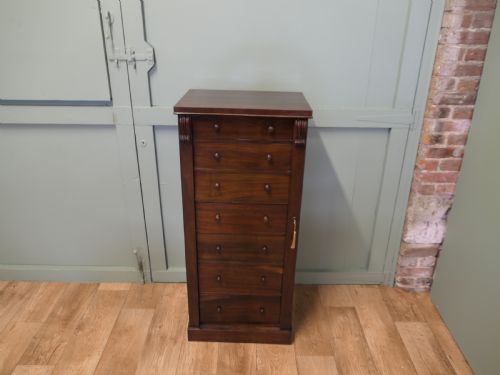
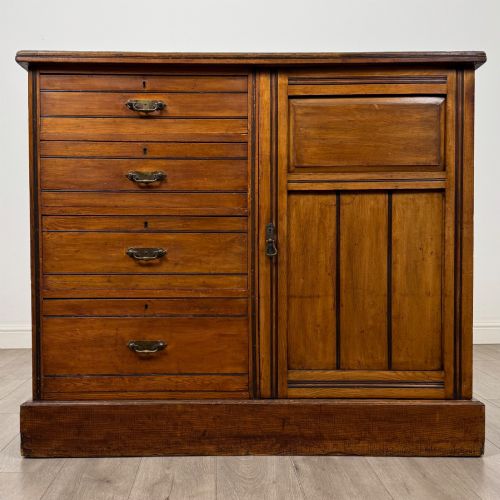
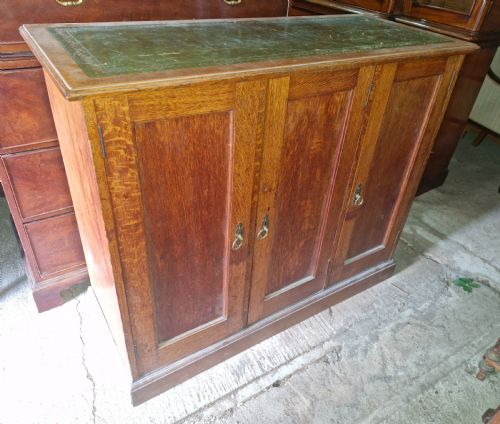
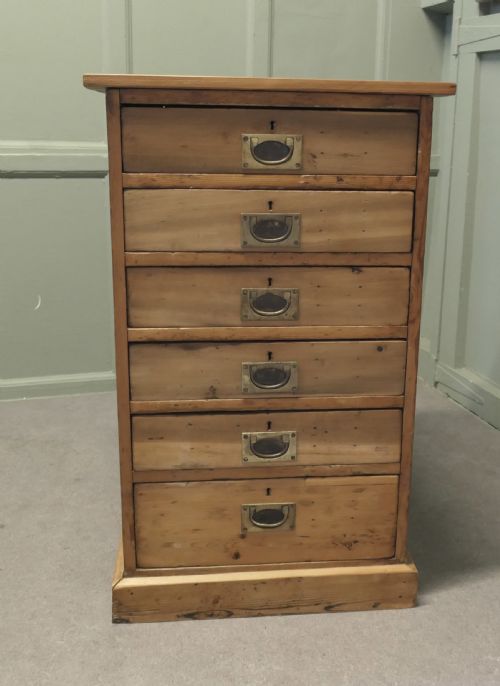
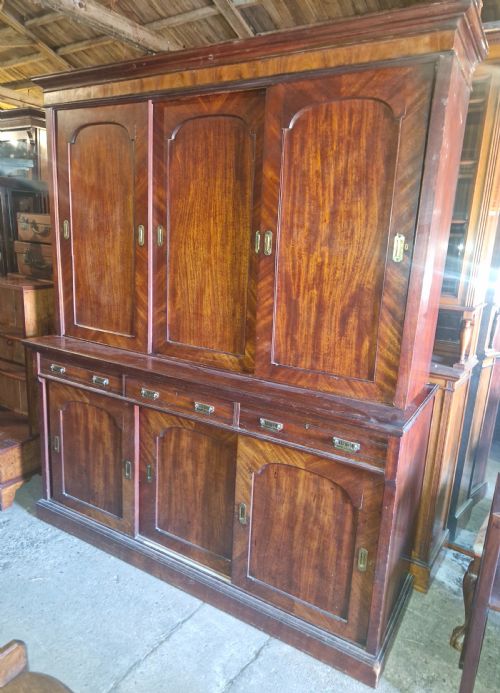
Victorian office storage spans functional items intended for organising documents, ledgers, and correspondence within period workspaces. The pieces appearing here range from tall Wellington chests and shallow pine drawers to estate cabinets and specialised letter files.
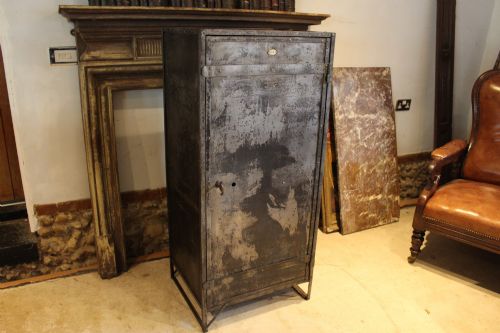
Mahogany and oak dominate the grander country house and estate examples, whilst pine and sheet steel meet the more utilitarian requirements. Buyers encountering these items frequently find configurations featuring pigeon holes, folio shelves, and patent filing mechanisms.
Originating predominantly from the nineteenth century into the early decades of the twentieth, these furnishings reflect the administrative expansion of the era. The forms vary from single-door cupboards and desktop tidies to multi-drawer cabinets engineered for systematic archiving.
Distinctions in quality
The division between standard utility pieces and finer examples rests upon the selection of timber and the precision of the cabinetwork. Mahogany pieces finished with flame veneers and fitted with original brass hardware represent a higher tier of production than basic pine storage.
Completeness of internal mechanisms, such as working patent filing hardware and intact pigeon hole dividers, separates unaltered survivals from heavily adapted items. The integration of maker attributions or patent stamps elevates the standing of an administrative cabinet.
Victorian Office Storage Retail Price Guide 2026
Typical asking prices for victorian office storage among the pieces listed under this phrase on Sellingantiques today, from the lower quarter to the upper quarter. They describe what is for sale here now, not the wider market.
Listings feature woods including mahogany, flame mahogany, oak, ash, and pine, alongside industrial sheet steel and wrought iron.
G Bartholomew and Co·Gillows
The Victorian Office Storage Glossary
- Wellington chest
- A tall, narrow chest of drawers secured by a hinged locking stile that fastens with a padlock or key. This design provides secure storage for documents and valuables in a compact footprint.
- Pigeon holes
- Compartments arranged in grids for sorting letters, folios, and stationery within an office or library. They are frequently incorporated into open shelving or fitted inside larger cupboards.
- Folio cabinet
- A piece designed specifically for storing large sheets of paper, prints, or maps flat. These units utilise shallow, wide drawers to protect fragile documents from bending or creases.
- Patent letter file
- A mechanized filing apparatus utilising spring-loaded clips or alphabetical indexes to organise correspondence. Amberg's system is a notable example seen in period office furnishings.
- Haberdashery cabinet
- A multi-drawer storage unit originally intended for retail merchandise that translates effectively into office storage for small items. These pieces typically feature numerous shallow drawers with glass or wooden fronts.
Victorian Office Storage: Frequently Asked Questions
What distinguishes an estate cabinet from a standard filing cabinet?
Estate cabinets generally display grander proportions and finer timber selections, such as flame mahogany, reflecting their placement in country house libraries and administrative rooms.
Standard filing cabinets prioritize utilitarian function over decorative presence, frequently constructed from simpler woods or sheet steel to serve commercial businesses.
How do patent filing cabinets operate?
Patent cabinets incorporate specialised mechanical systems designed by specific inventors to hold, index, and retrieve correspondence securely. These mechanisms often feature drop-front drawers or internal spring clips that keep letters upright and ordered.
Collectors look for these proprietary systems because they demonstrate the exact period technology used to streamline Victorian and Edwardian office administration.
Where were these pieces used originally?
These storage items served in country house estate offices, merchant counting houses, legal chambers, and private libraries. Their primary function was managing the vast influx of handwritten letters, ledgers, and documents generated during the period.
Today, they transition easily into modern homes and studies, providing practical organisation whilst retaining period character.
How do I identify a nineteenth century pine piece?
Nineteenth century pine storage exhibits hand-cut dovetails, timber shrinkage, and traditional surface finishes accumulated through decades of use. The construction methods show evidence of hand tools rather than modern high-speed machinery.
Secondary woods used for drawer linings and back panels also assist in confirming the age and origin of utilitarian office pieces.