


Victorian Oak Storage Trunk
A victorian oak storage trunk is a sturdy timber box built for travel or domestic storage, offering rugged utility and period character.
Victorian Oak Storage Trunk
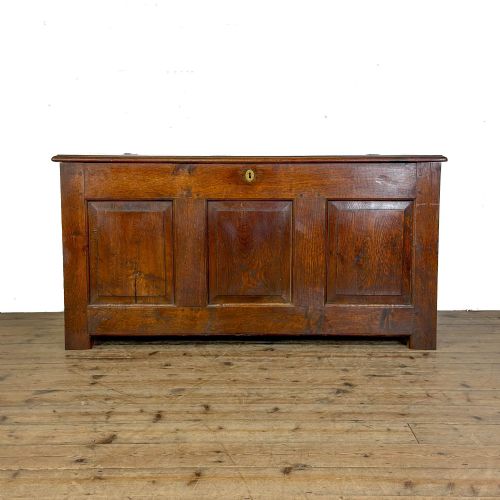
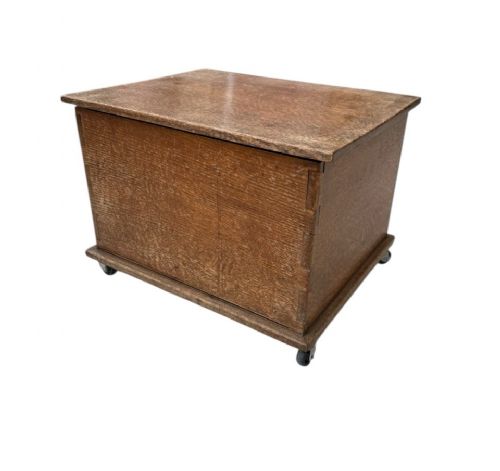
A victorian oak storage trunk serves as a robust receptacle for household goods, valuables, and travel equipment, emerging in various heavy-duty formats across the nineteenth century. Buyers encounter domestic blanket boxes alongside specialised military campaign chests and reinforced silver trunks.
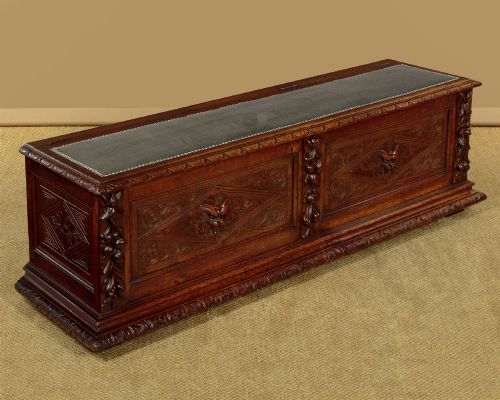
The pieces on this page span the 19th century, featuring styles from plain Victorian utility to Gothic Revival and Jacobean revival carving. Formats range from dome-top chests to flat-lidded travelling trunks equipped with lift-up tops and fitted interiors.
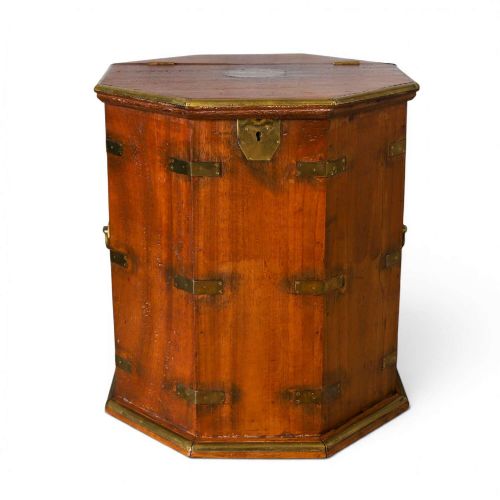
Origins include country houses, regimental baggage, and retailer workshops, reflecting a period when furniture needed to withstand rigorous transit by sea, rail, and horse-drawn carriage. Many surviving examples retain original iron or brass banding designed to protect corners and edges from impact.
What Varies in Quality
Quality depends upon the integrity of the original construction and the survival of specialised internal fittings such as lift-out trays, baize linings, and maker inscriptions. Heavy metal reinforcement adds substantive value, particularly when cast iron or brass bounds remain intact and unaltered.
The distinction between a standard blanket box and a high-tier retailer's silver chest lies in the complexity of the internal compartments and the gauge of the protective metalwork. Carved examples show variation in the depth and sharpness of the chisel work across panels and lids.
Revival styles span Elizabethan, Jacobean, and Gothic interpretations applied to standard storage chests.
Elkington·H D Dean
The Victorian Oak Storage Trunk Glossary
- Coffer
- A heavy wooden chest traditionally used for storing valuables, linens, or documents. These pieces often feature hinged lids and sturdy plank construction.
- Silver Chest
- A specialised heavy-duty trunk lined to protect domestic silverware and plate during transit. They are typically bound in iron or steel with robust carrying handles.
- Campaign Chest
- Portable furniture designed for military officers on active service, featuring recessed brass handles and sectional construction. These units pack down for easy transport on campaign.
- Dome Top
- A curved lid profile intended to shed water during travel. This form appears frequently on early travelling trunks and steamer luggage.
- Green Man
- A sculptural architectural motif depicting a face carved from leaves and foliage. It appears on revival oak panels and country house coffers.
Victorian Oak Storage Trunk: Frequently Asked Questions
What is a victorian oak storage trunk?
A victorian oak storage trunk is a heavy timber box built during the nineteenth century to store garments, silver, or military equipment. These chests utilise dense hardwood boards to survive frequent transit and household use.
They appear in plain utilitarian formats, metal-bound travelling configurations, and heavily carved decorative styles. Most retain original iron or brass hardware designed for security and lifting.
How were silver chests used?
Silver chests were manufactured to transport and house valuable family plate and cutlery securely. Interior compartments were often fitted with baize lining and custom slots to keep individual pieces separated during carriage.
Wealthy households utilised these reinforced trunks both for estate storage and travel between town and country residences. Their iron or steel bands prevented forced entry while on the road.
What is a campaign chest?
A campaign chest is a portable storage piece engineered for military officers on active service overseas. These units feature flush-fitting brass hardware to prevent snagging in transit.
Many examples include lift-up lids, internal drawers, and retailer inscriptions linking them to specific regiments or outfitters. Their rugged construction allowed them to endure harsh colonial environments.
How do you date a wooden trunk?
Dating relies upon examining construction methods, hardware types, and timber preparation. Machine-sawn boards and standardised screws generally point toward the later decades of the nineteenth century.
Hand-forged iron straps, primitive dovetailing, and early brass locks indicate earlier 19th-century or transitional Georgian origins. Stylistic revivals can mimic earlier centuries, so hardware and timber ageing provide crucial context.