

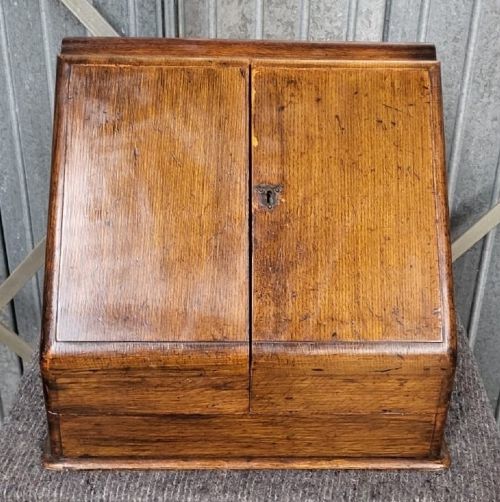
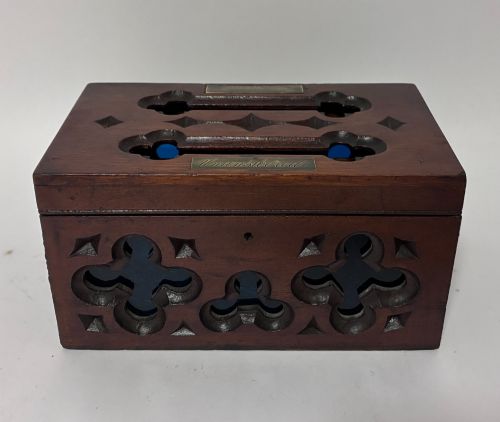
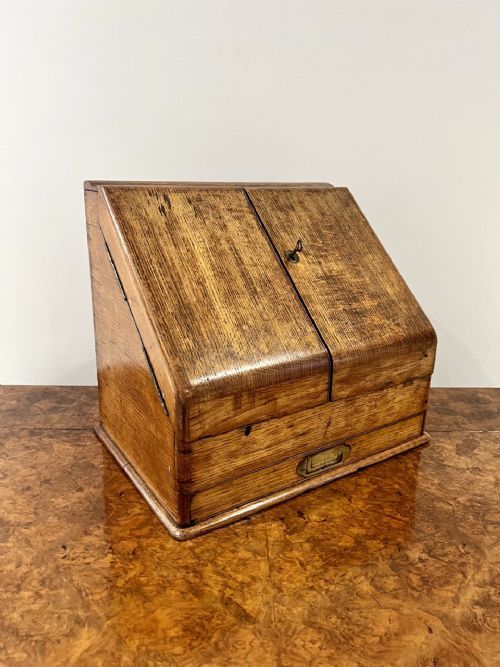


Victorian Oak Stationery Box
A victorian oak stationery box keeps your correspondence orderly, offering solid construction and handsome grain that suits any writing desk.
Victorian Oak Stationery Box
When you search for a victorian oak stationery box, you encounter practical desk furniture designed to hold letters, paper, and ink. These pieces range from simple desktop boxes to elaborate cabinets with drop fronts and internal compartments.
Most examples you meet on this page date from the nineteenth century, including pieces reflecting Gothic Revival and Arts and Crafts styles. They served in studies, offices, and country houses to keep daily correspondence organised.
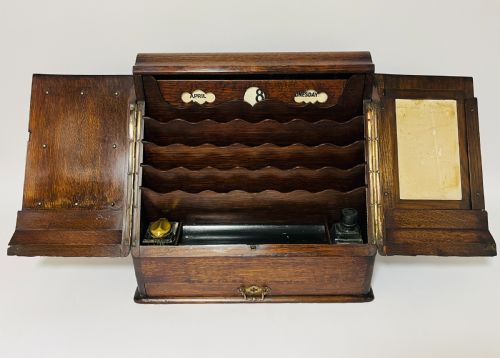
Forms vary from standard stationery cabinets and correspondence boxes to wall organizers and desk tidies. Some include fitted ink bottles, adjustable dates, or secret drawers beneath the letter slots.
How they were made
Cabinet makers utilised solid oak and pollard oak, often pairing the timber with brass mounts, hinges, and escutcheons. Metal straps and brass banding reinforced the corners of heavy-duty country house postboxes.
Interiors frequently incorporate fitted wooden dividers, glass ink bottles, and fabric-lined compartments. Drop fronts and sloping lids required precise joinery to ensure smooth daily operation.
Victorian Oak Stationery Box Retail Price Guide 2026
Typical asking prices for victorian oak stationery box among the pieces listed under this phrase on Sellingantiques today, from the lower quarter to the upper quarter. They describe what is for sale here now, not the wider market.
Listings feature oak, pollard oak, and brass alongside specialised forms like wall organizers, inkstands, and drop-front cabinets.
What varies in quality
The standard of a box depends on the selection of the timber and the complexity of the internal arrangement. Figured pollard oak and heavy brass mounts signal superior workshop production.
Construction details such as dovetailed joints, carved detailing, and integrated mechanisms like secret drawers separate standard utility pieces from fine, architect-designed examples.
The Victorian Oak Stationery Box Glossary
- Pollard oak
- Oak timber harvested from trees that were pollarded, producing a highly figured, mottled grain pattern. This decorative wood was favoured for high-end Victorian cabinet work.
- Correspondence box
- A desktop container specifically built to hold incoming and outgoing letters. These often feature internal tiered slots for different paper sizes.
- Drop-front cabinet
- A box with a hinged front panel that folds down to provide access to writing surfaces or internal pigeonholes. It allows quick viewing of stored stationery.
- Desk tidy
- A combined desktop accessory holding pens, ink, and stationery in a single compact frame. They keep working surfaces clear of loose paper.
- Gothic Revival
- A nineteenth-century architectural and decorative style drawing on medieval forms. Pieces in this style often display pointed arches, heavy ironwork, and carved tracery.
Victorian Oak Stationery Box: Frequently Asked Questions
How were stationery boxes used?
These boxes held notepaper, envelopes, and stamps on nineteenth-century desks before the widespread use of manufactured envelopes and fountain pens.
Larger country house versions managed household post, sorting incoming letters and outgoing correspondence for collection.
Can I use these boxes for modern mail?
Standard letters and modern stationery fit easily into the internal wooden dividers of most nineteenth-century boxes.
Some smaller cabinets accommodate modern envelopes, though very wide documents may require a larger correspondence box or wall organizer.
How do I care for oak desk furniture?
Keep wooden boxes away from direct sunlight and radiators to prevent the oak from drying out and splitting.
Apply a light application of natural wax periodically to maintain the lustre of the timber and protect the finish.