




Victorian Oak Prie Dieu
These Victorian oak prie dieu prayer desks and devotional chairs bring authentic ecclesiastical presence into domestic interiors.
Victorian Oak Prie Dieu
A victorian oak prie dieu is a specialised devotional seat or prayer desk designed for private or institutional worship, appearing primarily in Gothic Revival and ecclesiastical styles. The pieces found here span the nineteenth century, including examples associated with St Paul's Cathedral and rustic Flemish carving.
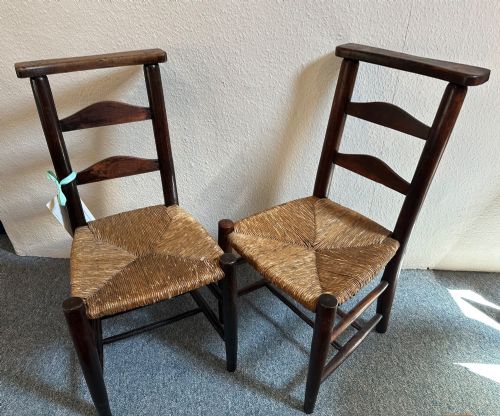
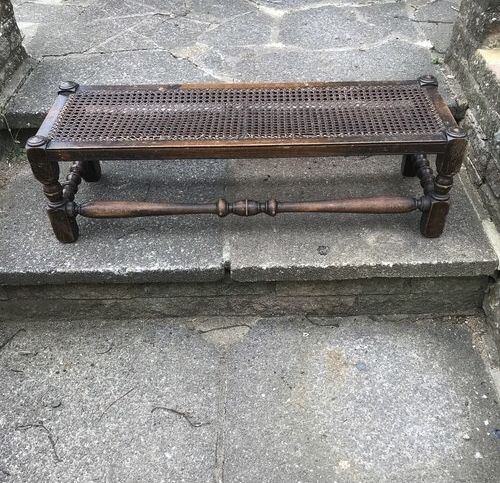
Buyers encounter various forms ranging from double prayer stools with turned legs to tall prayer chairs featuring fretted tops and integrated book rests. Oak is the dominant timber used across these devotional seats, often accompanied by brass, leather, and cane components.
How they were made
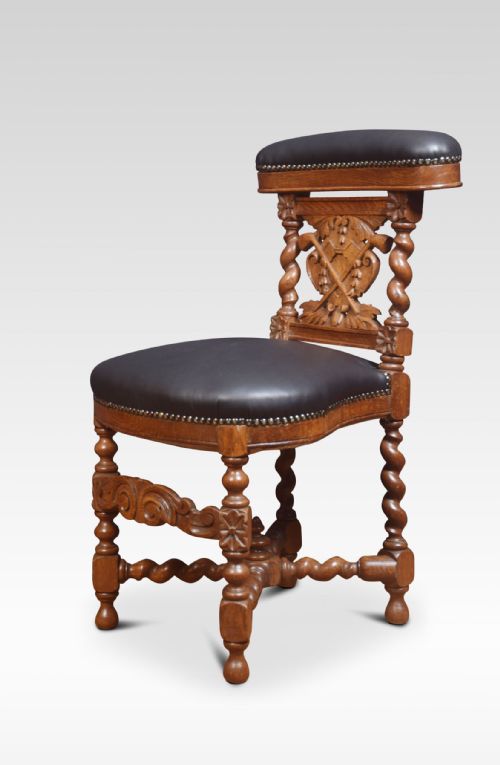
Cabinetmakers constructed these prayer desks and chairs predominantly from solid oak, utilising traditional joinery and detailed carving to achieve the prevailing Gothic Revival aesthetic. Decorative elements include heavy relief carving seen in Flemish and Black Forest examples, alongside turned legs and fretted woodwork.
Secondary materials such as brass fittings, cane panels, rush seating, and upholstered fabric surfaces appear on specific chairs, integrating structural durability with functional comfort for daily devotion.
One notable chair carries a direct ink stamp from St Paul's Cathedral, proving it survived London sermons and Victorian dust.
What varies in quality
The standard of carving and the crispness of the Gothic detailing largely determine the distinction between standard production pieces and finer devotional furniture. Deep, well-defined relief work on oak surfaces and provenance connected to significant ecclesiastical institutions elevate certain examples.
Structural integrity and the retention of original components, such as turned legs, brass mounts, and period fabric or leather, dictate the overall standing of an individual prie dieu.
The Victorian Oak Prie Dieu Glossary
- Prie Dieu
- A kneeling desk or chair used for prayer, typically featuring a lower shelf for the knees and a sloping upper rest for books or elbows.
- Gothic Revival
- An architectural and decorative style popular during the nineteenth century that revived medieval forms, pointed arches, and heavy tracery.
- Ecclesiastical
- Relating to the Christian Church or its clergy, describing furniture specifically manufactured for church interiors or rectories.
- Fretted top
- An upper section of woodwork pierced with decorative patterns, frequently incorporated into the crest rails of Victorian prayer chairs.
- Doublet
- A form of double prayer stool or twin kneeling bench designed to accommodate two individuals side by side during devotion.
Victorian Oak Prie Dieu: Frequently Asked Questions
What is a prie dieu chair?
A prie dieu chair combines a low kneeling platform with an upper ledge or desk designed to support a prayer book during private devotion. They were widely utilised in nineteenth-century rectories and domestic settings.
These pieces often feature tall backs and narrow profiles tailored for kneeling posture. They reflect the prevalent Gothic Revival tastes of the period.
How do I date a Victorian prayer desk?
Dating relies on examining the construction methods, timber selection, and decorative vocabulary such as Gothic Revival tracery or Jacobean Revival turning. Marked institutional pieces also provide reliable chronological markers.
Comparing the specific style of carving against documented nineteenth-century examples helps narrow down the decade of manufacture. Secondary materials like brass and cane further assist in period identification.
Were these chairs used in churches?
Many examples served in rectories, private chapels, and cathedrals, while others were built for domestic prayer rooms during the nineteenth century. Institutional pieces sometimes bear direct markings from their locations of use.
Their robust construction in oak suited the rigorous demands of ecclesiastical environments. Today they transition easily into residential interiors as striking accent seating.
What woods are used in these pieces?
Oak is the primary timber found across these devotional desks and chairs, selected for its strength and traditional association with ecclesiastical furniture. Mahogany and walnut also appear in specific nineteenth-century variations.
Craftsmen paired these durable timbers with complementary materials such as leather, cane, rush, and brass. This combination ensured both structural longevity and functional utility.