
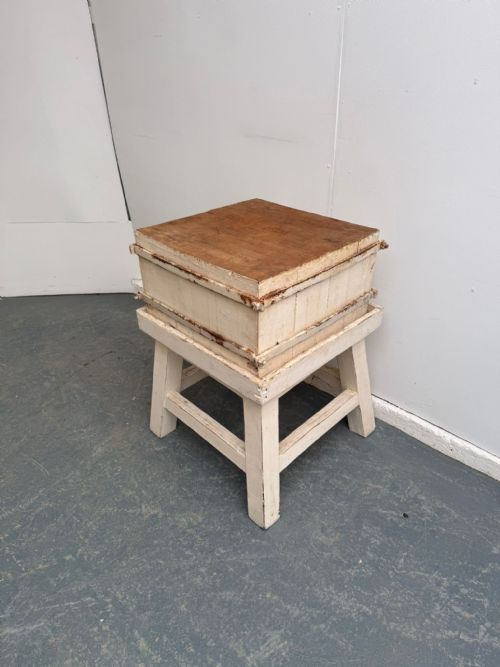


Victorian Oak End Table
These pieces are solid timber items designed for practical use, and a victorian oak end table brings sturdy nineteenth-century utility and rich grain to a corner.
Victorian Oak End Table
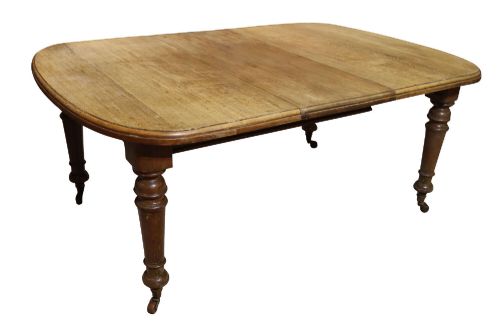
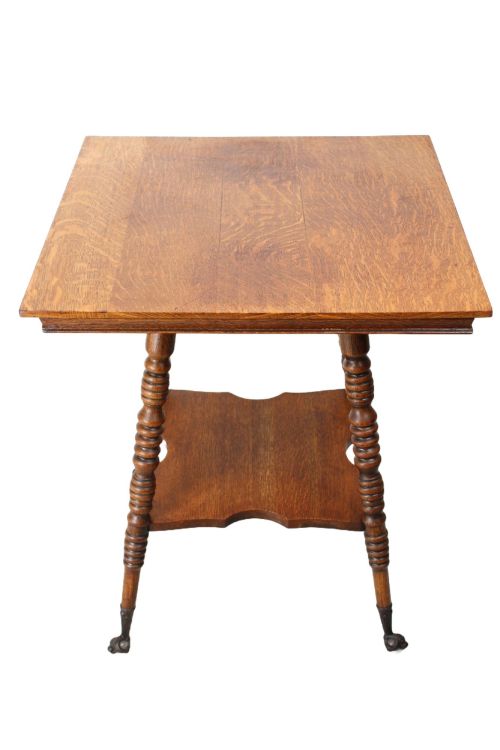
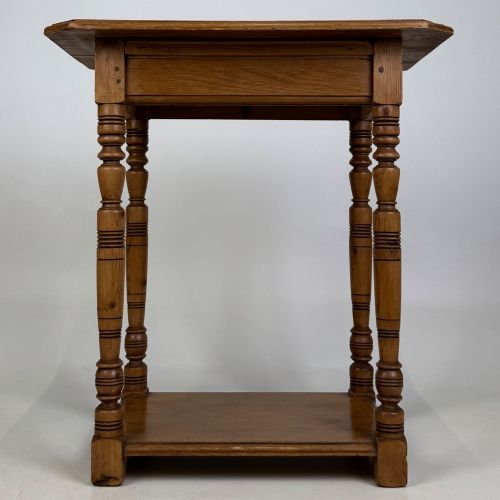
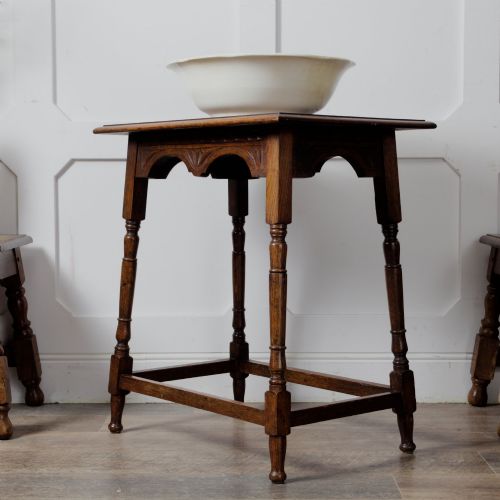
When you search for a victorian oak end table, you encounter practical side pieces, low lamp tables, and small occasional formats designed for nineteenth-century domestic use. These items serve smaller spaces beside seating while providing a firm surface for daily objects.
The pieces appearing here stem primarily from the Victorian era and the later nineteenth century, occasionally stretching towards the early twentieth century. Alongside standard side tables, related forms such as occasional tables and smaller stands share similar proportions and timber construction.
Stylistic influences range from plain country versions to decorative Arts and Crafts, Gothic Reform, and Jacobean Revival variants. Carved details and turned supports frequently distinguish these functional domestic items from simpler utilitarian furniture.
How they were made
Makers utilised solid oak alongside figured varieties like burr and pollard oak to create durable frames with striking grain patterns. Supporting elements occasionally incorporate iron or brass hardware for structural stability and functional adjustments.
Joinery methods rely on traditional framing techniques designed to withstand heavy daily use without losing rigidity. Carved ornamentation appears directly on the timber surfaces of specific styles, reflecting period workshop practices.
Some tables hide clever extending book slides or end drawers designed to keep nineteenth-century reading matter close at hand.
What varies in quality
Quality rests upon the selection of the timber, particularly when figured woods like pollard or burr oak display exceptional natural grain patterning across the top. Plain boards offer straightforward utility, whereas selected cuts provide greater visual depth.
The execution of carved details and turned supports distinguishes standard production from finer workshop outputs. Crisp chisel work and balanced proportions indicate greater care during original construction.
James Winter and Sons·Howard and Sons·Gillows
The Victorian Oak End Table Glossary
- Burr oak
- A growth deformity in the timber that produces dense, swirling grain clusters. Cabinet makers prize this material for decorative veneering and feature panels.
- Pollard oak
- Timber taken from trees that have been pollarded, resulting in closely grained and heavily mottled patterns. This variant appears frequently in nineteenth-century formal furniture.
- Gothic Reform
- A nineteenth-century design movement promoting medieval structural honesty and geometric ornament. Pieces from this tradition display architectural mouldings and chamfered edges.
- Arts and Crafts
- A late nineteenth-century movement emphasising visible construction methods and handcrafted quality. Tables from this tradition often feature exposed joints and minimal surface decoration.
- Stretcher table
- A table featuring horizontal rails connecting the legs to improve lateral stability. These supports often sit low near the floor or take decorative turned forms.
Victorian Oak End Table: Frequently Asked Questions
What defines a victorian oak end table?
These items are nineteenth-century wooden furniture pieces built for domestic utility beside chairs or beds. They provide compact surfaces constructed from solid timber.
Most examples feature four legs, sometimes linked by stretchers, and occasionally include carved decoration or specialised grain patterns reflecting period design movements.
How do I care for solid oak furniture?
Maintain the wood by keeping it away from direct heat sources and sudden humidity shifts that can cause splitting. Regular dusting with a dry cloth protects the finish.
Avoid commercial silicone sprays and instead apply appropriate beeswax occasionally to nourish the timber and preserve the natural sheen of the grain.
Are these tables suitable for modern rooms?
Their modest proportions allow them to fit easily beside contemporary seating arrangements. The neutral tones of the wood blend with various interior palettes.
They serve practical roles holding lamps, books, or drinks while introducing nineteenth-century character into domestic spaces without dominating the room.
How do I distinguish regional styles?
Regional and stylistic variations appear through carved motifs and leg structures. Gothic Reform pieces show architectural chamfers, while Arts and Crafts examples keep surfaces simpler.
Heavier turned legs often point towards Jacobean Revival influences, whereas plain square legs typically indicate standard domestic production from the period.