



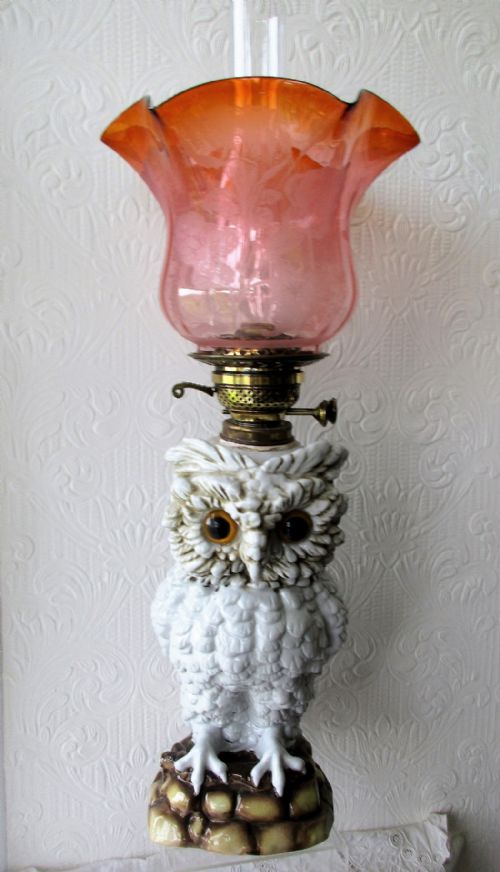


Victorian Novelty Table Lamp
These Victorian novelty table lamp pieces bring whimsical historical character to a desk or mantelpiece through playful animal and object forms.
Victorian Novelty Table Lamp
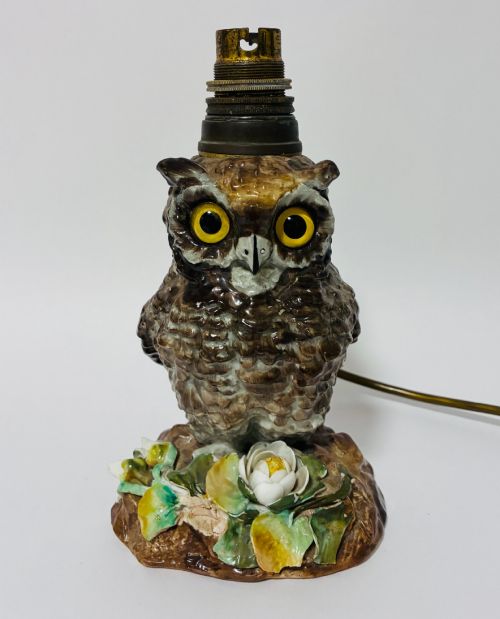
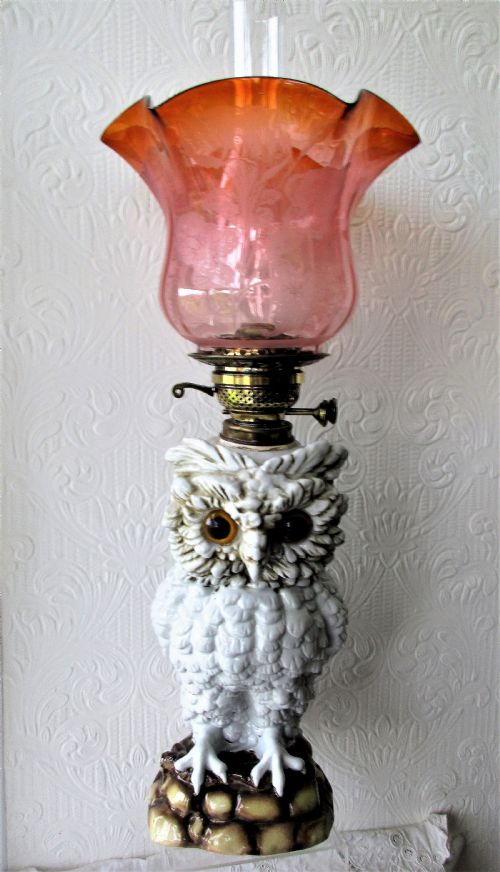
A victorian novelty table lamp is an imaginative lighting or lighting-adjacent piece designed to mimic animals, everyday objects, or historical military items. The selection frequently includes ceramic and porcelain animal figures such as owls and dogs, alongside taxidermy elements like deer hoof lamp bases.
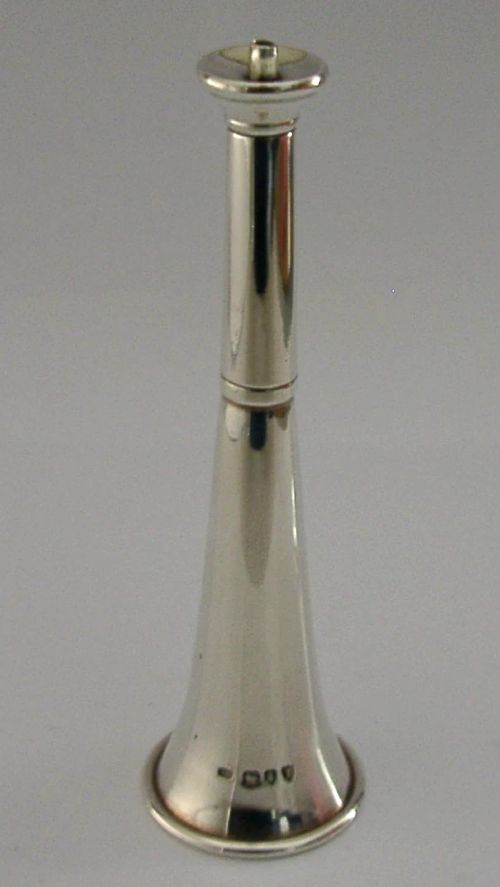
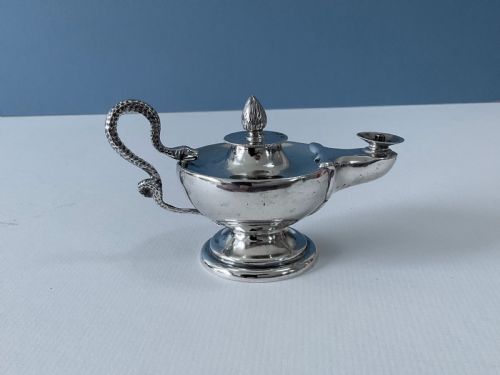
Beyond traditional illumination, these items often overlap with functional desk accessories, incorporating forms like Davy lamps, cavalry dress swords, hunting horns, and Aladdin's lamps. These pieces date from the nineteenth century, spanning periods from the eighteen-sixties through the eighteen-nineties.
How they were made
Taxidermy pieces incorporated natural materials such as actual deer hoof combined with metal mounts to create sturdy table lamp bases. Artisans also integrated mechanical and horological elements into desk compendiums and specialised lighters.
Periods represented span from the eighteen-sixties through the eighteen-nineties within the broader Victorian era.
What varies in quality
Quality rests primarily on the prestige of the maker and the crispness of the modelling in both ceramic figures and cast metalwork. Pieces bearing documented maker marks or attributed to known workshops demonstrate superior finish and more refined artistic execution.
The choice of material also dictates distinction, with solid sterling silver and finely detailed porcelain commanding greater artisanal merit than standard silver plate or basic ceramic castings.
Braham·Sitzendorf·Guilmet·Elkington·John Wilmin Figg
The Victorian Novelty Table Lamp Glossary
- Novelty lamp
- A lighting piece shaped to resemble an animal, person, or distinct object rather than following traditional lamp geometry. These items combined practicality with decorative whimsy during the nineteenth century.
- Table lighter
- A functional desktop reservoir device designed to hold fuel and produce a flame for cigars or pipes. They frequently mirrored the shapes of mythical vessels or hunting horns.
- Desk compendium
- A multi-functional desktop accessory combining several instruments, such as clocks and lamps, into a single integrated housing. Guilmet produced notable examples in the form of industrial Davy lamps.
- Taxidermy mount
- The preserved skin or physical remains of an animal mounted over a sculpted form. In this context, parts like deer hooves served as sturdy foundations for nineteenth-century lighting.
Victorian Novelty Table Lamp: Frequently Asked Questions
What materials were used?
Maker workshops constructed these pieces from brass, glass, porcelain, silver plate, sterling silver, ceramic, deer hoof, and nickel plate. Ceramics and metals dominate the surviving evidence.
Finer examples utilised precious metals and porcelain factories, while taxidermy pieces integrated natural biological materials.
How do I date them?
Dating relies on stylistic markers, hallmarking on silver pieces, and known active periods of specific makers and potteries. The evidence spans the Victorian era from the eighteen-sixties to the eighteen-nineties.
Written records and maker marks help narrow the production window to specific decades within the nineteenth century.
Were they used for lighting?
Many items served dual purposes as oil lamps, candlelamps, or table lighters for cigars. Desk compendiums also incorporated timekeeping alongside illumination.
Their primary function combined practical desk utility with decorative conversation pieces.
Are animal designs common?
Animal forms appear frequently across the evidence, including ceramic owls and spitz dogs. Taxidermy animal parts also form the bases of lighting fixtures.
These biological and zoological motifs reflect Victorian tastes for novelty and natural history.