





Victorian Navette Cluster Ring
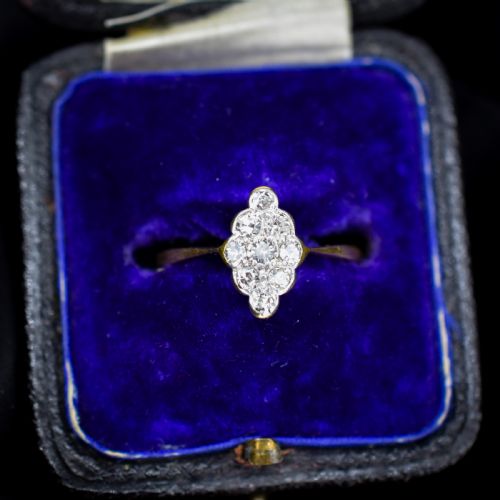
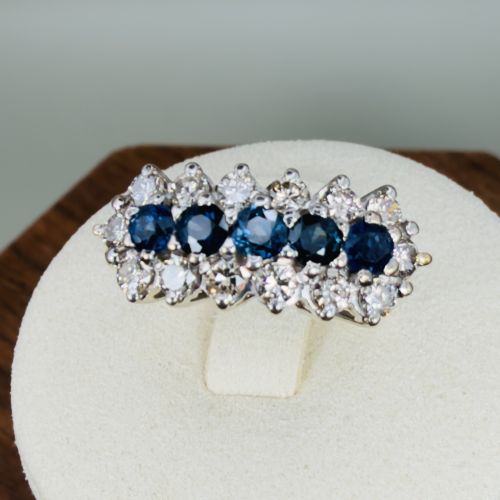
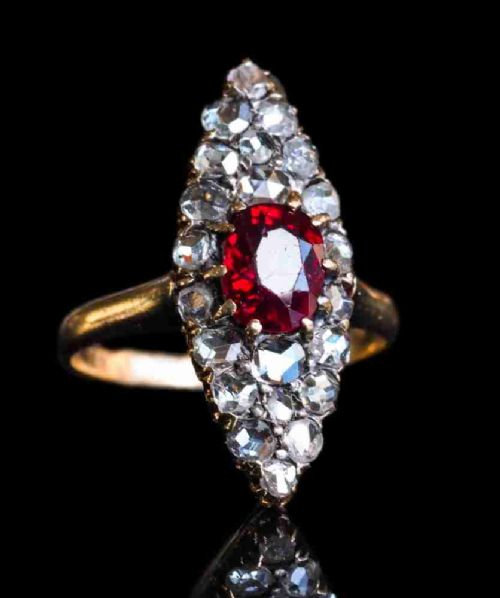
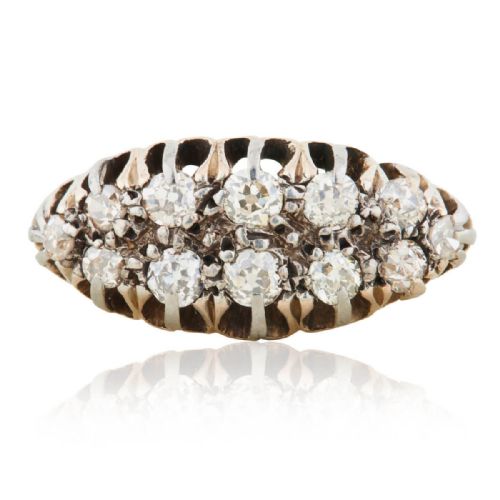
A victorian navette cluster ring gives you an elongated finger presence with old cut diamonds and coloured stones.
Victorian Navette Cluster Ring
When you search for a victorian navette cluster ring, you encounter elongated boat-shaped settings that sit flat along the finger. These pieces span from the late nineteenth century into the Edwardian era, carrying distinctive pointed boat profiles.
The format relies on a central cluster of gems arranged symmetrically within a marquise outline. Most examples combine diamonds with rubies, emeralds, turquoise, or pearls set in yellow gold and platinum.
Materials and construction methods
Goldsmiths worked primarily in 18ct yellow gold and silver-topped gold, mounting old cut diamonds alongside rubies, emeralds, sapphires, and pearls. Platinum appears in later pieces, reflecting shifting metallurgical preferences at the turn of the century.
The multi-stone clusters demand precise claw or bezel work to secure tapering geometric arrays. Metal is worked to form the signature navette silhouette without excess weight.
Victorian Navette Cluster Ring Retail Price Guide 2026
Typical asking prices for victorian navette cluster ring among the pieces listed under this phrase on Sellingantiques today, from the lower quarter to the upper quarter. They describe what is for sale here now, not the wider market.
Some Victorian makers tucked tiny turquoise eyes into pearl clusters to ward off misfortune.
Distinctions in execution and material
Quality rests on the integrity of the central cluster and the crispness of the navette outline. Stones matched for scale and colour elevate the piece, whilst uneven spacing or clumsy metalwork lowers the standard.
The choice of gem material shifts the character, with natural unheated rubies or substantial old cut diamonds marking the upper tier. Settings that retain their original proportions without thinning from wear command greater attention.
The Victorian Navette Cluster Ring Glossary
- Navette
- A boat-shaped or marquise outline tapering to pointed ends at each side. This geometry maximises finger coverage.
- Cluster ring
- A design grouping multiple stones around a central focal point. The arrangement creates a larger visual impact.
- Old cut diamond
- A hand-faceted diamond cut before modern machine standards existed. These stones possess smaller tables and open culets.
- Boat shaped
- A descriptive term matching the curved, tapered profile of a navette cluster. It sits low across the knuckle.
Victorian Navette Cluster Ring: Frequently Asked Questions
How do I wear a navette ring daily?
These pieces sit flat along the finger, making them suitable for regular wear when handled with care. Their pointed ends require attention to avoid catching on knitwear.
Pairing them with plain bands prevents rubbing against the delicate cluster edges.
How do I identify a Victorian piece?
Victorian rings show hand-worked 18ct yellow gold, often paired with silver settings on the stone face. The gemstones typically display old cut facets rather than modern brilliant cuts.
Proportions and mounting techniques align with late nineteenth-century workshop practices.
What stones are used in these clusters?
Diamonds form the primary sparkle, frequently paired with rubies, emeralds, sapphires, or turquoise. Pearls also appear in decorative multi-gem arrangements.
Coloured stones are selected for their depth of tone within the elongated border.