




Victorian Narrative Genre Scene
A victorian narrative genre scene captures domestic life, social history and quiet interior moments through 19th century oil paintings.
Victorian Narrative Genre Scene
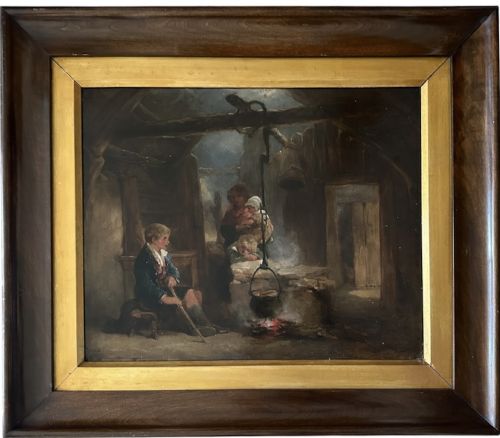
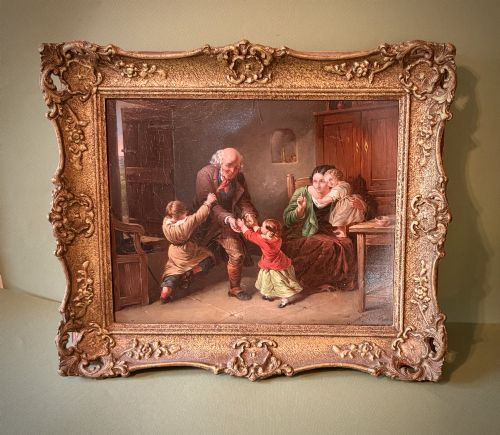
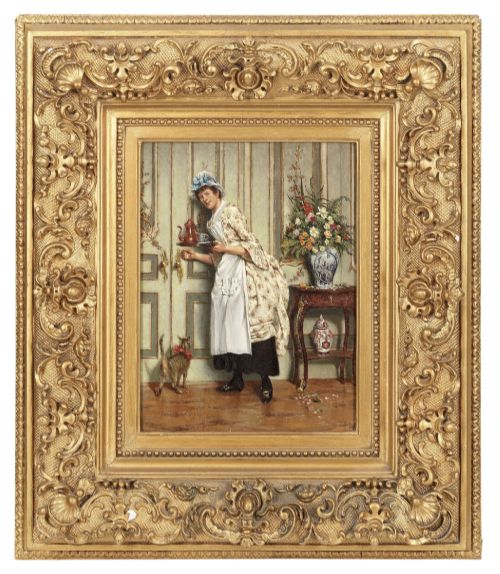
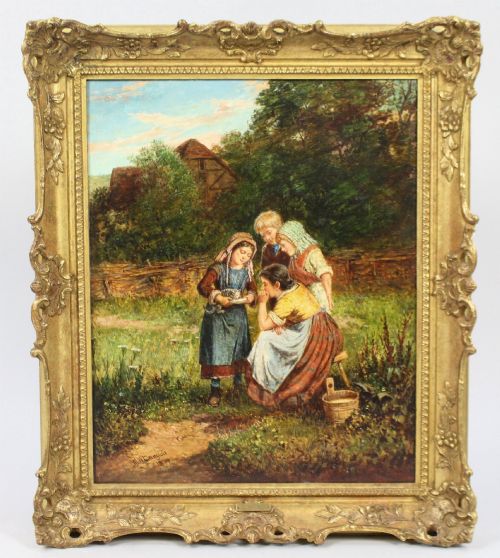
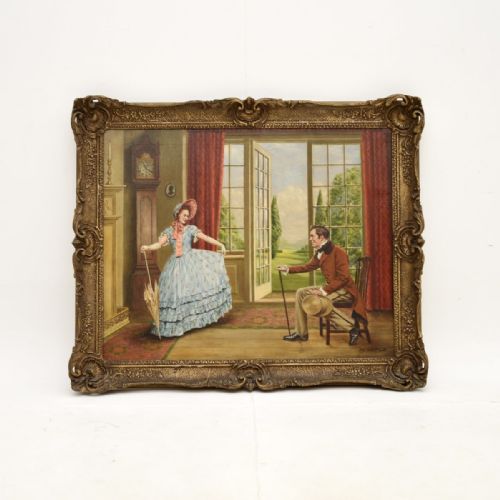
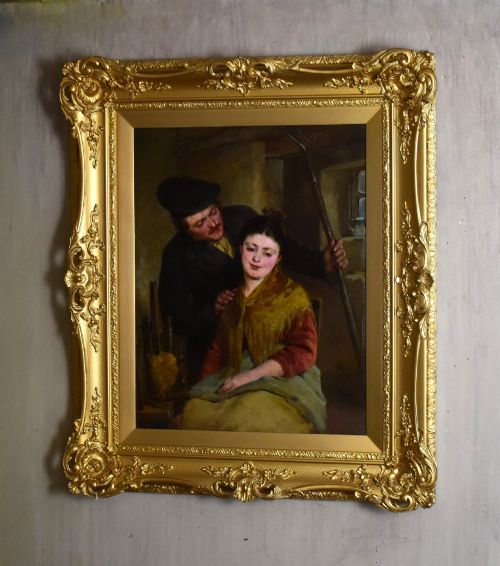
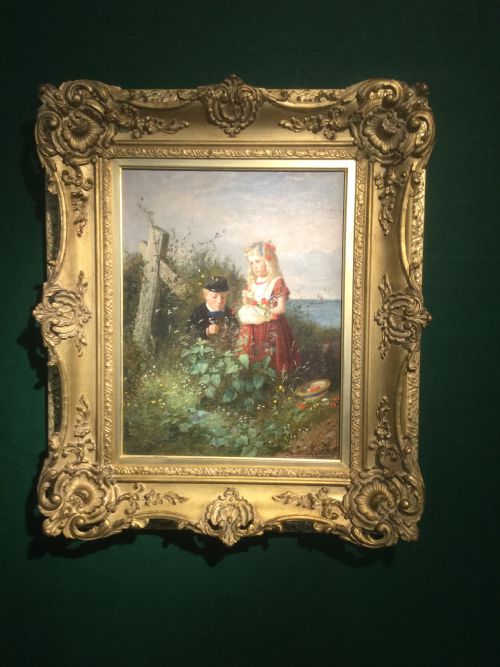
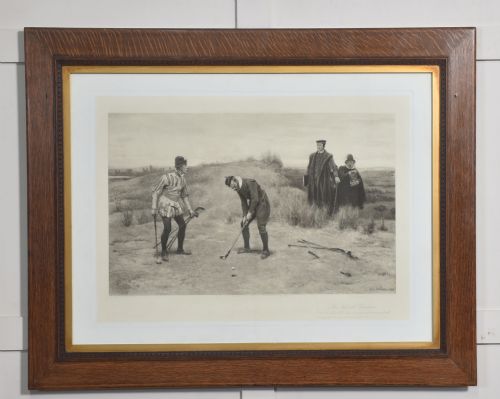
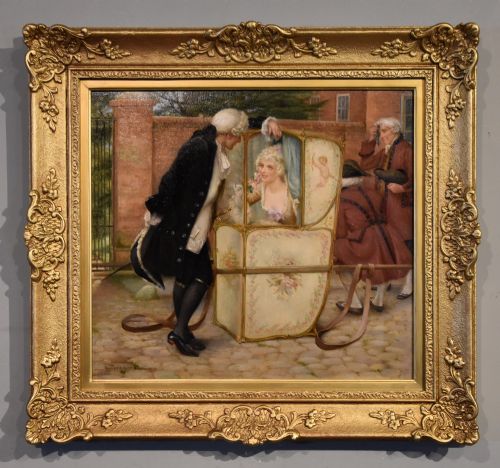
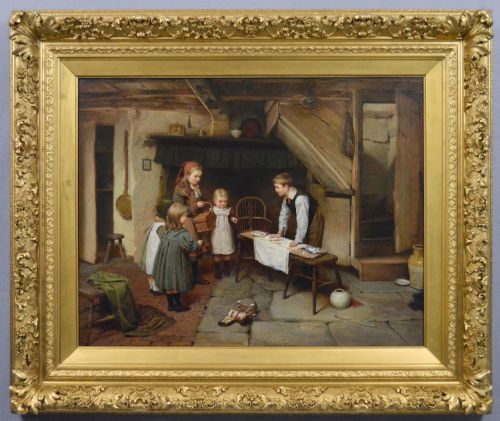
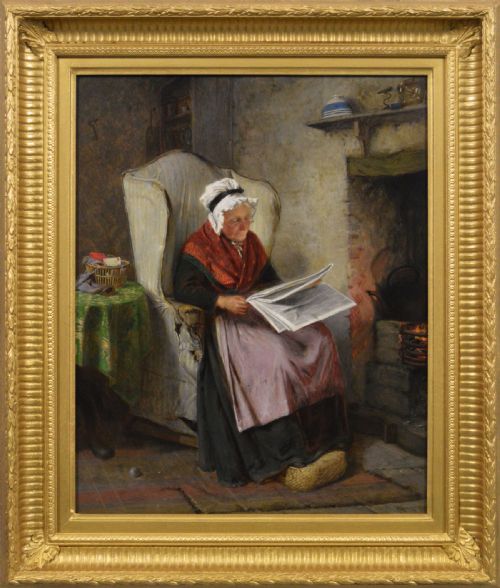
A victorian narrative genre scene presents figurative subjects drawn from everyday life, domestic interiors, cottages and historical moments. Buyers encounter works depicting tea times, children playing, blacksmiths at work and tavern interiors.
The pieces appearing here span the nineteenth century, including specific dates across the 1860s, 1870s, 1880s, 1900s and early 19th century. These works originate from British, French, German and Italian artists who recorded contemporary and historical human stories.
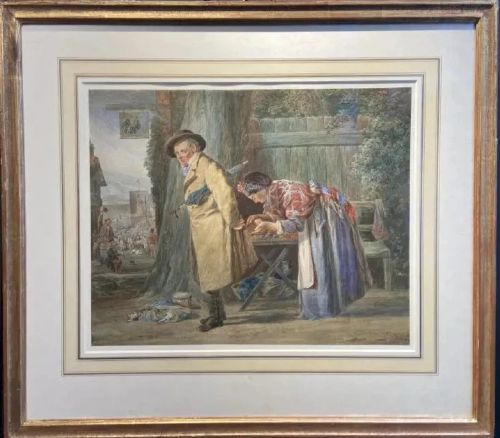
Forms include oil paintings on canvas, oil on panel, watercolours and framed engravings. Subjects range from intimate cottage scenes with mothers and children to monumental social history paintings.
How They Were Made
Artists applied oil paint onto canvas or wooden panel supports, building up narrative compositions with meticulous brushwork. Some works utilise watercolour on paper, while others are presented as framed engravings.
Frames form an integral part of the presentation, utilising gilt wood, giltwood, gold leaf and gesso. Burr maple frames also appear, housing the painted panels and canvases.
Frames include gilt wood, gesso, gold leaf and burr maple alongside standard canvas stretchers.
What Varies in Quality
Quality rests upon the artist's ability to render facial expressions, hands and fabric textures within the narrative composition. Accomplished works convey psychological depth and atmospheric lighting in domestic interiors.
The handling of the original framing, whether gilt wood, gesso or burr maple, contributes to the overall presentation of the artwork. Provenance, such as exhibition history at the Royal Academy, distinguishes notable pieces.
Felix Stone Moscheles·Stephen Samuel Lewin·Mark William Langlois·Alfred Lyndon Grace·Howard Helmick·Joseph H Barnes·Charles Hunt·James Hayllar·Harry Brooker·Alexander Rosell·John Arthur Lomax·Haynes King·James Kyd·Léon Joseph Voirin·Robert Alexander Hillingford·George Smith·Edwin Hughes·Alfred Holst Tourrier·Arthur Longley Vernon·Gilbert Scott Wright·John Henry Dell·Théophile Emmanuel Duverger·John Ritchie·Henry Charles Bryant·Pompeo Massani
The Victorian Narrative Genre Scene Glossary
- Genre painting
- A pictorial representation of scenes from everyday life, ordinary people, and domestic interiors rather than grand historical or mythological subjects.
- Oil on panel
- A painting executed on a wooden support rather than stretched canvas, often seen in smaller nineteenth-century interior scenes.
- Gesso
- A plaster-like mixture applied to wooden frames and mouldings before gilding or painting, providing a smooth surface for decoration.
- Social realism
- An artistic movement depicting the everyday conditions of the working classes and poor, highlighting contemporary social issues.
- Burr maple
- A decorative wood veneer showing twisted grain patterns, frequently utilised for nineteenth-century picture frames.
Victorian Narrative Genre Scene: Frequently Asked Questions
What is a genre scene?
A genre scene depicts everyday life, ordinary people and domestic interiors rather than heroic history. These works capture domestic moments like tea times, cottage visits and children playing.
Artists recorded the details of nineteenth-century life, providing visual records of historical clothing, interiors and social customs.
How do I date these paintings?
Dating relies on artist lifespans, written signatures, exhibition dates and stylistic markers of nineteenth-century realism. Many works carry specific dates or signatures from the artist.
Framing materials and panel construction also offer clues to the period of creation.
Where were these artists from?
The artists represented include British, French, German and Italian painters of the nineteenth century. Many exhibited at major institutions such as the Royal Academy.
Their works reflect both regional domestic traditions and broader European academic training.
How should I display them?
These works suit traditional interior settings, particularly paired with period gilt wood or burr maple frames. Proper wall placement away from direct sunlight preserves the oil paint and panel supports.
Matching the scale of the frame to your room ensures the narrative detail remains the focal point.