



Victorian Music Furniture
Victorian music furniture comprises dedicated pieces designed to hold scores, support instruments and seat performers with grace.
Victorian Music Furniture
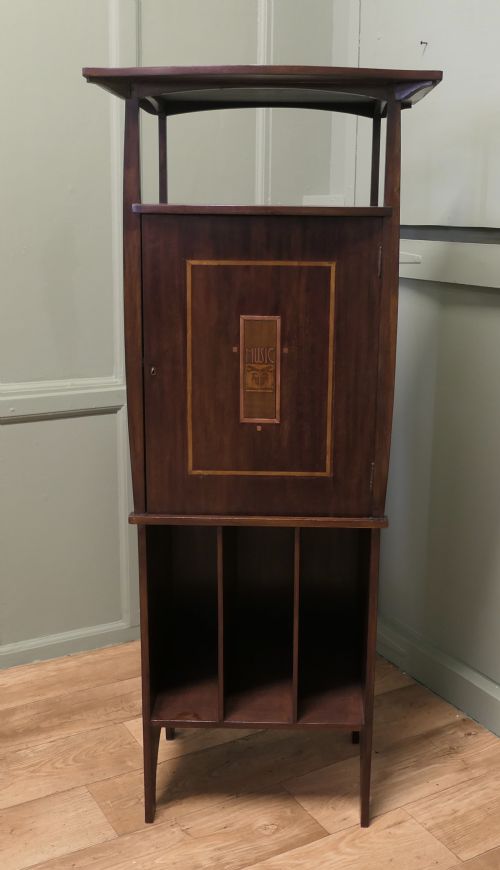
Victorian music furniture centres on pieces made to organise scores and accommodate musicians in nineteenth-century drawing rooms. The selection on this page shows a strong presence of canterburys, music cabinets, and piano stools from the period.
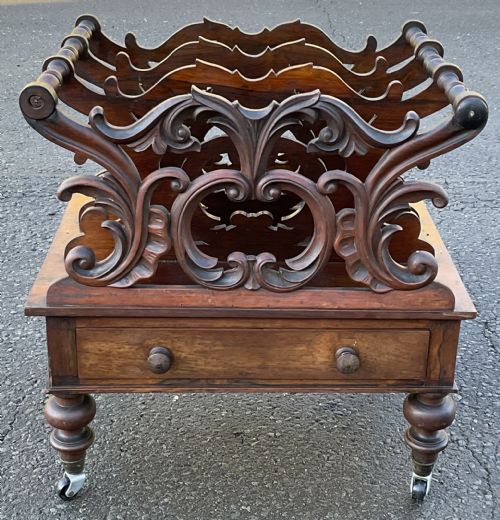
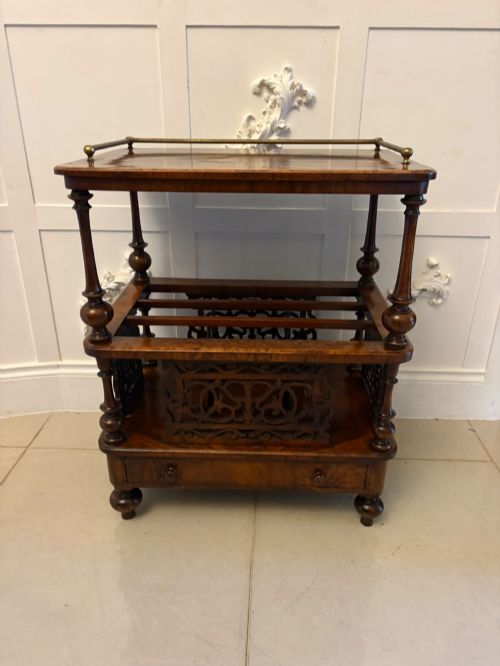
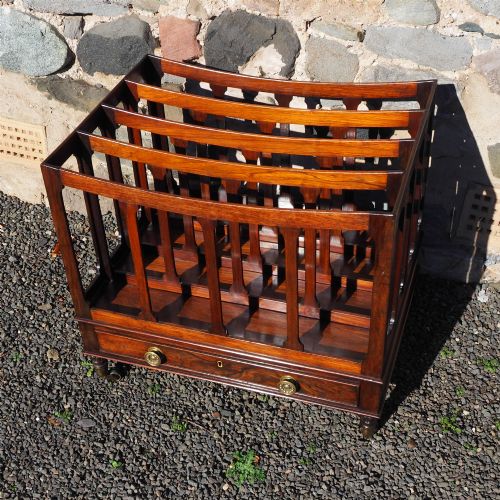
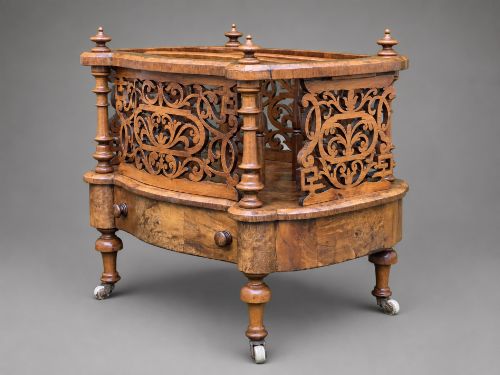
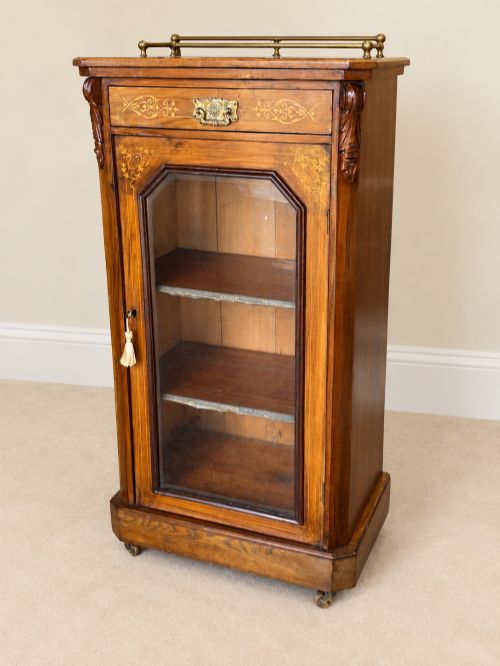
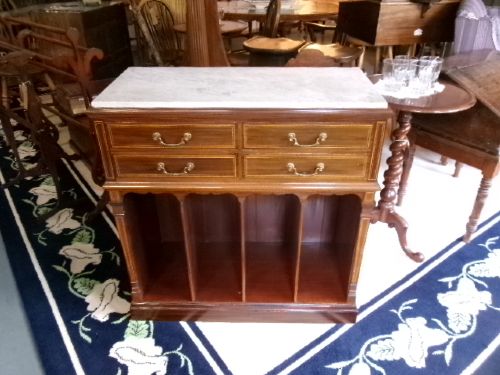
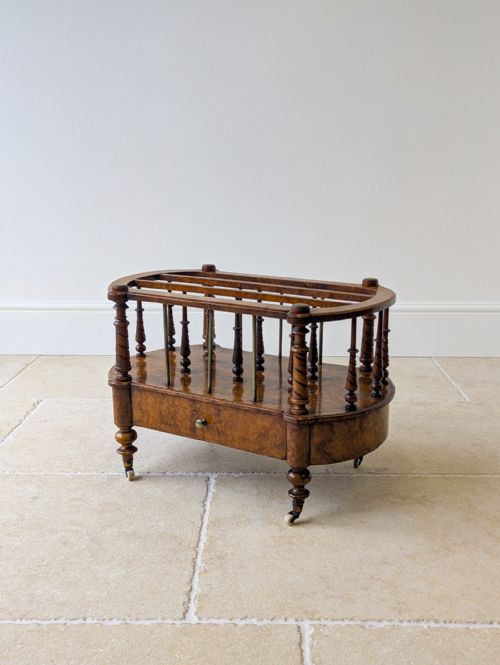
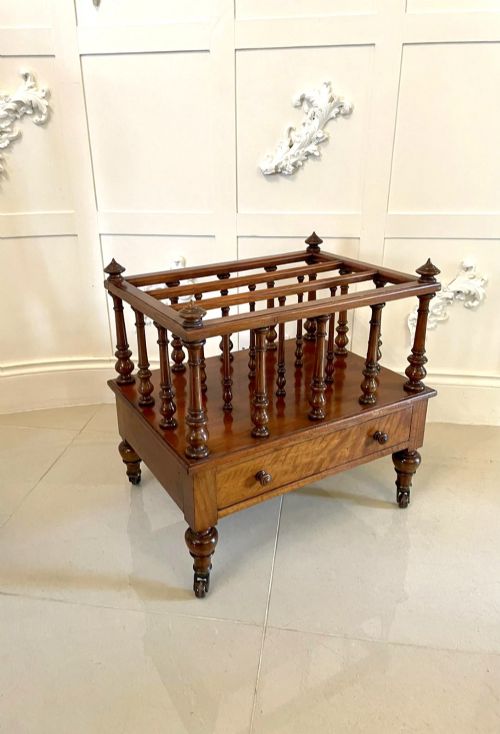
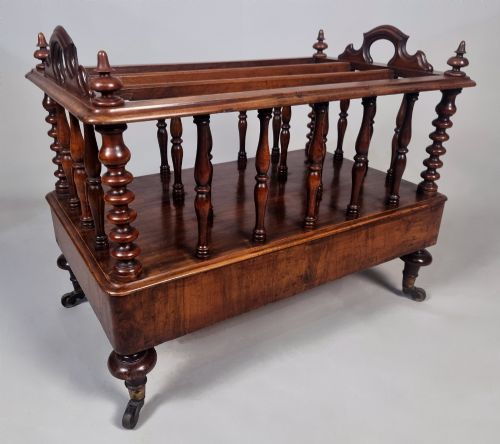
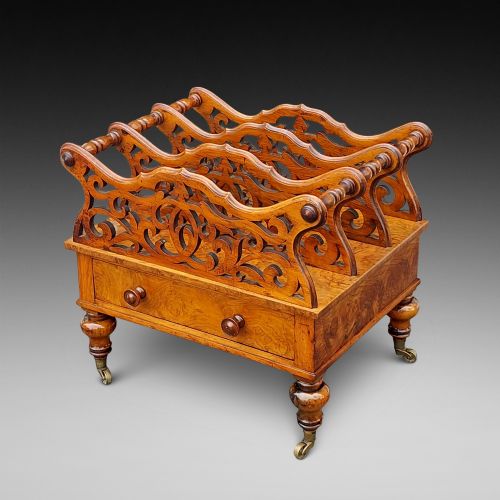
Canterburys serve as the primary form encountered here, often featuring slatted partitions for sheet music above a drawer base. Alongside these, narrow cabinets, étagères and specialised seating appear across the listings.
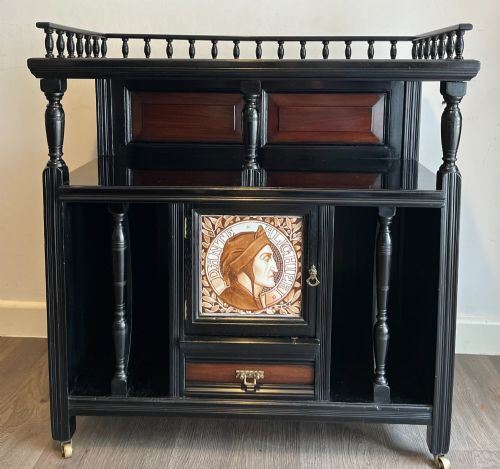
Origins span standard Victorian workshops alongside related Regency and William IV pieces, incorporating Aesthetic Movement and Arts and Crafts examples. Walnut and mahogany dominate the structural forms across these categories.
Materials and Technique
Makers utilised rich timbers such as burr walnut, rosewood, and mahogany to construct these pieces, frequently employing figured veneers to decorative effect. Inlays of satinwood and brass details add textural contrast to the primary wood surfaces.
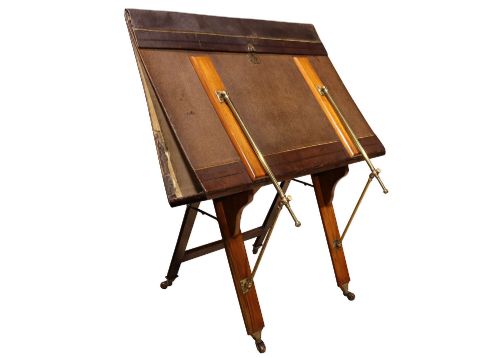
Turned wooden supports, fretwork partitions, and adjustable mechanisms define the construction methods. Ebonised wood and bamboo also emerge in specific late-nineteenth-century examples, showing varied artisanal approaches.
Victorian Music Furniture Retail Price Guide 2026
Typical asking prices for victorian music furniture among the pieces listed under this phrase on Sellingantiques today, from the lower quarter to the upper quarter. They describe what is for sale here now, not the wider market.
Design styles span the Regency, William IV, Victorian, Aesthetic Movement, Arts and Crafts, and Edwardian periods.
Distinctions in Execution
Quality reveals itself in the choice of timber and the precision of the joinery rather than mere ornamentation. Highly figured burr walnut and carefully matched rosewood veneers distinguish superior pieces from plain utilitarian items.
Finer examples integrate subtle marquetry, robust turning, and functioning internal mechanisms like adjustable seats or smooth-running drawers. The integrity of the partitions and the crispness of carved details set the finer workshops apart.
Edwards and Roberts·GM Elwood for JS Henry·Gabriel Viardot·Gillows
The Victorian Music Furniture Glossary
- Canterbury
- A low stand with vertical partitions designed for holding sheet music and periodicals. It frequently includes a small drawer beneath the open rack.
- Étagère
- A set of open shelves for displaying small objects or holding books and music. These pieces often feature delicate turned supports.
- Marquetry
- Decorative patterns formed by inserting thin pieces of wood, ivory, or metal into a veneered surface. It is commonly found on Victorian walnut furniture.
- Serpentine
- A curved line that undulates gently inwards and outwards, often seen on the front edges of tabletops and cabinet bases.
Victorian Music Furniture: Frequently Asked Questions
What is a canterbury used for?
A canterbury functions primarily as a specialised stand for organising sheet music, scores, and periodicals near a piano or music room seating.
The partitioned upper section keeps individual folios upright and sorted, while the lower drawer provides extra storage for smaller accessories.
How do I identify a Victorian music cabinet?
Victorian music cabinets typically present as tall, narrow cupboards with panelled or glazed doors designed to protect bound volumes of sheet music.
Internal shelving is often adjustable to accommodate different folio sizes, sometimes accompanied by internal drop-front compartments.
Where should I place a piano stool?
Piano stools suit placement directly beside vintage or modern keyboard instruments, offering designated seating with adjustable height mechanisms for player comfort.
They also function effectively as compact occasional seats or small side tables in living spaces.
How do I care for burr walnut veneer?
Burr walnut veneer requires protection from direct sunlight and excessive humidity to prevent the wood from drying out or warping over time.
Maintain the surface by dusting with a soft, dry cloth and applying appropriate wax polish sparingly to nourish the grain.