


Victorian Mourning Ring
These pieces of a victorian mourning ring are enduring tokens of remembrance, sought after for their intricate sentiment and tangible connection to the past.
What these pieces are
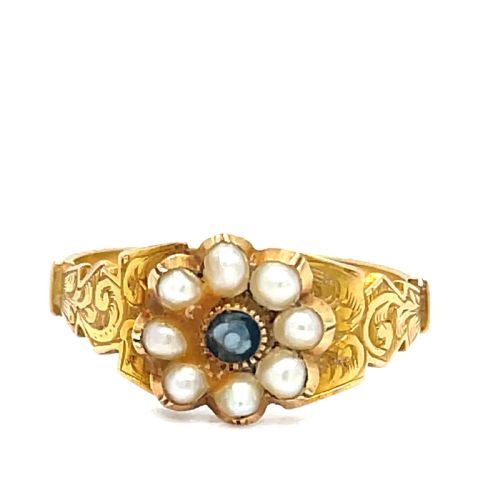
The specimens recorded in the evidence range from early Victorian examples incorporating diamonds, pearls, and enamel to later Victorian gold bands. Pieces from the earlier Regency transition often feature fine enamel work alongside diamond and pearl settings, while later iterations simplify the form into gold bands. Every piece serves as a physical archive of personal history and mourning customs of the era.
How they were made
Goldsmiths utilised eighteen-carat gold, fifteen-carat gold, and nine-carat gold to form the structural bands of these rings. These metals were cast and shaped by hand to securely hold delicate gemstones and decorative elements.
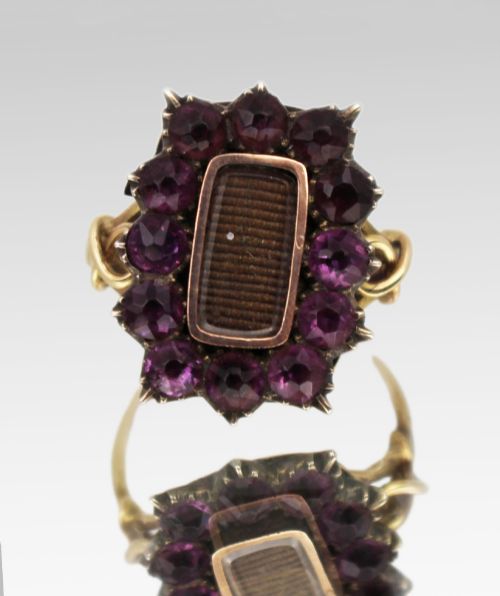
Makers integrated diamonds, pearls, enamel, and glass into the gold settings to create symbolic imagery such as forget-me-not flowers. Intricate compartments frequently housed preserved hair beneath glass panels, requiring precise miniature handiwork.
Someone's actual hair is safely tucked inside these rings, whispering secrets from centuries past.
What varies in quality
The distinction between tiers of work rests on the complexity of the materials combined within a single setting. Pieces that integrate multiple elements like diamonds, pearls, and detailed enamel demand a higher level of goldsmithing skill than plain gold bands.
The refinement of the miniature glass compartments and the preservation condition of the internal hair work dictate the overall integrity of the piece. Superior examples maintain crisp enamel details and secure gemstone settings that reflect the master craftsmanship of the period.
The Victorian Mourning Ring Glossary
- Enamel
- A fused glassy substance applied to metal for decoration and colour. This technique created durable black or coloured backgrounds for commemorative inscriptions and motifs.
- Regency
- An architectural and decorative style period preceding the Victorian era. Pieces from this time display early nineteenth-century design characteristics.
- Victorian
- The historical period spanning the reign of Queen Victoria. Jewellery from this era encompasses distinct phases of mourning customs and sentimentality.
- Carat
- A unit of mass measuring the purity of gold alloyed in the ring. Higher carats indicate a greater proportion of pure gold in the metal.
Frequently Asked Questions
What materials make up a victorian mourning ring?
These rings incorporate eighteen-carat gold, fifteen-carat gold, and nine-carat gold as their primary structural metals. Artisans also integrated diamonds, pearls, enamel, glass, and human hair.
The inclusion of specific stones like diamonds and pearls elevated the visual richness of the memorial. Enamel and glass were utilised specifically to protect and display the commemorative elements or hair work.
How do you date a victorian mourning ring?
Dating relies on stylistic shifts across the Regency and Victorian periods, alongside the specific combination of materials used. Early examples often feature intricate enamel and gemstone arrangements.
Later iterations tend to shift in gold purity and decorative restraint. Examining the construction of the setting and the nature of the internal hair work provides further chronological context.
Were these rings worn daily?
Wearers generally utilised these pieces as personal talismans for daily remembrance of lost loved ones. The robust nature of gold bands and securely set pearls or diamonds permitted regular wear.
However, the delicate glass panels protecting hair work required some care during everyday activities. Many owners preserved them carefully to protect the fragile internal components.
What symbols appear on these rings?
Motifs such as forget-me-not flowers frequently appear in enamel to signify everlasting remembrance. Diamonds and pearls were also chosen for their symbolic purity and enduring brilliance.
The incorporation of hair itself served as the most direct physical symbol of the departed. Every decorative choice communicated a specific sentiment regarding grief and memory.