


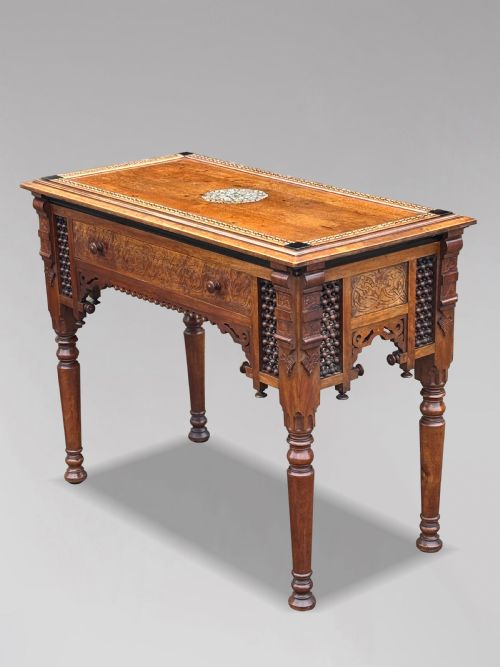


Victorian Moorish Furniture
Victorian moorish furniture brings exotic geometry and intricate inlaid surfaces into western interiors.
Victorian Moorish Furniture
Victorian moorish furniture encompasses a distinct range of domestic objects designed with eastern and Islamic decorative idioms during the nineteenth and early twentieth centuries. Pieces span from the 1880s through to the 1930s, reflecting a sustained British appetite for exotic interior design during the Victorian and Edwardian eras. Buyers searching for this phrase encounter an array of occasional tables, armchairs, benches, and overmantel mirrors.
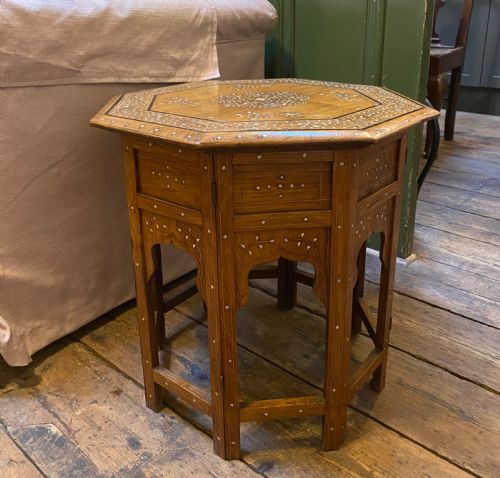
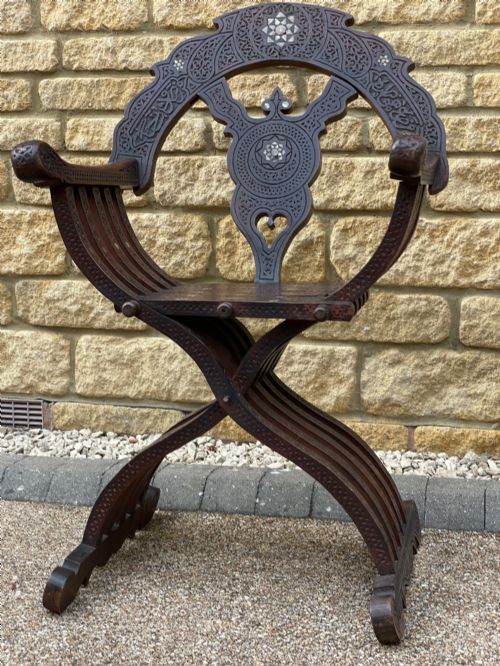
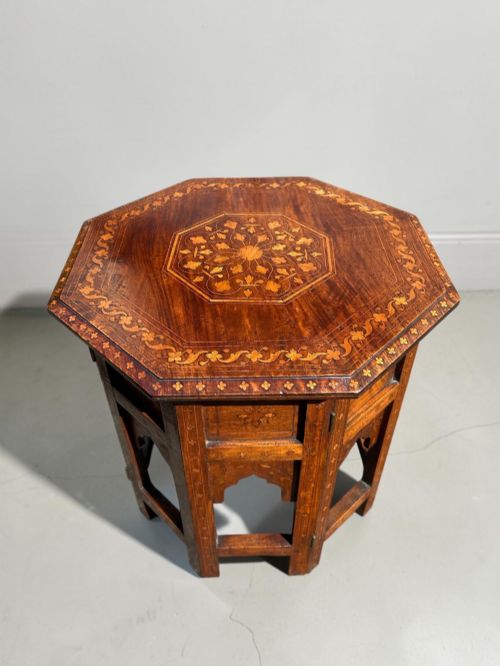
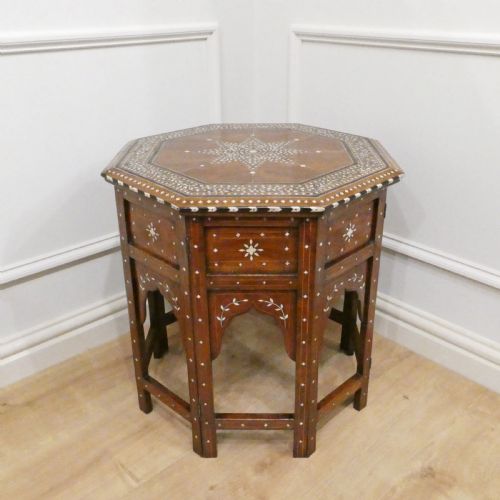
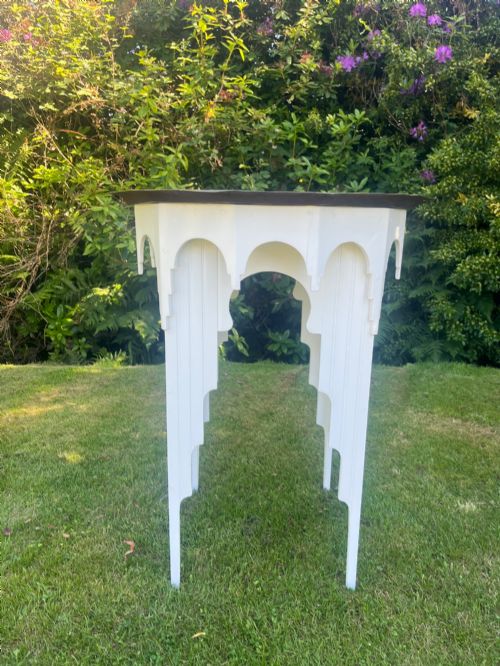
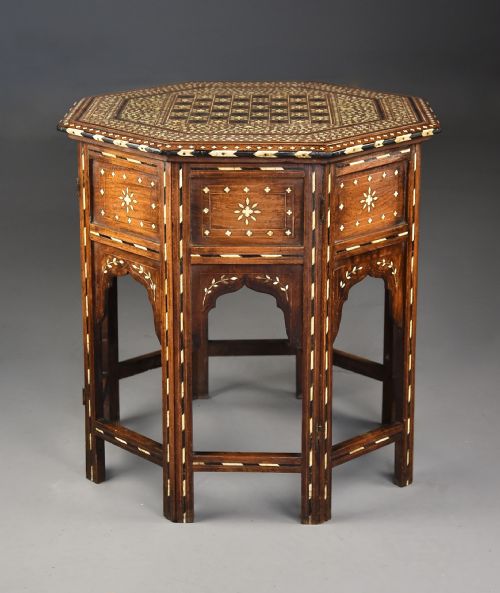
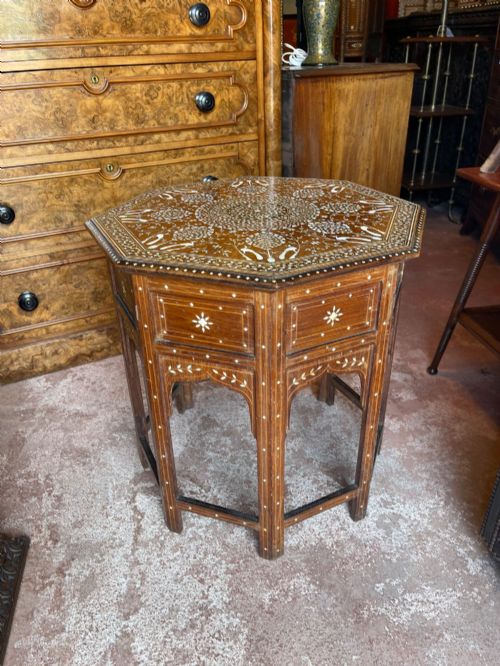
Octagonal occasional tables dominate the selection, often featuring complex folding or fixed bases alongside heavily decorated tops. Seating ranges from single armchairs and side chairs to conversation seats, window seats, and sets of stools. More architectural forms such as corner cabinets, bureaux, and overmantel mirrors also appear, demonstrating the broader reach of the style across domestic living spaces.
Origins and stylistic influences cross geographical boundaries, encompassing Syrian, Cairene, North African, and Anglo-Indian traditions. Makers such as Liberty & Co. interpreted these foreign aesthetics through contemporary British production methods, creating hybrid designs like Anglo-Moresque and Aesthetic Movement pieces. This synthesis of eastern motifs with familiar western furniture forms defines the core of what is available.
Materials and Construction
Makers utilised a variety of timbers including walnut, rosewood, oak, mahogany, ebonised wood, and general hardwood as foundational structures. These woods provided a stable canvas for the dense surface ornamentation characteristic of the movement. Ebonised wood and dark hardwoods were frequently chosen to contrast sharply with pale decorative inlays.
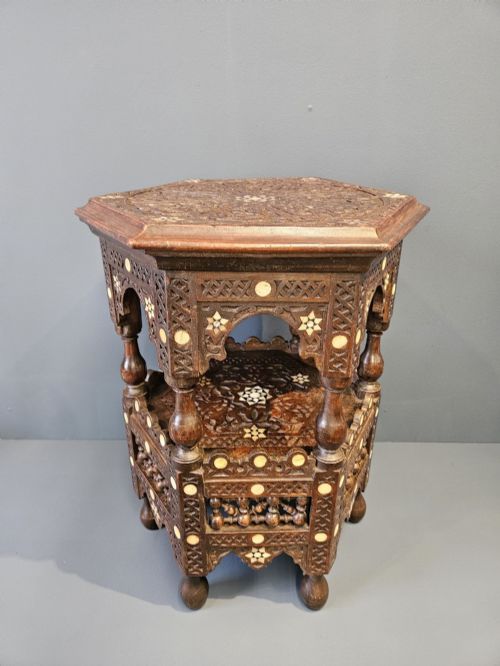
Surface decoration relies heavily on detailed carving and intricate inlay work using bone and mother-of-pearl. Geometric patterns, cusped arches, and lattice work are assembled piece by piece into the timber frames. Certain tables incorporate contrasting metal elements, such as copper tops, adding further texture to the finished object.
Victorian Moorish Furniture Retail Price Guide 2026
Typical asking prices for victorian moorish furniture among the pieces listed under this phrase on Sellingantiques today, from the lower quarter to the upper quarter. They describe what is for sale here now, not the wider market.
Several octagonal tables fold down neatly, proving that Victorian practicality could happily embrace elaborate eastern geometry.
Distinctions in Quality
The density and precision of the bone and mother-of-pearl inlay separate standard items from superior examples. Finely executed pieces display tightly fitted geometric tessellation with minimal filler, whereas lesser items rely more heavily on surface carving alone. The crispness of the carved lattice and the stability of multi-part octagonal bases indicate the original maker's skill.
Attribution to established firms such as Liberty & Co. elevates certain pieces above anonymous workshop production. The integration of design styles, such as the synthesis seen in Aesthetic Movement or Anglo-Moresque pieces, reflects thoughtful planning rather than basic decorative application. Structural integrity in complex folding tables and multi-seat conversation furniture further distinguishes finer survivals.
Liberty & Co.·Liberty of London
The Victorian Moorish Furniture Glossary
- Anglo-Indian
- A style describing furniture made in India for British residents or export to Britain, often combining local carving traditions with European forms. Hoshiarpur tables are prime examples of this cross-cultural production.
- Octagonal
- A geometric shape with eight sides, frequently utilised for the tops and bases of occasional tables in this style. This form allowed for complex multi-panel inlay work.
- Overmantel Mirror
- A large mirror designed to be hung specifically above a fireplace mantelpiece. In this aesthetic, frames often feature Islamic arches and intricate woodwork.
- Ebonised Wood
- Timber treated with a dark stain or finish to imitate expensive ebony. It provided a dramatic dark backdrop for shimmering bone and mother-of-pearl inlay.
- Moorish Revival
- An architectural and decorative style that revived Islamic design elements from Spain, North Africa, and the Middle East during the nineteenth century.
Victorian Moorish Furniture: Frequently Asked Questions
What is Victorian moorish furniture?
It is decorative domestic furniture produced in Britain and abroad during the late nineteenth and early twentieth centuries, inspired by Islamic and eastern design.
Items range from small occasional tables to seating and mirrors, characterised by geometric inlay and intricate woodcarving.
Who made these pieces?
Production involved overseas workshops in regions such as India, Syria, and North Africa, as well as British firms like Liberty & Co. who retailed and designed hybrid styles.
Many pieces were imported directly or created locally to satisfy the Victorian fascination with exotic interiors.
How do I style these items at home?
These pieces serve well as focal points in contemporary or traditional rooms, adding texture through contrasting dark woods and pale inlay. An octagonal table or carved stool can easily anchor a corner or sit beside a neutral sofa.
Avoid overcrowding the space around them so the intricate geometric patterns remain visible.
How do I identify periods and styles?
Look to the combination of materials, such as bone and mother-of-pearl on ebonised wood or mahogany, alongside labels or stylistic hints of the Aesthetic Movement and Arts and Crafts eras.
Dates typically cluster around the late nineteenth century, spanning from the 1880s through to the Edwardian period.