

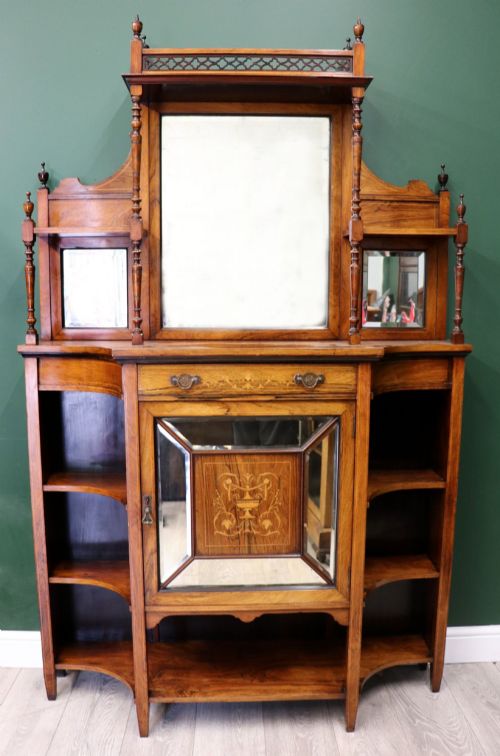
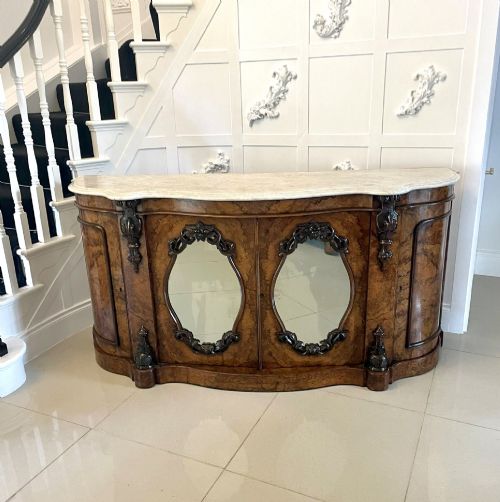
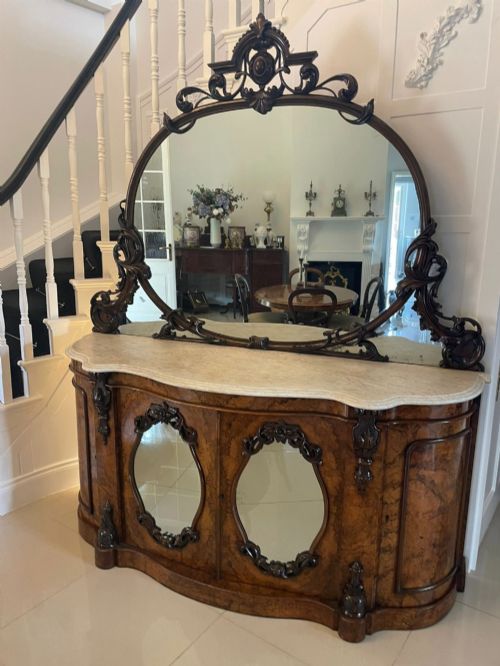
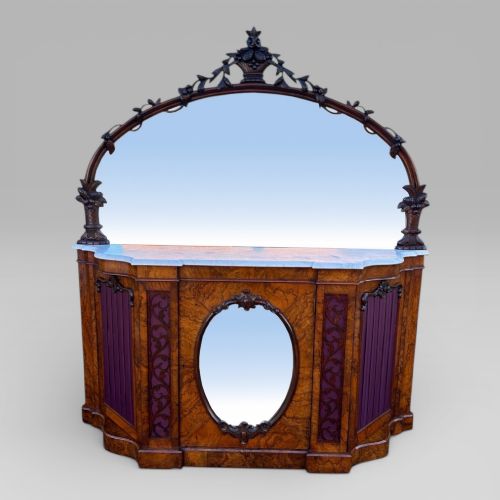


Victorian Mirror Top Credenza
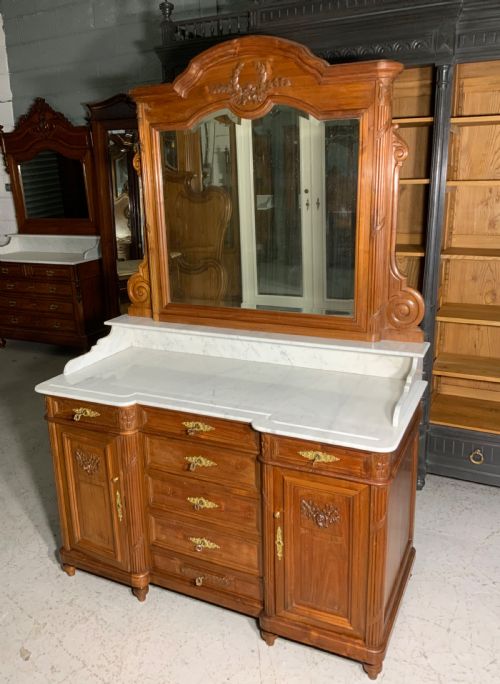
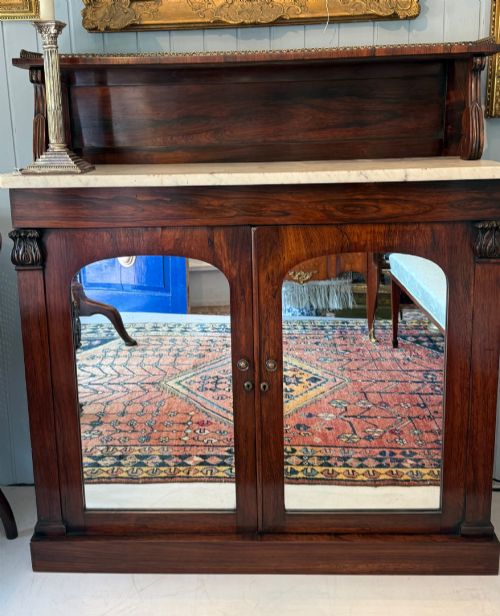
A victorian mirror top credenza brings depth and light to a room through its polished timber and grand glass back.
Victorian Mirror Top Credenza
A victorian mirror top credenza is a substantial storage piece designed to anchor a formal interior, combining low cabinetry with an upright glass back. These pieces emerge predominantly from the nineteenth century, carrying the heavy presence typical of the period.
Buyers encounter variations ranging from straightforward arched mirror backs to elaborate carved frames featuring marquetry inlay and ormolu mounts. The core shape remains low and wide, designed to sit against a primary reception room wall.
Materials and construction
Cabinet makers utilised dense native and exotic timbers, laying highly figured burr walnut and flame mahogany veneers over stable secondary woods. These surfaces received meticulous hand-finishing to draw out the natural grain patterns.
Marble slabs, particularly white and grey varieties, were fitted directly to the upper surface of the credenza to provide a durable and cool staging area. Heavy silvered glass was set into carved wooden frames to form the distinctive mirror backs.
Decorative detailing relied on applied brass ormolu mounts, porcelain plaques, and precise marquetry inlay executed in contrasting light and dark veneers. Carved wooden scrolls and serpentine mouldings shaped the structural outlines.
Victorian Mirror Top Credenza Retail Price Guide 2026
Typical asking prices for victorian mirror top credenza among the pieces listed under this phrase on Sellingantiques today, from the lower quarter to the upper quarter. They describe what is for sale here now, not the wider market.
One tiny table top cabinet hides its grandeur in miniature, proving that victorian craftsmen loved a grand gesture on any scale.
Assessing quality and execution
Superior examples display exceptional figure in the burr walnut or mahogany veneers, matched symmetrically across the doors and panels. Lower quality pieces rely on plain timber stocks with minimal grain movement.
The sophistication of the carving and the integration of marquetry or ormolu dictate the standing of the piece within the period. Finely worked serpentine fronts and heavy, unblemished marble tops separate high workshop output from standard commercial production.
The Victorian Mirror Top Credenza Glossary
- Credenza
- A low cabinet or sideboard designed for formal reception rooms, often featuring central doors flanked by curved glass or open shelving. The form gained immense popularity during the Victorian era.
- Burr Walnut
- Timber taken from the growth excrescences of a walnut tree, yielding intricate, swirling grain patterns. Cabinet makers prized this wood for high-status veneering.
- Marquetry
- The art of applying decorative pieces of veneer to a structure to form geometric or floral pictures. Skilled artisans cut contrasting woods together to achieve a seamless fit.
- Ormolu
- Gilded bronze or brass used for ornamental mounts on furniture. This decorative technique added metallic lustre to cabinet fronts and mirror frames.
- Serpentine
- A furniture front or edge that curves outward in the centre and inward at the sides. This contour requires precise woodworking skill to execute properly.
Victorian Mirror Top Credenza: Frequently Asked Questions
Where should a credenza go?
These pieces suit large reception rooms or dining spaces where a low profile and reflective glass can open up the floor plan. Placing them against a primary wall allows the mirror back to bounce light across the interior.
Ensure the floor is level so the heavy marble top and timber carcase remain stable. Avoid areas exposed to direct sunlight to protect the polished wood veneers from fading.
How do I care for the marble top?
Wipe the marble surface regularly with a soft, damp cloth and neutral soap to prevent staining from acidic liquids. Avoid harsh chemical cleaners that can etch or dull the polished stone.
Use coasters and felt pads under objects placed on the marble to prevent scratching. Periodic gentle waxing helps maintain the lustre of the surrounding timber frame.
What is a mirror back used for?
The integrated mirror reflects light and the contents of the room, creating an illusion of greater space in Victorian interiors. It also serves to showcase decorative items placed on the credenza top.
Clean the glass gently with a mild glass cleaner applied to a cloth rather than sprayed directly, protecting the surrounding wood and antique silvering from moisture damage.
How are different periods identified?
Cabinet construction methods, timber choices, and decorative motifs help determine the approximate date of a piece. Mid nineteenth century examples often feature rich burr walnut and rococo revival carving.
Later Victorian items may incorporate simpler architectural lines or heavier oak structures. Examining the secondary woods inside the cabinet provides further clues to its age.