



Victorian Military Drawers
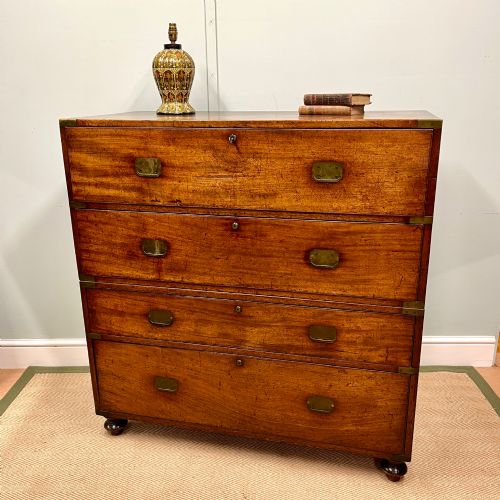
Victorian military drawers are modular chests engineered for transport, combining robust campaign utility with refined cabinetmaking.
Victorian Military Drawers
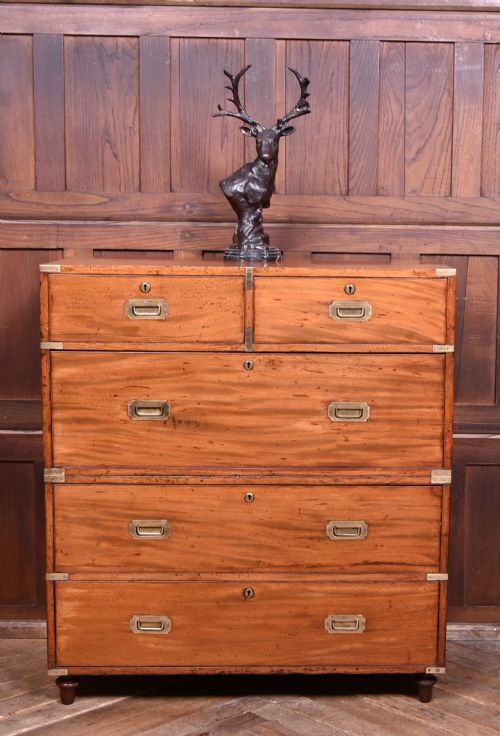
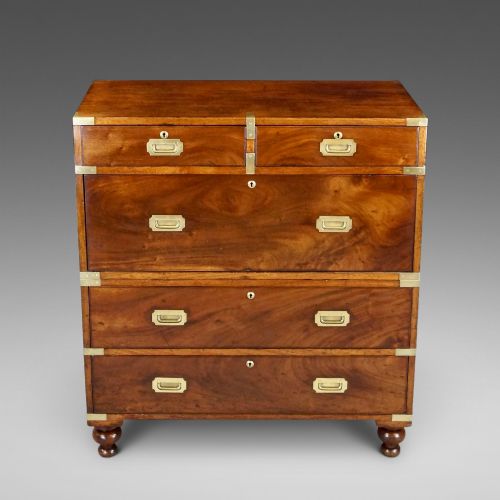
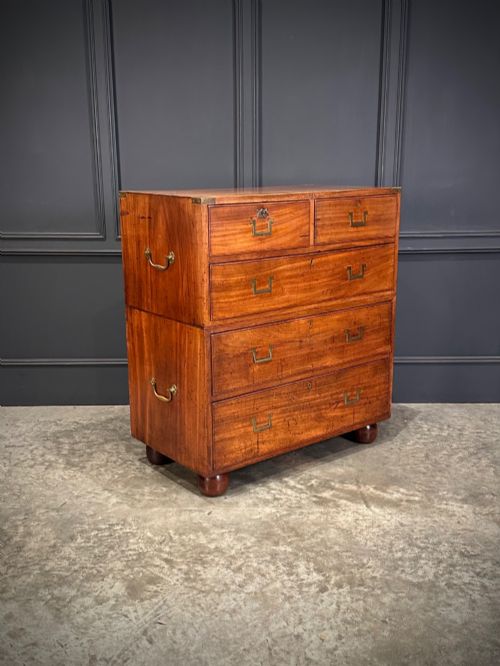
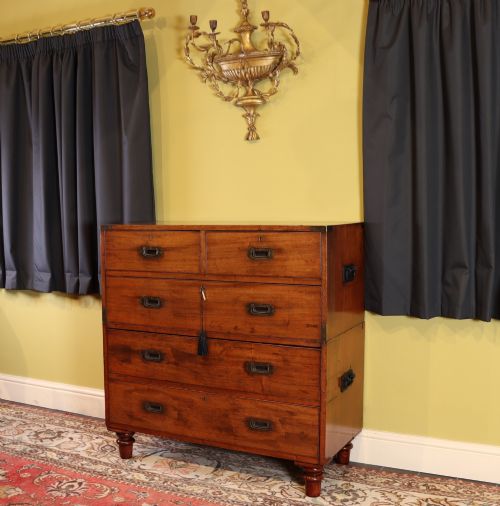
When searching for victorian military drawers, buyers encounter sturdy, dismantlable storage units designed for officers on the move during the nineteenth century. These pieces divide into separate stacking sections, allowing easy loading onto baggage trains or ships.
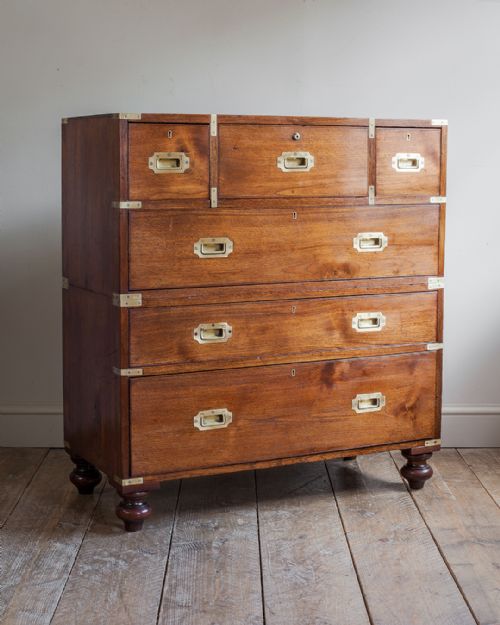
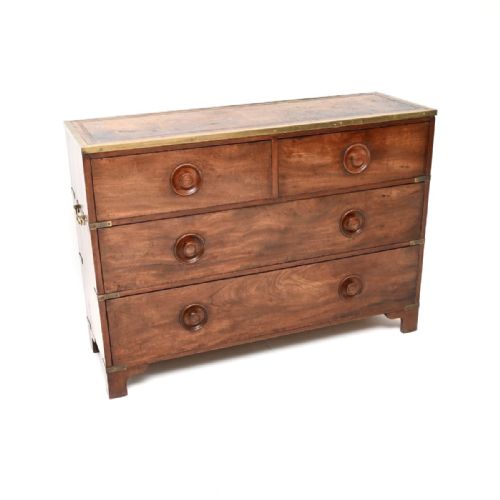
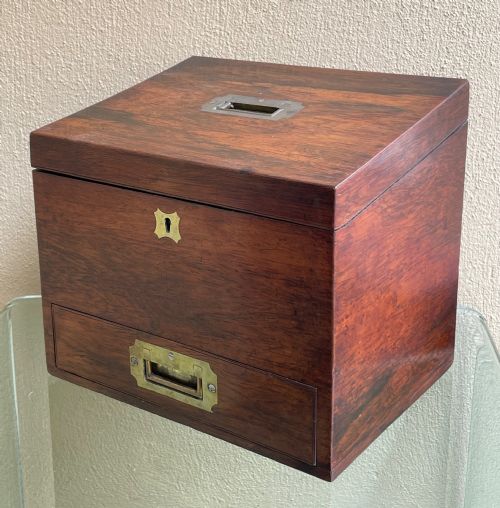
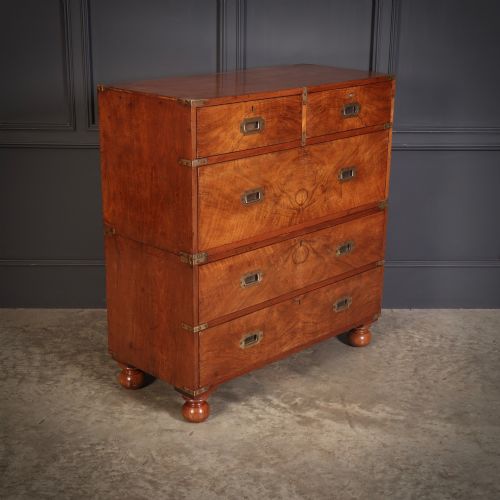
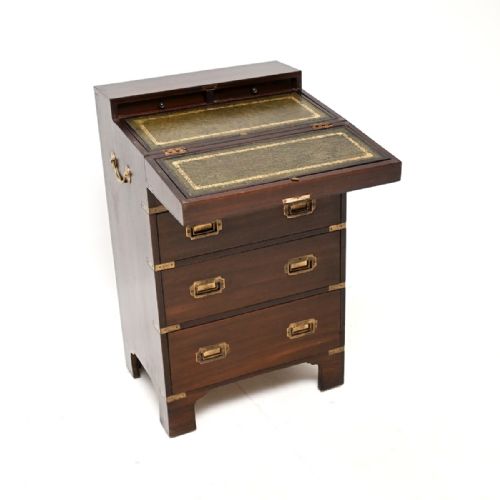
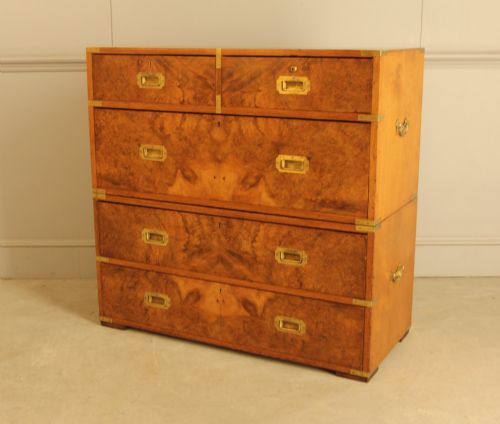
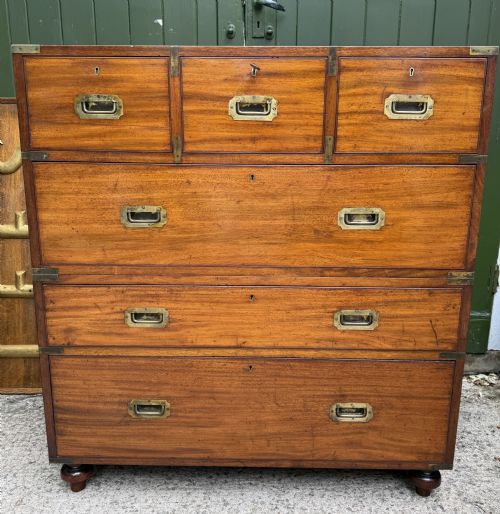
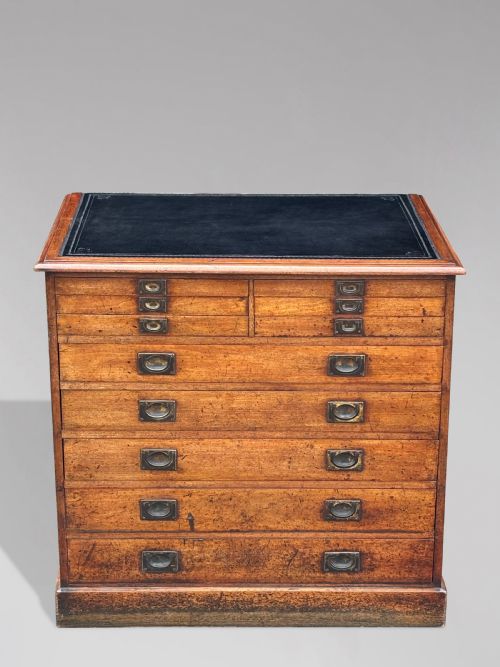
The standard configuration met on this page is the two-part chest of drawers, frequently accompanied by recessed brass handles and corner brackets to prevent damage during transit. Alongside standard drawer configurations, variations include secretaire chests fitted with drop-front writing desks, alongside filing cabinets and compact desktop storage boxes.
Originating across British colonial outposts and domestic workshops, these items utilise dense hardwoods suited to fluctuating climates. The aesthetic balances severe functional utility with the polished domestic comfort expected by military officers stationed abroad.
How they were made
Cabinetmakers constructed these chests using durable timbers such as mahogany, teak, camphor wood, and walnut, chosen for their resilience against warping and tropical humidity. Dense grains allowed the timber to withstand frequent dismantling and reassembly without compromising structural integrity.
Hardware played a central structural role, with brass corners, straps, and flush-fitting inset drawer pulls screwed tightly into the wood to absorb impact. These metal elements protected vulnerable edges while keeping the exterior profiles entirely smooth for packing.
Secret drawers hidden behind false partitions kept confidential dispatches safe from prying eyes.
What varies in quality
Quality separates mass-contracted camp supply items from bespoke officer commissions through the refinement of internal joinery and timber selection. Superior examples feature meticulously figured veneers, secret compartments, and finely dovetailed drawer linings that demonstrate uncompromised workshop standards.
The integration of the hardware dictates overall execution, with top-tier pieces exhibiting hand-beveled brass plates sunk flush with the wood surface. Poorer variants display loose fittings, crude iron substitutes, or secondary timbers hidden beneath heavy staining.
S. W. Silver & Co. London & Liverpool·Ross & Co.·Army & Navy·Graves and Sons of Devonport·Arthur Foley & Son of Salisbury
The Victorian Military Drawers Glossary
- Campaign chest
- A modular chest of drawers built in two or more stacking sections for military transport. These units feature removable feet and side carrying handles.
- Secretaire chest
- A chest of drawers featuring a central pull-out drawer with a hinged fall-front writing surface. Inside, small pigeonholes and letter drawers provide desktop functionality.
- Brass bound
- The reinforcement of cabinet corners and edges with brass strips and corner pieces. This technique prevents splitting when exposed to rough handling.
- Recessed handle
- A metal pull inset into the drawer face so it sits flush with the wood. This design stops handles from catching during packing.
- Two-part chest
- A chest constructed as independent upper and lower boxes that lock together. This division halves the weight for lifting and transport.
Victorian Military Drawers: Frequently Asked Questions
Why are they built in two sections?
Two-part construction allowed officers to divide heavy chests into manageable loads for transport by pack animal or wagon.
Each half locked securely together using internal brass brackets when stationary.
What is a secretaire drawer?
A secretaire drawer conceals a fitted writing desk behind a hinged drop-front facade.
Opening the front reveals small drawers and compartments for correspondence.
How do I identify tropical hardwoods?
Teak and camphor wood display natural oils that often retain distinct aromas and resist moisture.
Mahogany and walnut offer dense, tight grain patterns suited to fine carving.
Where were these pieces used?
Officers utilised these chests inside campaign tents, barracks, and colonial quarters.
They provided civilized domestic storage during extended overseas postings.