




Victorian Metal Table Lamp
A victorian metal table lamp brings heavy cast brass, bronze, and spelter into domestic spaces, offering both period weight and converted utility.
Victorian Metal Table Lamp
A victorian metal table lamp sits among lighting, occasional tables, and converted vessels spanning the nineteenth century through the Edwardian years. Buyers encounter oil lamps, candelabra, and ewers adapted for electricity, alongside standard brass columns.
The selection ranges from simple turned brass and copper to sculptural bronze figures, gilt metal mounts, and silver plate. Many pieces originate from domestic Victorian parlours or draw upon continental revival styles.
The form often derives from earlier classical or rococo models, utilising heavy cast metals that anchor the piece securely to a surface. These lamps frequently incorporate decorative elements such as Corinthian capitals or figural supports.
How they were made
Foundry work relied on casting bronze, brass, and spelter into detailed moulds, which were then chased, patinated, or gilt. Metal components were frequently combined with glass, onyx, or porcelain reservoirs and columns.
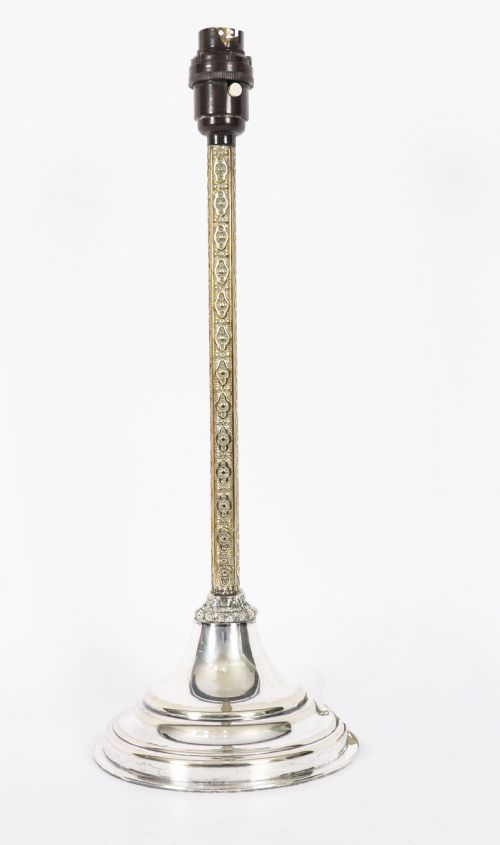
Makers utilised silver plating over base metals to imitate solid silver, while other pieces received parcel gilt finishes to highlight raised ornament. Wiring and burner assemblies were later additions when oil lamps were converted for modern use.
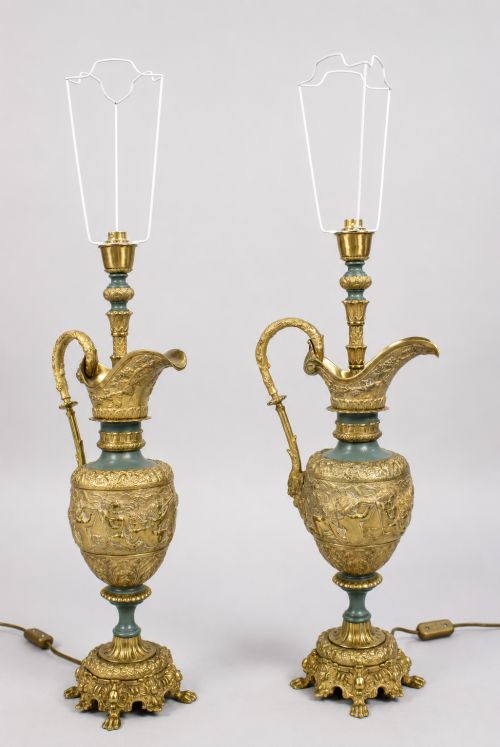
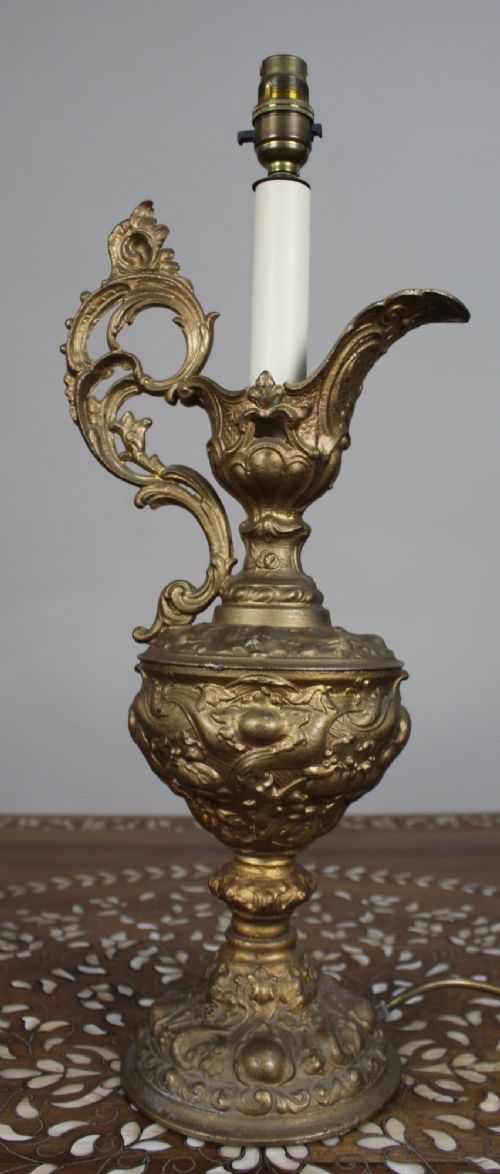
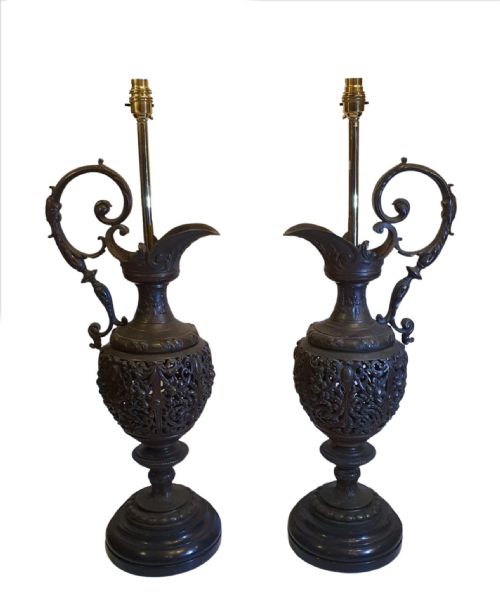
Converted table lamps frequently utilise nineteenth-century ewers, candelabra, and tea canisters as bodies.
What varies in quality
Material choice dictates the structural integrity of the base and column. Solid brass, heavy bronze, and fire-gilded ormolu outlast softer zinc-based spelter alloys, which can show stress or surface fatigue over time.
Mappin & Webb·Wild And Wessel·Adrien Gaudez·Gaggenau
The Victorian Metal Table Lamp Glossary
- Spelter
- A zinc alloy used as a cost-effective alternative to bronze for cast figures and lamp bases. It takes patination well but lacks the structural strength of bronze.
- Ormolu
- Finely ground high-carat gold applied to a bronze or brass base through mercury gilding. This technique produces a durable, warm metallic lustre.
- Ewer
- A large jug with a wide spout and handle, frequently adapted during the nineteenth century to form the body of a table lamp.
- Parcel Gilt
- A decorative treatment where only specific portions of a silver or bronze object are highlighted with gold leaf or gilding.
- Corinthian Column
- An architectural support featuring an ornate capital decorated with acanthus leaves, commonly used for nineteenth-century brass standard and table lamps.
Victorian Metal Table Lamp: Frequently Asked Questions
How do I wire an old lamp safely?
Conversion typically involves running modern insulated flex through the central channel of the metal column or vessel. A qualified electrician should replace old brass lampholders with modern components that meet current safety standards.
Original burners or switches can often be retained above the cord-grip without altering the exterior appearance of the metalwork.
Are spelter lamps genuine bronze?
Spelter is an alloy based on zinc, making it noticeably lighter and softer than true bronze. Magnet tests and surface inspection help distinguish the dull grey interior metal from copper-rich bronze.
Victorian makers used spelter extensively for affordable sculptural lamp bases and figural groups.
What is a converted oil lamp?
Many nineteenth-century lamps originally burned paraffin or oil using complex burner mechanisms. These were later adapted to accept standard electric lamp holders and bulbs.
Retaining the original font and burner gallery preserves the mechanical history of the piece.
How do I clean antique brass?
Dusting with a soft dry cloth prevents the accumulation of grime in recessed cast details. Avoid harsh chemical polishes that strip away historical patination and age.
Preserving the dark, undisturbed areas within the relief work maintains the visual depth of the metal.