



Traditional Silver Desk Lamps
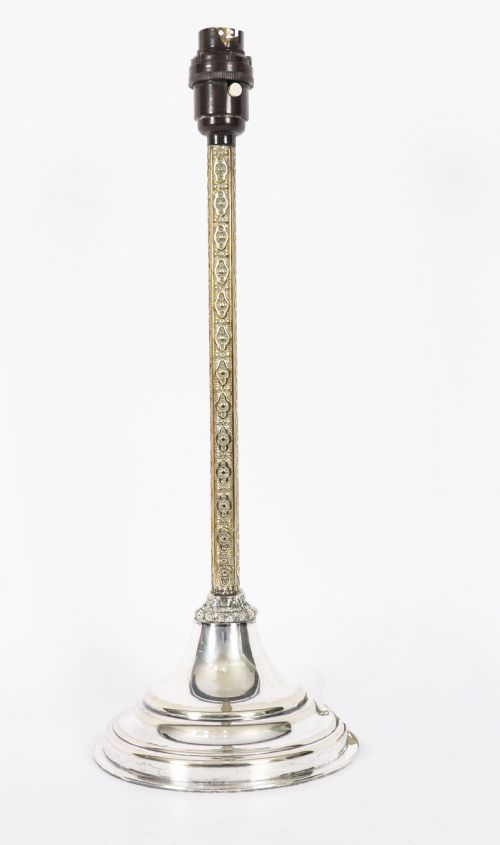
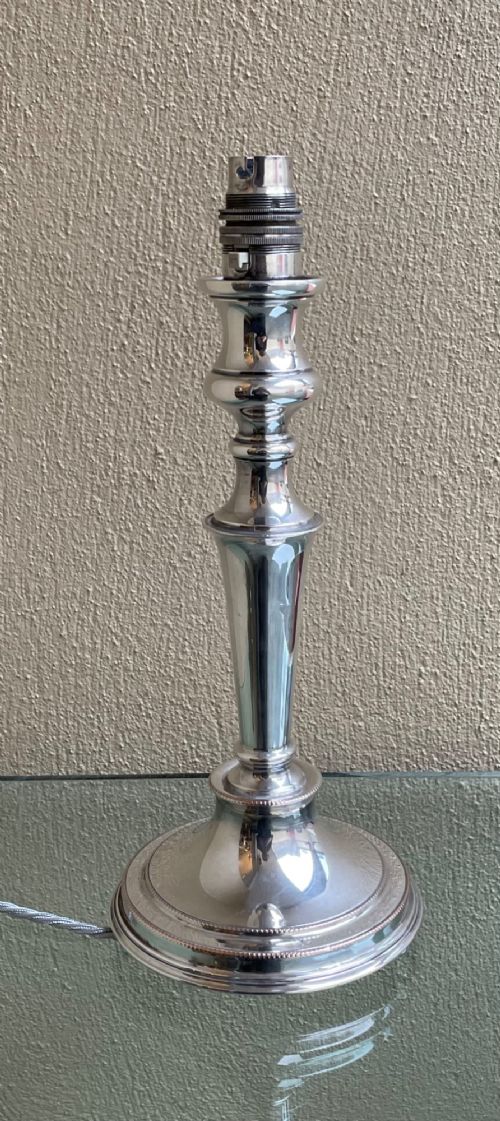
Traditional silver desk lamps bring polished column forms and gleaming metallic surfaces to a study, built from silver plate and brass.
Traditional Silver Desk Lamps
Traditional silver desk lamps encompass table lamps and converted oil lamps fashioned primarily from silver plate over base metals. These pieces draw on Victorian, Edwardian, and nineteenth-century design idioms to provide functional illumination with period character.
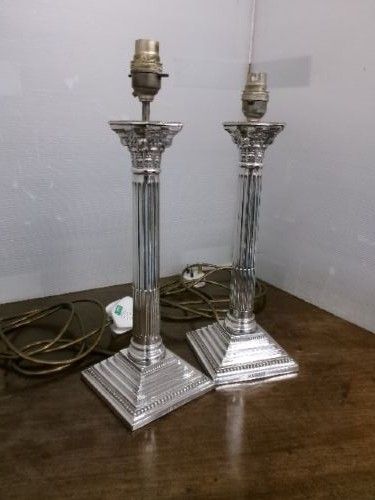
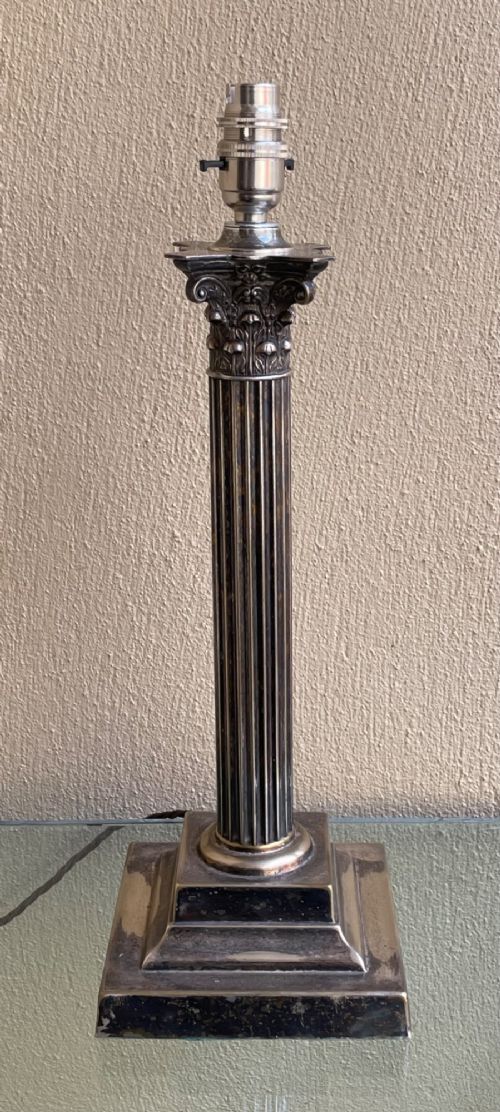
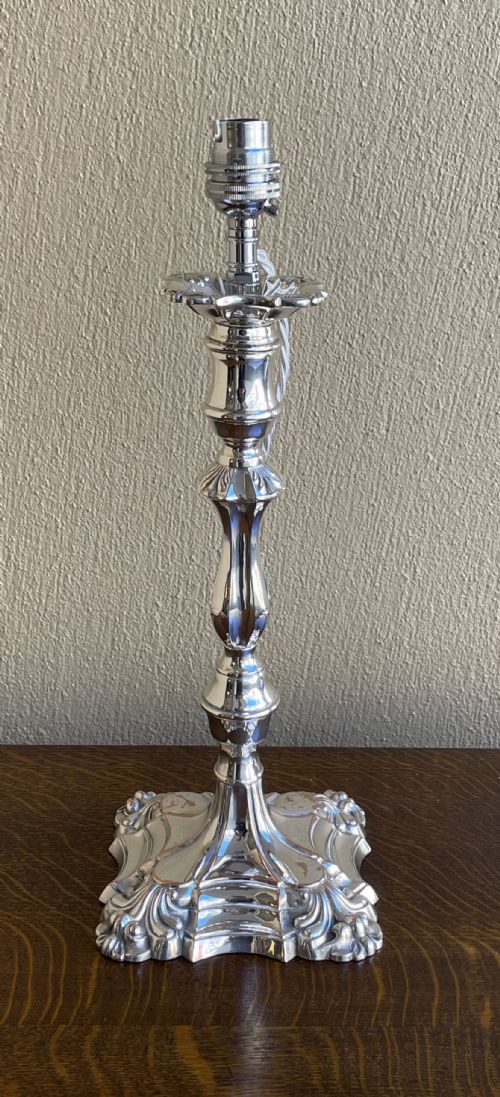
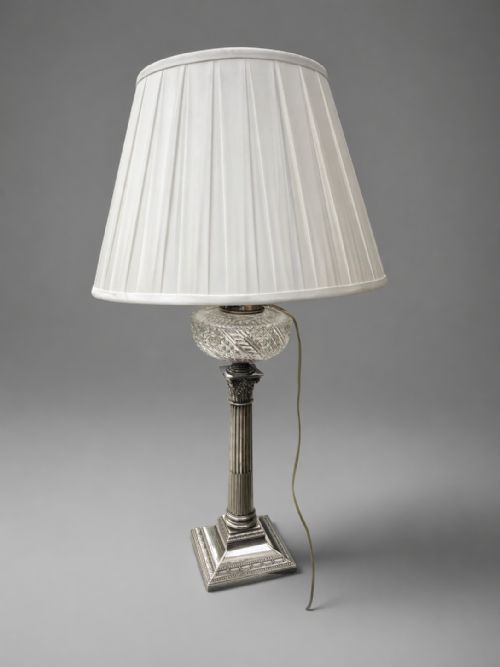
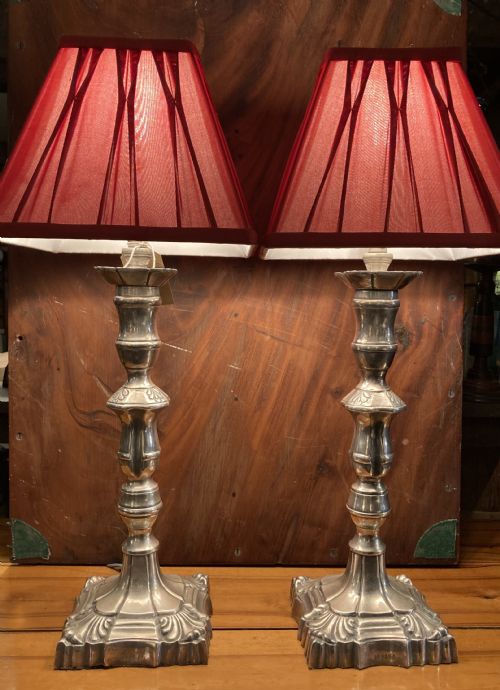
The most common version met on this page is the Corinthian column table lamp, usually rendered in silver plate and dating from the late nineteenth century through to the nineteen-twenties. Buyers frequently encounter these architectural forms alongside simple round-based designs and converted candlesticks.
Origins span the Victorian and Edwardian eras, with George V examples also appearing. Makers such as Mappin & Webb and Palmer & Co contributed to this heritage, producing pieces stamped in locations like Sheffield.
How they were made
Makers utilised silver plate over underlying metals such as brass, sometimes incorporating gilt metal details or cut glass components. Electroplating techniques allowed manufacturers to apply a durable silver coating onto base metal columns and round bases.
Architectural orders guided the construction of column lamps, where fluted shafts met detailed capitals. Components were cast, turned, and assembled by hand before plating, and later examples often received modern wiring to accommodate contemporary use.
Several columns stand ready to support a room's ambition, having spent a century shedding oil for electricity.
What varies in quality
The weight and gauge of the underlying metal dictate the structural integrity of each piece, distinguishing substantial items from lighter productions. Crispness in the casting of architectural capitals and fluted columns separates finer workshops from standard commercial outputs.
The preservation of the silver plate over decades determines visual appeal, particularly on raised details and high-touch areas. Maker stamps, such as those from Sheffield or established firms, indicate provenance and adherence to high standards of manufacture.
Mappin & Webb·Palmer & Co
The Traditional Silver Desk Lamps Glossary
- Silver Plate
- A thin layer of silver bonded to a base metal, usually brass, providing the appearance of solid silver at a lower production cost. This technique became widespread during the nineteenth century for domestic lighting.
- Corinthian Column
- An architectural order featuring an ornate capital decorated with acanthus leaves, frequently utilised as the main shaft for table lamps. This classical form was especially popular during the Victorian and Edwardian periods.
- Parcel Gilt
- A method where specific areas of an object are highlighted with gold leaf or gilt, contrasting against the surrounding silver plate. This treatment emphasises decorative details on high-end nineteenth-century pieces.
- Sheffield
- A city in England renowned for its metalworking and silver plating industries, often appearing as a stamp of origin on quality table lamps. Marks from this centre denote regional manufacturing heritage.
Traditional Silver Desk Lamps: Frequently Asked Questions
How do I date a silver lamp?
Dating relies on stylistic clues, manufacturing techniques, and any stamped maker marks or town hallmarks present on the metal. Victorian pieces often display heavier neoclassical ornamentation, whilst nineteen-twenties examples tend toward simpler geometry.
Changes in plating technology and electrical conversion methods also help establish an approximate decade of production for surviving examples.
Are these lamps safe to use daily?
Most antique lamps require rewiring to meet contemporary electrical standards before regular domestic use. Qualified professionals can easily update the internal cord and lamp holder while preserving the historic exterior.
Using low-heat LED bulbs helps protect vintage components and fabric shades from thermal degradation over extended periods of illumination.
How do I clean silver plate?
Cleaning silver plate requires a gentle approach using non-abrasive cloths and specialised silver polish formulated for plated items. Harsh scrubbing can wear through the thin silver layer and expose the underlying brass or base metal.
Regular dusting with a soft cloth prevents tarnish build-up and maintains the reflective finish of the metal surface.