



Victorian Merchant Cabinet
These victorian merchant cabinet pieces are utilitarian storage units and shop fittings offering generous drawer space for domestic organisation.
Victorian Merchant Cabinet
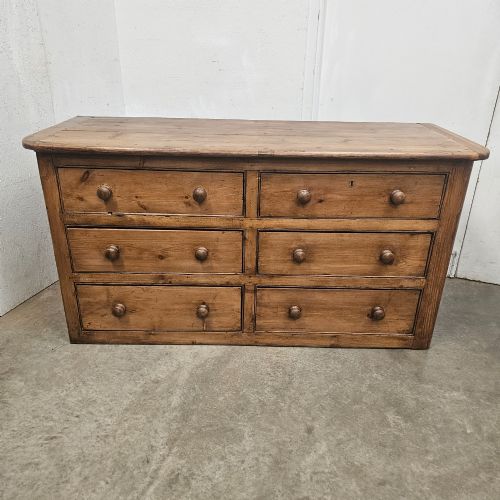
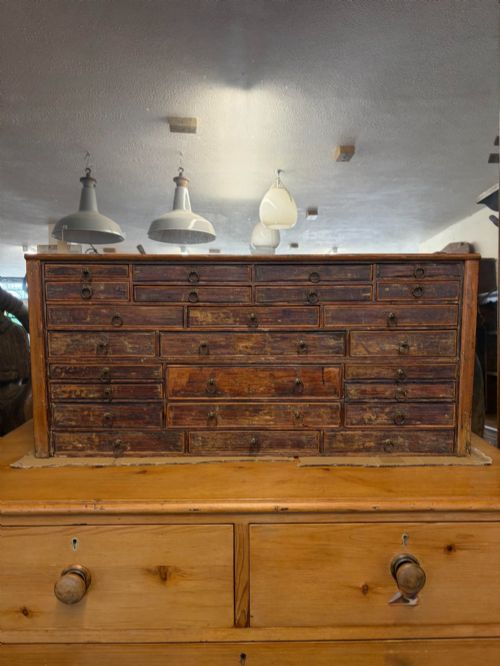
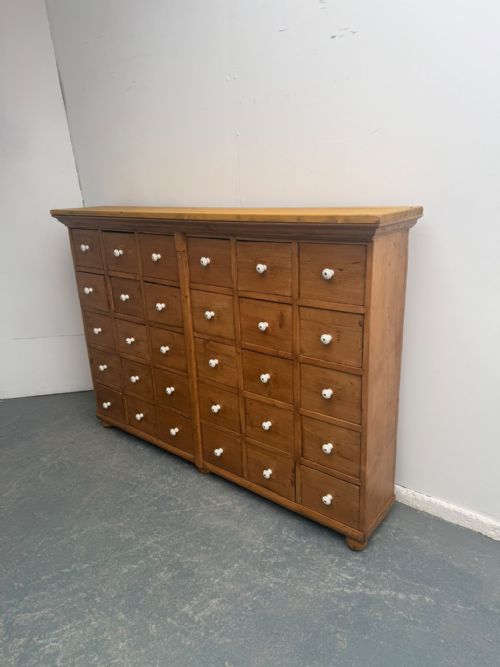
A victorian merchant cabinet encompasses multi-drawer banks, shop fittings, and seed chests originating primarily from the nineteenth century. These forms were originally utilised in commercial environments such as chemist shops, florist premises, and watchmakers' workshops to organise small stock.
Buyers will encounter various configurations on this page, dominated by banks of drawers constructed in pine or walnut. These utilitarian objects transition smoothly into modern homes as practical storage solutions for paperwork or craft materials.
The styles recorded span from rustic country and industrial through to Edwardian utilitarian and Victorian colonial variations. Each piece carries the distinct marks of its commercial heritage.
How they were made
Construction relies heavily on sturdy timbers such as pine, mahogany, teak, and walnut, chosen for their durability in daily commercial use. Many examples feature numerous small drawers designed to withstand frequent opening in busy shops.
Fittings incorporate brass handles, glass elements, and iron details, while certain surfaces retain original painted finishes or polished wood treatments. Adjustable feet and later sign-writing appear on specific shop counters and cabinets.
Victorian Merchant Cabinet Retail Price Guide 2026
Typical asking prices for victorian merchant cabinet among the pieces listed under this phrase on Sellingantiques today, from the lower quarter to the upper quarter. They describe what is for sale here now, not the wider market.
Listings feature woods including pine, mahogany, teak, and walnut, alongside brass, glass, and iron components.
What varies in quality
The distinction between pieces rests in the scale of the drawer banks, the choice of primary timber, and the retention of original surface treatments. Solid walnut and mahogany models with numerous graduated drawers sit at one end, alongside simpler pine workshop units.
Original provenance, such as specific shop fittings originating from named establishments or documented regional uses, influences the character of the piece. The presence of authentic hardware and untouched painted finishes further differentiates the examples.
Luxmore's of Ilfracombe
The Victorian Merchant Cabinet Glossary
- Bank of drawers
- A multi-drawer storage unit containing numerous stacked compartments. These were built for commercial utility in trade and retail premises.
- Shop fitting
- Fixtures and furniture constructed specifically for retail interiors. They include counters and multi-drawer cabinets designed for displaying or storing merchandise.
- Seed chest
- A small compartmented cabinet utilised by florists and merchants for seed storage. These feature shallow drawers for sorting small items.
- Graduated drawers
- A series of drawers increasing in depth from top to bottom. This arrangement provides varied storage capacities within a single chest.
- Utilitarian
- Designed primarily for practical use rather than ornament. This describes the robust construction found in commercial trade furniture.
Victorian Merchant Cabinet: Frequently Asked Questions
What were merchant cabinets used for?
These units served as functional shop fittings and trade storage in commercial premises. Merchants utilised them to organise small inventory, seeds, and specialised tools.
Over time, many transitioned from working shops into domestic settings for general household storage.
How do I date a merchant cabinet?
Dating relies on timber choices, construction methods, and recorded periods such as the nineteenth century or Edwardian era. Details like original brass hardware and painted finishes offer further chronological clues.
Commercial documentation or shop provenance stamped on the unit also helps establish its exact age.
Are these cabinets suitable for modern homes?
Their multi-drawer configurations make them practical for organising office supplies, craft materials, or kitchen items. The modest footprint of many pieces allows them to fit comfortably into hallways and studies.
Living with these units brings a strong sense of industrial and commercial history into contemporary interiors.
What woods were used for these cabinets?
Makers commonly employed pine for utilitarian workshop and shop pieces. Finer grain timbers such as walnut, mahogany, and teak appear on larger or more finished retail counters.
Iron, brass, and glass frequently supplement the primary wooden construction.