




Victorian Mechanical Bell
A victorian mechanical bell brings a sharp, crisp summons to a room, uniting everyday utility with clever nineteenth-century engineering.
Victorian Mechanical Bell
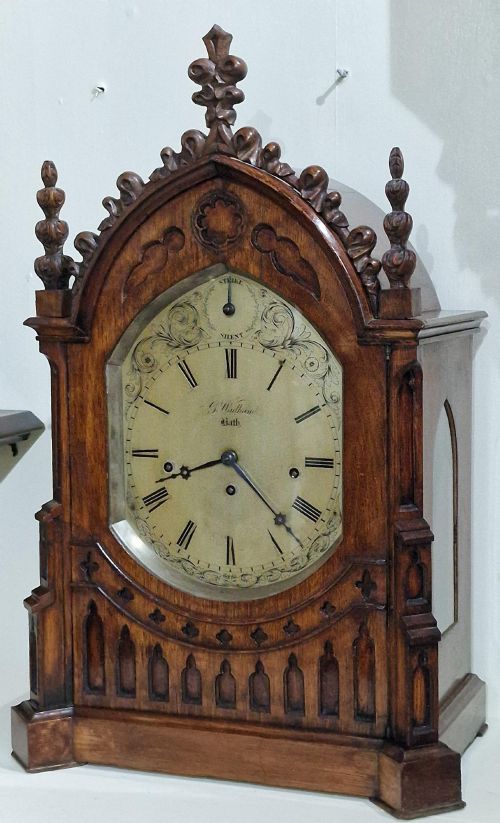
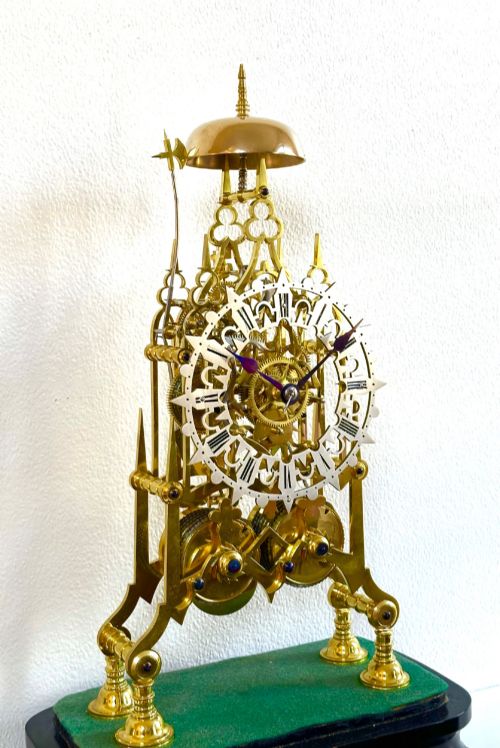
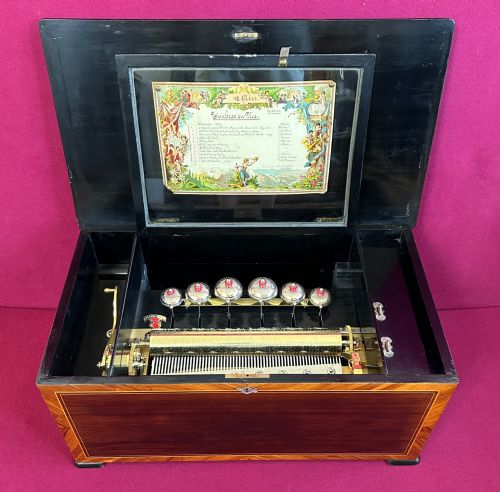
A victorian mechanical bell spans several distinct forms designed for communication, timekeeping, and domestic service. You will find desk and counter bells intended for reception rooms, alongside door hardware, servants' bells, and intricate musical boxes fitted with striking bells.
The selection ranges across the Victorian period into Georgian and early twentieth-century examples, incorporating revivalist aesthetics like Gothic and French Rococo. Brass dominates the physical forms, often paired with cast iron, glass, and rosewood depending on whether the piece mounts to a door frame or sits upon a shop counter.
How they were made
Makers utilised cast and polished brass alongside steel mechanisms to create reliable spring and lever actions. Heavy cast iron provided structural support for servants' bell setups, while rosewood and oak formed resonant cases for musical boxes and clock movements.
Listings feature diverse materials including rosewood, silvered metal, cast iron, and glass alongside standard brass.
What varies in quality
Quality rests upon the crispness of the casting and the smoothness of the mechanical action. Superior pieces show precise engineering in the springs and hammers, delivering a clear, resonant tone rather than a dull thud.
Material selection and decorative enrichment also set pieces apart, moving from utilitarian cast iron to highly ornate brass bases and inlaid rosewood cabinetry. The integrity of the original linkages and mounted components dictates the overall success of the design.
George Wadham·Dwerrihouse And Bell·Peerless Mathias Bauerle
The Victorian Mechanical Bell Glossary
- Fusee
- A conical pulley used in clockwork to maintain even power as the mainspring unwinds. This mechanism helps ensure accurate timekeeping across the duration of the wind.
- Carriage clock
- A small, portable spring-driven clock designed for travel during the nineteenth century. Many incorporate repeat strike mechanisms and visible escapements.
- Bell pull
- A mechanical linkage device mounted beside a fireplace or entrance to ring a remote bell. They connect via wires and cranks to servants' quarters.
- Lantern clock
- An early form of brass chamber clock featuring an open bell on top. They typically hang on a wall or sit on small wall brackets.
- Repeat strike
- A complication in clocks that chimes the last hour or quarter-hour again when a cord or button is pressed. It allowed owners to check the time in total darkness.
Victorian Mechanical Bell: Frequently Asked Questions
How do mechanical desk bells work?
Pressing the plunger or lever trips an internal spring-loaded hammer that strikes the inside of the brass dome. This action produces an immediate acoustic signal without the need for electrical wiring.
Such systems were standard for summoning staff in shops, hotels, and large Victorian residences.
Where were door bell pulls placed?
Door bell pulls were mounted externally beside front entrances, connected by cranks and wires running through the wall to a bell indoors. Visitors pulled the handle to alert household occupants.
They appear in brass and sometimes glass formats across Georgian and Victorian properties.
How do I maintain an antique mechanical bell?
Keep the metal clean using appropriate non-abrasive polishes for brass or silver plating, taking care not to gum up internal pivot points. Periodic light lubrication of the striking mechanism by a professional keeps the action crisp.
Avoid forcing any stiff levers, as the historical springs can fatigue or snap under excessive pressure.
What is the difference between a counter bell and a servants bell?
Counter bells are self-contained tabletop units designed for immediate customer service in commercial settings. Servants bells are usually part of a larger wall-mounted board or remote wiring system used in domestic staff quarters.
Both utilise mechanical striking actions but serve entirely different spatial contexts within a nineteenth-century building.