






Victorian Measure Jug
These Victorian measure jug examples are solid tavern and kitchen workhorses crafted to hold exact capacities, bringing tactile weight and honest metalwork to a modern interior.
Victorian Measure Jug
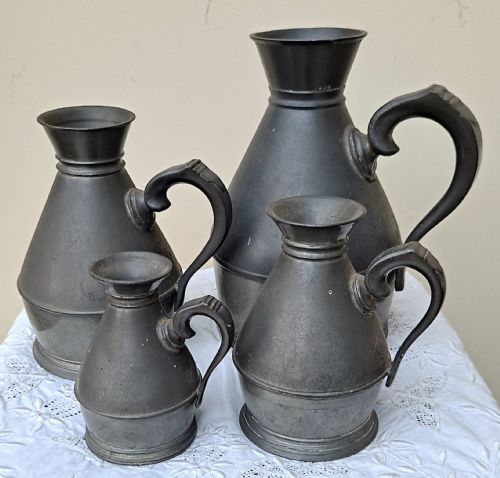
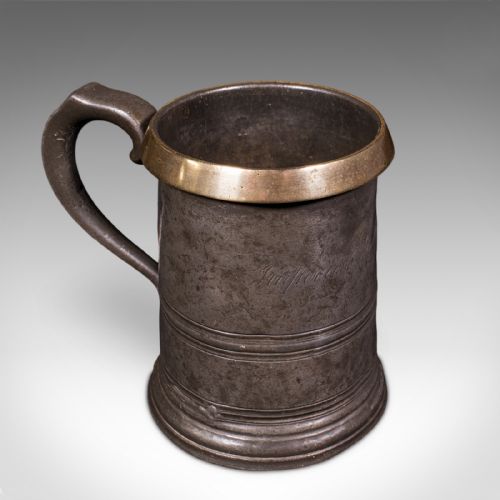
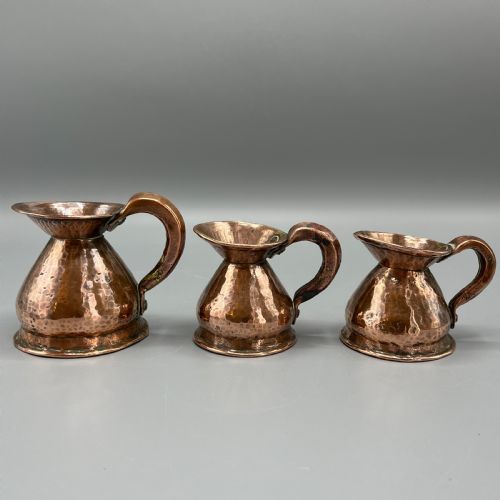
A victorian measure jug represents the functional metal and ceramic vessels used in nineteenth-century public houses and kitchens to dispense exact volumes of ale, spirits, or liquids. The listings bring forward substantial copper flagons, heavy brass haystack measures, and pewter tankards designed for daily trade.
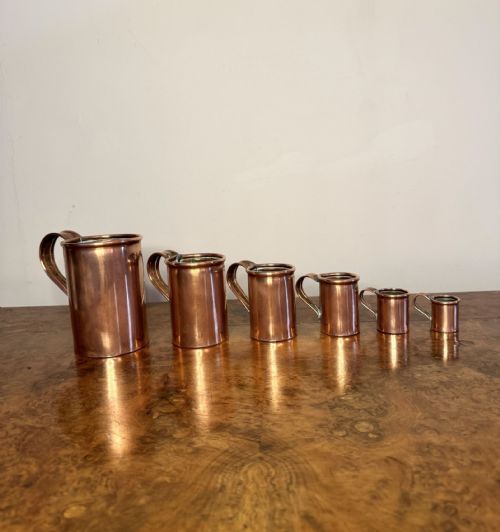
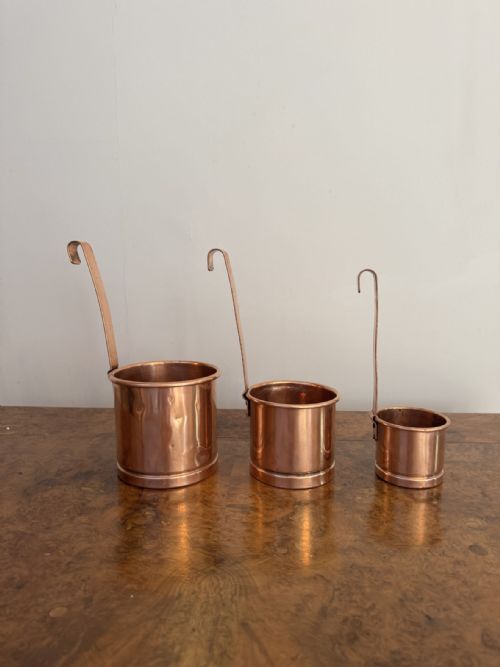
Buyers encounter single vessels alongside graduated sets, ranging from small miniature apprentice pieces and half pint lidded measures up to large one gallon and two gallon harvest jugs. The forms span regional British and Irish styles, including distinct local shapes from Scotland and the East Riding alongside white glazed earthenware bearing iron bands.
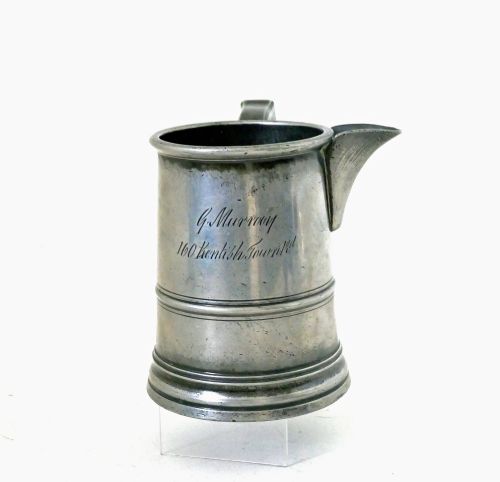
These items originate primarily from the nineteenth century, drawing on Georgian traditions while adopting the stricter standardisation required by Victorian public houses. Each piece carries the marks of its utility, whether through engraved tavern names, capacity stamps, or makers' details.
How they were made
Metal vessels dominate the selection, utilising heavy copper, brass, and pewter shaped through beating, spinning, or casting. Pewter pieces often combine tin with lead, while copper and brass examples rely on rolled sheets joined at seams and reinforced with folded rims or iron bands.
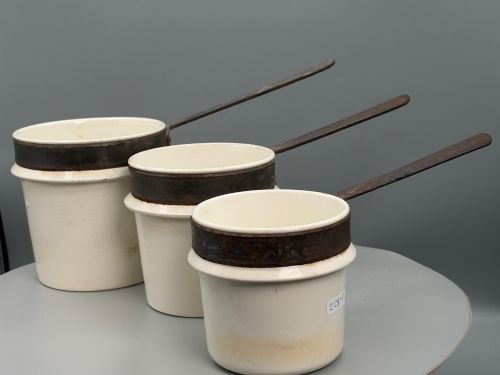
Earthenware versions introduce white glazes paired with structural iron handles and bands to withstand robust handling in busy kitchens. Interior surfaces frequently receive tin linings to ensure safe contact with liquids, protecting the base metal from corrosion during service.
Victorian Measure Jug Retail Price Guide 2026
Typical asking prices for victorian measure jug among the pieces listed under this phrase on Sellingantiques today, from the lower quarter to the upper quarter. They describe what is for sale here now, not the wider market.
Tiny apprentice pieces allowed young metalworkers to prove their proficiency by scaling down a heavy public house flagon into a pocket-sized marvel.
What varies in quality
Quality rests in the crispness of form, the integrity of the original joins, and the presence of clear capacity stamps or maker inscriptions. Superior examples maintain balanced proportions, particularly in graduated sets where every vessel matches in gauge and profile.
The survival of original surfaces and unpolished patinas distinguishes exceptional pieces from those stripped of their historical character. Weight, wall thickness, and the precision of the rim and spout formation separate utilitarian workshop output from master metalwork.
J Bower·S Hancock·G Murrouy·Wedgwood
The Victorian Measure Jug Glossary
- Haystack measure
- A traditional Irish or British measure characterised by a bulbous lower body tapering towards a narrower neck, resembling a stacked rick of hay. These brass and pewter vessels often form graduated sets.
- Imperial standard
- A legal system of weights and measures established in nineteenth-century Britain to unify trade. Measures bearing VR stamps or capacity marks relate directly to this standardisation.
- Apprentice piece
- A smaller version of a standard object created by a trainee artisan to demonstrate skill to a guild or master. These miniature copper jugs reproduce full-scale tavern measures in every detail.
- Breweriana
- Collectable items associated with the brewing and serving of beer, including public house tankards and spirit measures. This category encompasses much of the metal tavernware found in trade.
- Tin lining
- A protective internal coating applied to copper and iron vessels to prevent metallic contamination of liquids. Its survival inside a measure indicates careful period maintenance.
Victorian Measure Jug: Frequently Asked Questions
What were victorian measure jugs used for?
These vessels served primarily in public houses, inns, and domestic kitchens to measure and pour exact quantities of ale, spirits, or milk. Their calibrated volumes ensured honest trade and reliable daily service.
Over time, many transitioned from working tavern tools into decorative kitchenware, displayed on dressers or tavern shelves for their distinct metallic forms and honest craftsmanship.
How do I clean antique copper or pewter?
Historic metal surfaces benefit from minimal intervention, retaining their dark patinas and signs of handling rather than aggressive polishing. Dusting with a soft cloth and applying neutral wax protects the metal without removing historical character.
Harsh chemical cleaners strip away centuries of oxidation and can damage soft pewter alloys or thin tin linings. Preservation focuses on stable dry environments away from excessive moisture.
How can I tell pewter from other metals?
Pewter possesses a duller, softer grey lustre compared to the bright yellow of brass or the reddish warmth of copper. It feels heavier than tin or aluminium and yields a muted sound when struck gently.
Older pieces often show surface oxidation and minor casting irregularities rather than the machine-finished perfection of modern alloys. Maker touches and touchmarks on the base or rim provide further confirmation.
Are graduated sets complete?
Graduated sets of measures were designed to nest or sit in rows according to capacity, ranging from half pints up to multiple gallons. Finding a complete set depends on matching the gauge, material, and maker details across every piece.
Individual replacements often lack the uniform wear and shared provenance of a true surviving set, making matching groups particularly valued by collectors of tavern metalware.