





Victorian Marquetry Work Box
These pieces of a victorian marquetry work box unite practical nineteenth-century needlework storage with intricate wood inlay, offering a tangible link to period domestic craft.
Victorian Marquetry Work Box
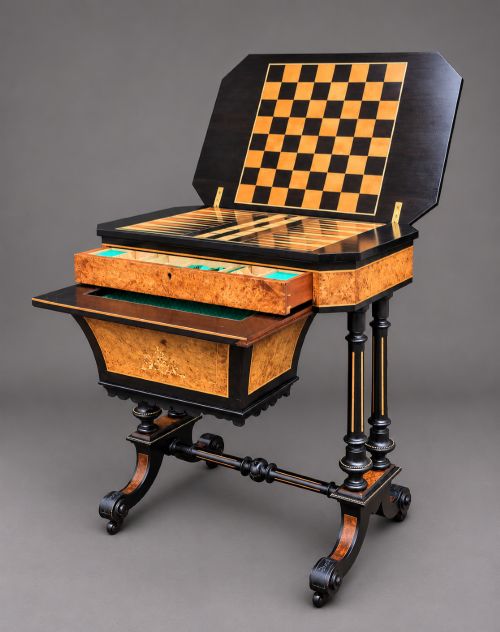
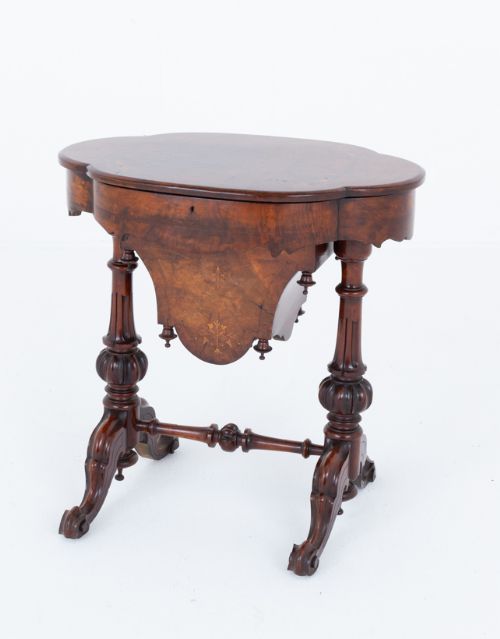
A victorian marquetry work box serves as a portable container for sewing implements, threads, and textiles, frequently taking the form of a tabletop casket or a freestanding trumpet table. These objects originate largely from the nineteenth century, spanning decades from eighteen fifty to eighteen ninety.
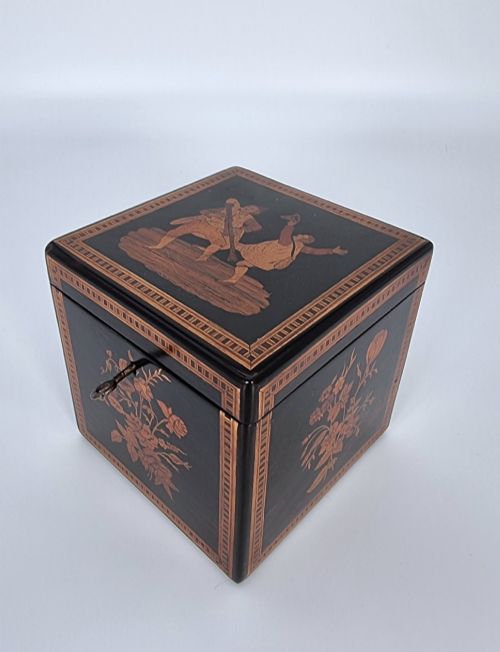
Makers construct these boxes in various formats, including smaller desktop caskets and larger multi-functional pieces that combine games boards with sewing storage. The visible surface employs elaborate wood inlay to decorate the lid and sides with geometric patterns, floral motifs, or architectural scenes.
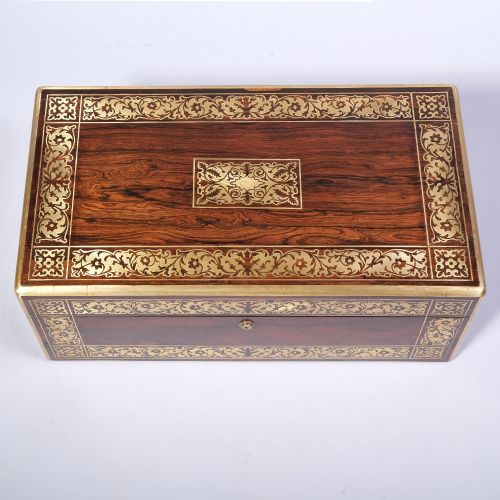
Walnut, burr walnut, and rosewood form the primary carcases for these containers, providing a dark, richly grained background for the lighter inlay woods. Pieces span English production alongside continental examples such as Italian Sorrento ware and French boulle work.
Materials and Construction
Craftsmen construct the main body of a victorian marquetry work box using solid timbers or pine carcases faced with decorative veneers of walnut, rosewood, or fruitwood. They inlay contrasting timbers like boxwood into the surface to build pictorial or geometric designs.
Specialised techniques such as Tunbridge ware utilise thousands of tiny tinted wood blocks assembled to create mosaic pictures, while boulle work incorporates brass and tortoiseshell inlay. Interior fitted trays utilise lightweight softwood frameworks lined with paper or fabric to organise compartments.
Victorian Marquetry Work Box Retail Price Guide 2026
Typical asking prices for victorian marquetry work box among the pieces listed under this phrase on Sellingantiques today, from the lower quarter to the upper quarter. They describe what is for sale here now, not the wider market.
One extraordinary nineteenth-century survival substitutes standard wood inlay entirely with an intricate maritime diorama built from delicate straw work.
Distinctions in Quality
Quality in a victorian marquetry work box rests upon the precision of the inlay work and the selection of figured timber veneers like burr walnut. Finer examples display tight, seamless joints in the mosaic patterns and retain their original internal fitted trays without replacement components.
The complexity of the internal fittings, such as lidded compartments, bone spool holders, and working brass locks with keys, separates standard utilitarian boxes from superior pieces. The crispness of the carving on trumpet table pedestal bases or the inclusion of specialised regional styles like Sorrento ware elevates the standing of an individual piece.
Lund Of Cornhill·Waring & Gillow
The Victorian Marquetry Work Box Glossary
- Marquetry
- Decorative veneer work forming pictures or patterns by applying thin pieces of wood to a structural carcase. This technique defines the lid decoration on many nineteenth-century caskets.
- Tunbridge Ware
- Woodworking technique originating from Kent involving tiny coloured wood prisms assembled into mosaic designs. These geometric or pictorial motifs decorate nineteenth-century boxes and baskets.
- Burr Walnut
- Sourced from walnut tree growths, this timber yields highly swirled, knotted grain patterns. Cabinet makers prize it for veneering the exterior surfaces of high-status nineteenth-century furniture.
- Boulle Work
- Inlay method combining brass and tortoiseshell to create ornate patterns across furniture and boxes. It takes its inspiration from French seventeenth-century cabinet making traditions.
- Sorrento Ware
- Italian woodwork featuring detailed marquetry panels depicting buildings or figures. These items emerge from the nineteenth-century Grand Tour trade.
Victorian Marquetry Work Box: Frequently Asked Questions
What did people store inside a work box?
Owners kept needles, threads, scissors, and small textile projects within fitted internal trays.
These compartments kept sewing materials organised for domestic handiwork during the nineteenth century.
How do I distinguish Tunbridge ware from standard marquetry?
Tunbridge ware employs thousands of precisely cut wood prisms grouped together to form a mosaic picture. Standard marquetry uses larger veneer sheets cut and fitted to form flat surface patterns.
Both techniques appear on nineteenth-century boxes but require different assembly methods.
Are these boxes portable?
Tabletop caskets feature small brass side handles or rely on their compact size for movement between rooms. Freestanding tables remain stationary while providing equivalent internal storage.
Portable designs allowed nineteenth-century users to carry their sewing projects to different sitting areas.
How do I identify a Sorrento ware box?
Italian Sorrento pieces utilise olive wood and distinct pictorial marquetry depicting architectural ruins or local scenes. These boxes often date from the mid nineteenth century during the period of the Grand Tour.
They stand apart from English production through their specific subject matter and lighter timber tones.