
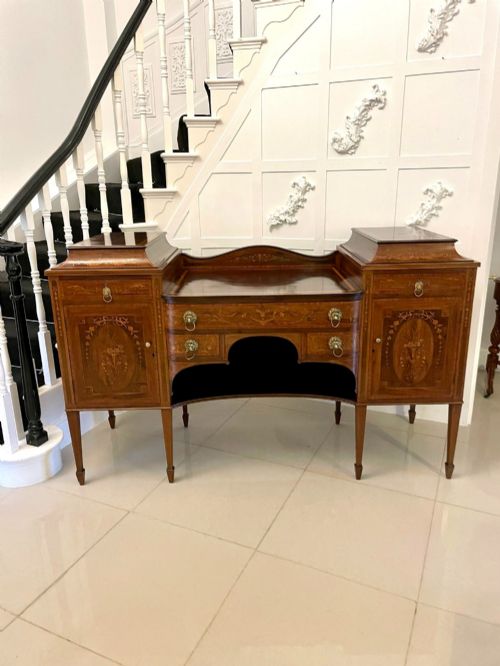


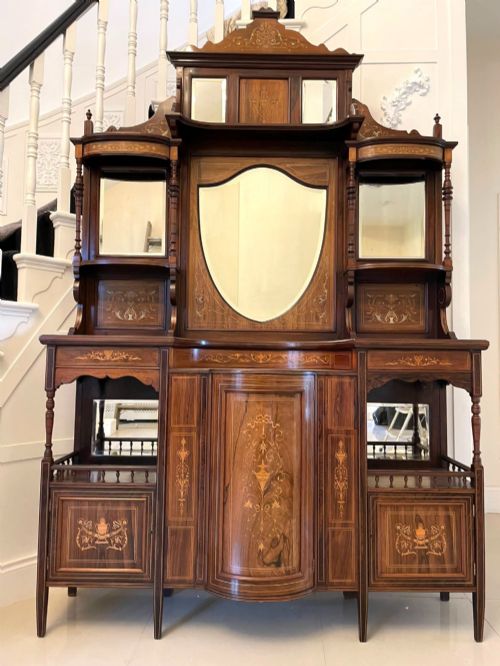
Victorian Marquetry Credenza Cabinet
A victorian marquetry credenza cabinet brings statement storage and intricate wood-inlay to a room, offering display space and historic presence.
Victorian Marquetry Credenza Cabinet
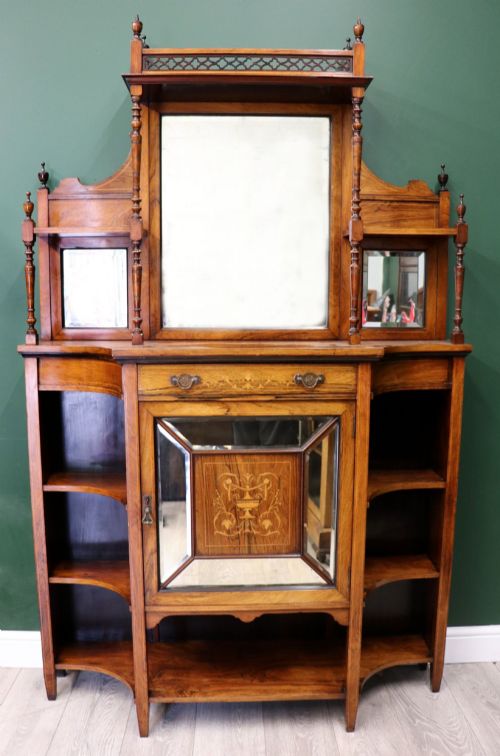
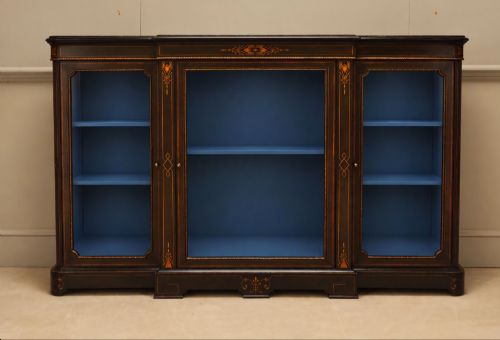
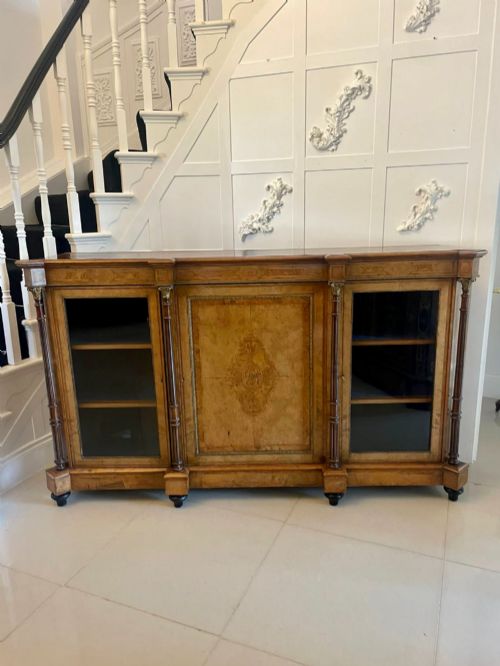
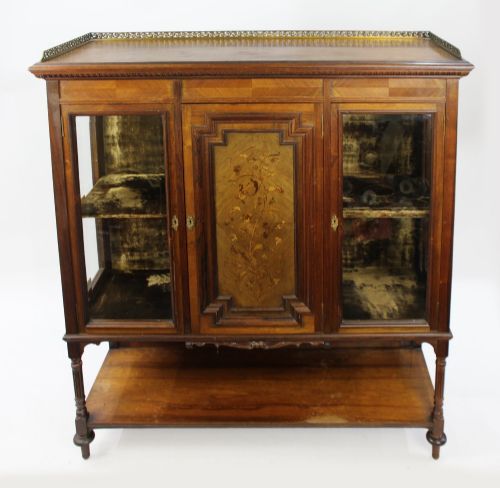
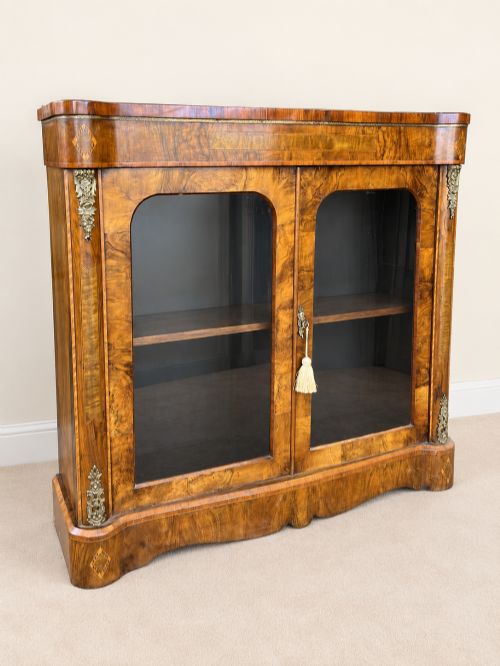
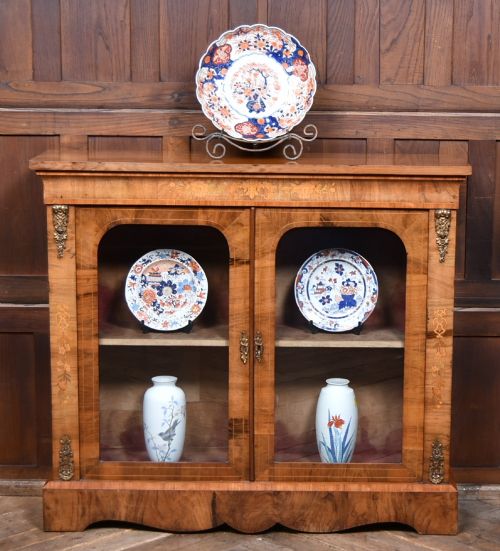
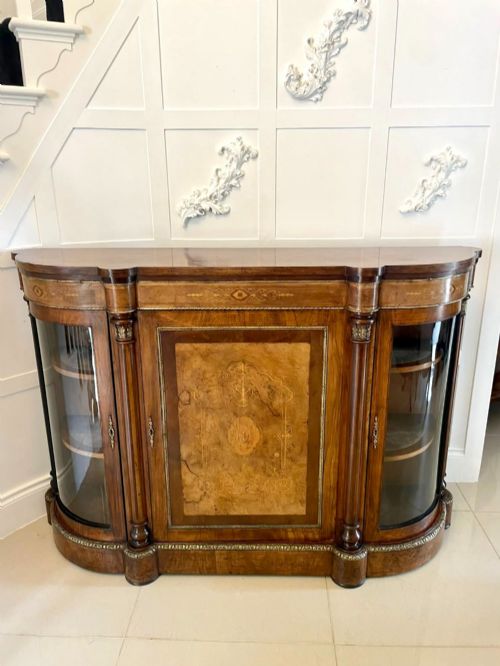
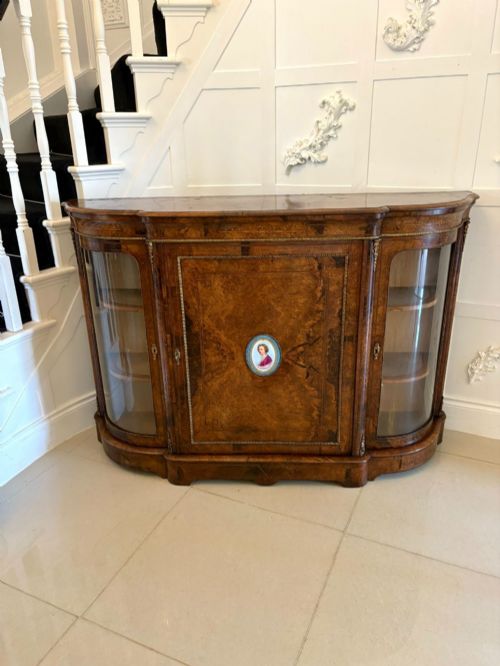
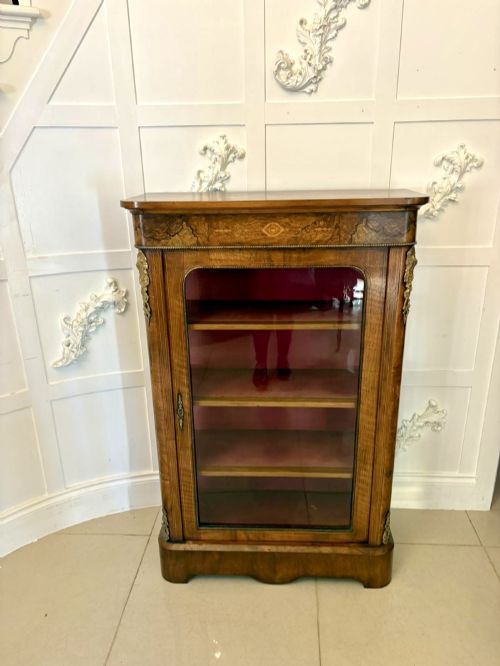
A victorian marquetry credenza cabinet is a low, freestanding piece of furniture designed for display and storage in formal reception rooms. These items frequently take the form of side cabinets, credenzas, and pier cabinets featuring glazed doors and central cupboards.
The versions met on this page originate predominantly from the nineteenth century, spanning decades such as the eighteen-fifties, sixties, seventies, and eighties. They combine architectural presence with elaborate surface decoration, serving as focal points in traditional and eclectic interiors.
Materials and construction methods
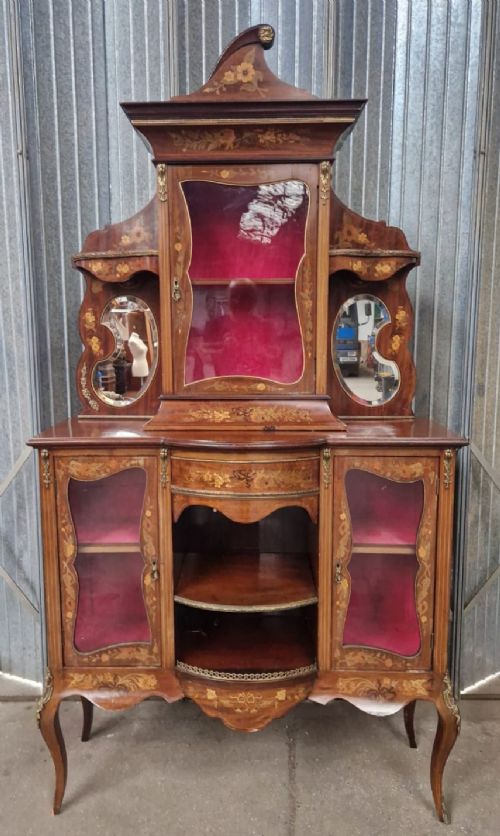
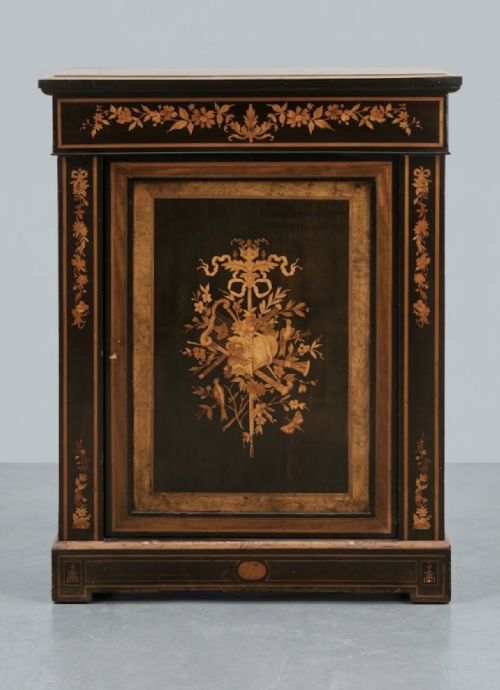
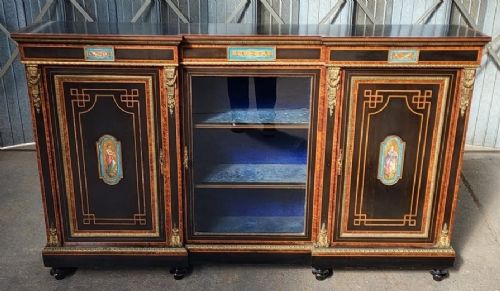
Cabinet makers utilised fine timbers such as burr walnut, rosewood, mahogany, and ebonised wood as the primary carcass foundations. These woods were often embellished with contrasting veneers and detailed marquetry inlay using satinwood and exotic species.
Structural enrichment relied on cast ormolu mounts, gilt-bronze details, and inset porcelain plaques, combined with curved glass doors for display sections. Joinery techniques ensured sturdy housing for heavy marble tops and delicate brass stringing.
The listings on this page span the Victorian period, utilising burr walnut, rosewood, and mahogany alongside French revival and Aesthetic movement styles.
Distinguishing quality across examples
The standard of a victorian marquetry credenza cabinet rests on the intricacy of the floral or geometric wood-inlay and the crispness of the cast ormolu mounts. Finer examples display meticulous hand-cut marquetry that integrates seamlessly into the surrounding burr walnut or rosewood grain.
Construction depth also defines the hierarchy, with exhibition pieces featuring serpentine shapes, multi-door configurations, and matching porcelain plaque insets. Lesser pieces rely on simpler rectilinear carcasses with minimal brass stringing and standard glass panels.
Hewetsons London·Collinson and Lock·Gillows·Lamb of Manchester·Edward Holmes Baldock·Maison Gagneau
The Victorian Marquetry Credenza Cabinet Glossary
- Marquetry
- Decorative veneer work forming pictures or patterns by assembling small pieces of different coloured wood. This technique provides the characteristic floral and geometric motifs seen on nineteenth-century cabinet doors.
- Ormolu
- Gilded bronze ornamentation applied to furniture mounts and feet. It adds metallic contrast to dark woods like walnut and ebonised timber.
- Credenza
- A low sideboard or cabinet, frequently featuring glass-fronted side cupboards flanking a central door. It developed as a principal display form in Victorian reception rooms.
- Pier cabinet
- A narrow freestanding display cabinet built to stand against the wall space between windows. These tall, slender units often house glazed shelving for ceramics and glass.
- Boulle
- A style of marquetry using tortoiseshell and brass inlay developed in France. It appears on select Napoleon III and Victorian hybrid pieces.
Victorian Marquetry Credenza Cabinet: Frequently Asked Questions
How do I care for burr walnut?
Dust regularly with a soft, dry cloth and avoid applying modern chemical polishes that can damage nineteenth-century French polish finishes.
Maintain stable room humidity levels to prevent timber shrinkage and veneer lifting.
What is the difference between a credenza and a pier cabinet?
A credenza is a wide, low sideboard unit often featuring three doors with curved end compartments designed for substantial rooms.
A pier cabinet is a much narrower, taller single-door display case specifically proportioned for wall spaces between windows.
How do I identify marquetry from painted decoration?
Inspect the surface closely under a light to observe the natural grain direction and tiny join lines between individual pieces of contrasting wood veneer.
Marquetry consists of physically cut timber segments inlaid into the backing surface rather than pigment applied by a brush.