



Victorian Marble Top Chest
A victorian marble top chest brings a cool, durable stone surface to traditional bedroom furniture, offering both practical utility and continental elegance.
Victorian Marble Top Chest
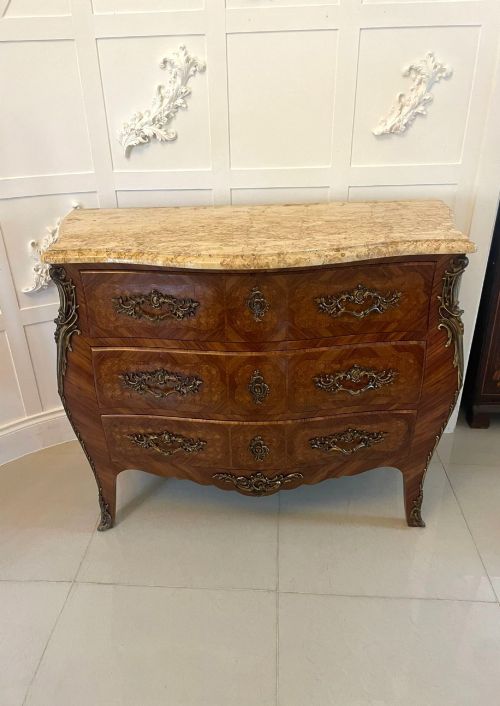
A victorian marble top chest combines sturdy timber cabinetry with a fitted slab of stone, functioning variously as a commode, washstand, or bedroom chest of drawers. These pieces emerge from the nineteenth century in both domestic British forms and continental styles influenced by French taste.
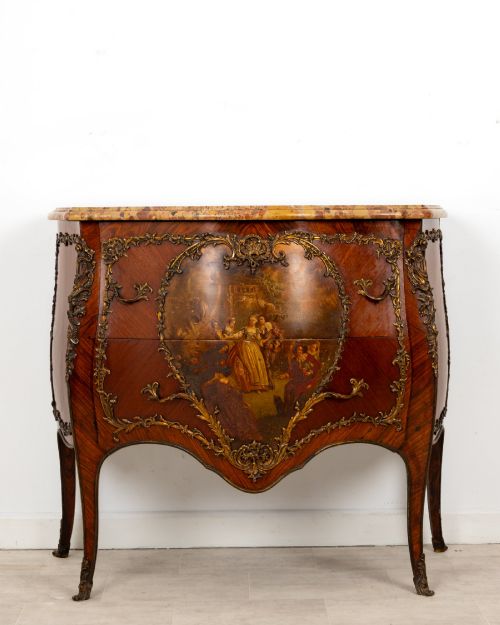
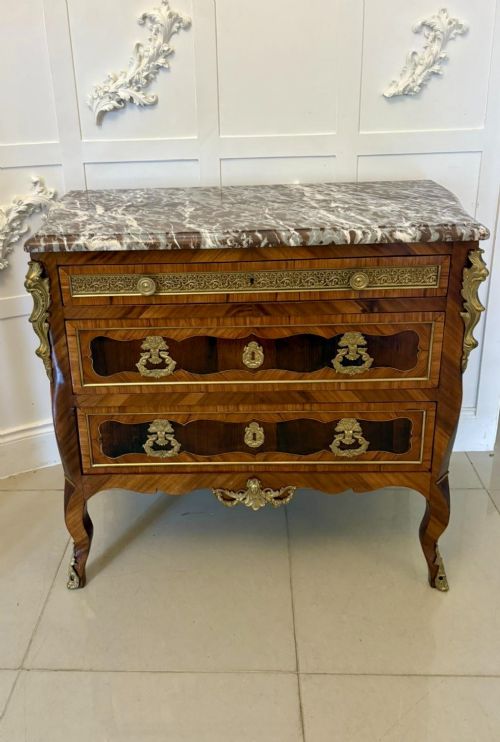
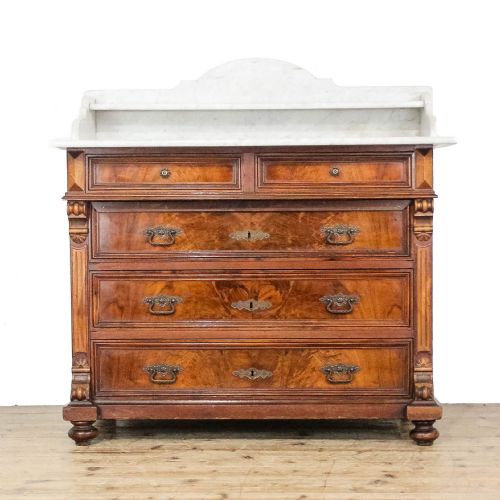
The version most commonly met on this page is the French-influenced commode or washstand featuring rich veneers like burr walnut or mahogany. Alongside these stand simpler pine and bow-fronted variants produced across the Victorian era.
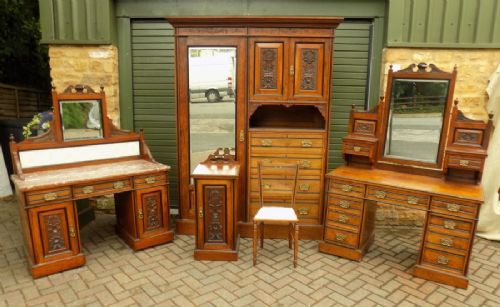
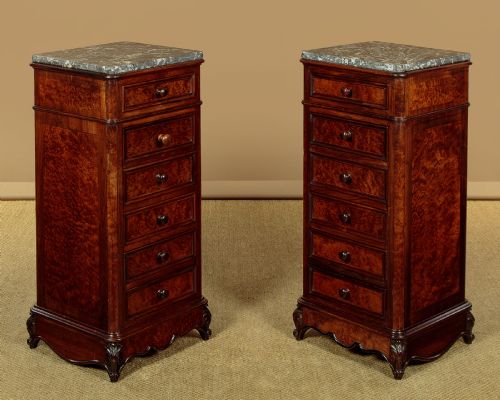
Makers adapted the form for diverse uses, pairing the stone surface with mirrored backs, cupboard doors, or banks of drawers. Buyers encounter these pieces functioning as bedside pedestals, dressing chests, and compact bedroom cabinets.
Materials and construction
Cabinet makers built these pieces using solid timbers and decorative veneers such as mahogany, walnut, kingwood, and burr walnut over secondary woods. Surfaces frequently display intricate parquetry or marquetry inlay work.
The heavy stone slabs, including white and rouge varieties, sit atop the wooden carcase to provide a water-resistant and decorative working surface. Ormolu mounts, gilt-bronze accents, and brass hardware complete the construction on finer continental examples.
Some Victorian dentists kept specialised cabinetry featuring marble tops and multiple small drawers for their instruments.
Markers of quality
Quality rests significantly in the selection and application of timber veneers, where matched grain patterns and complex parquetry elevate a piece beyond standard utility furniture. The integration of the stone slab and the crispness of any cast or chased ormolu mounts further distinguish finer examples.
Internal construction details, such as dovetailed drawer linings and the choice of secondary woods, separate standard workshop output from exceptional cabinet work. The balance between the weight of the marble top and the proportion of the supporting wooden carcase indicates the maker's skill.
The Victorian Marble Top Chest Glossary
- Commode
- A low chest of drawers or cabinet, often associated with French furniture styles of the nineteenth century. These pieces frequently feature decorative veneers and marble surfaces.
- Ormolu
- Gilded bronze mounts applied to furniture for decorative effect. This technique appears regularly on fine French Victorian commodes.
- Parquetry
- Geometric patterns formed by small pieces of wood veneer fitted together on a surface. It creates a decorative mosaic effect across drawer fronts and tops.
- Washstand
- A piece of furniture designed to hold a basin and jug, commonly fitted with a marble top to resist water damage. Later examples often include mirrored splashbacks.
- Burr walnut
- Timber taken from a tree growth featuring swirling, knotted grain patterns. Cabinet makers prized this wood for its highly decorative appearance on prominent surfaces.
Victorian Marble Top Chest: Frequently Asked Questions
How were marble top chests used originally?
These pieces served practical roles in nineteenth-century bedrooms as washstands, dressing tables, and general storage chests. The stone surface provided a durable, water-resistant counter for washing utensils and grooming items.
In grander settings, ornamental commodes functioned as display surfaces for decorative objects while housing linens or clothing within their drawers.
Are the marble tops original to the chests?
Most fitted stone slabs on nineteenth-century pieces are original to the carcase, shaped specifically to follow the contours of the wooden moulding. Variations in the thickness and edge profiling typically correspond to the period of the base furniture.
Inspectors often look at the bearing surfaces underneath the stone to confirm contemporary fit and manufacture.
How do I care for a marble top?
Regular dusting with a soft cloth keeps the stone surface clean without risking abrasion. Acidic liquids like citrus juice or vinegar should be wiped away immediately to prevent etching the polish.
Using coasters and placemats protects the porous surface from stains and moisture rings during daily use.
What distinguishes French Victorian styles from British ones?
Continental pieces frequently employ bolder serpentine shapes, bombe profiles, and extensive marquetry or ormolu mounts influenced by Louis XV and Louis Philippe revivals. British equivalents tend toward rectilinear mahogany or walnut carcases with simpler drawer arrangements.
Both traditions adopted the stone surface, though French examples leaned heavily toward decorative commode forms.