




Victorian Marble Top Chest of Drawers
A victorian marble top chest of drawers brings cool stone surfaces and rich timbers together for practical bedroom storage.
Victorian Marble Top Chest of Drawers
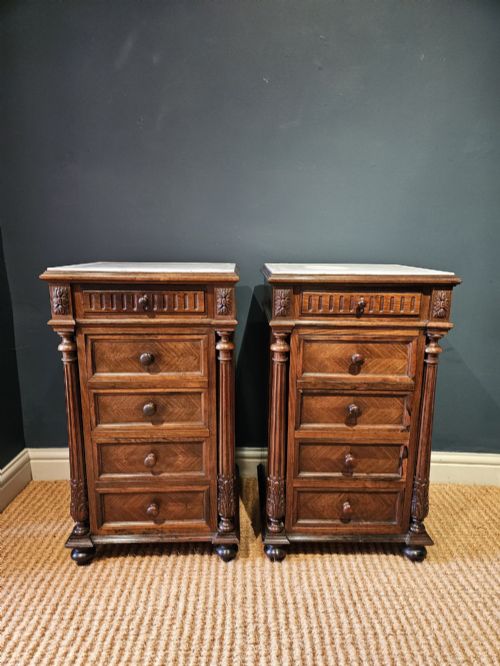
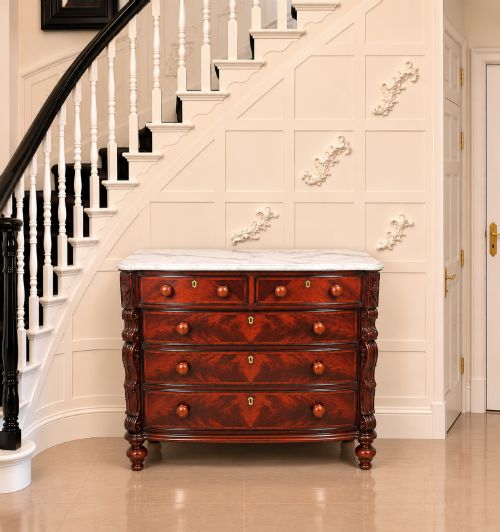
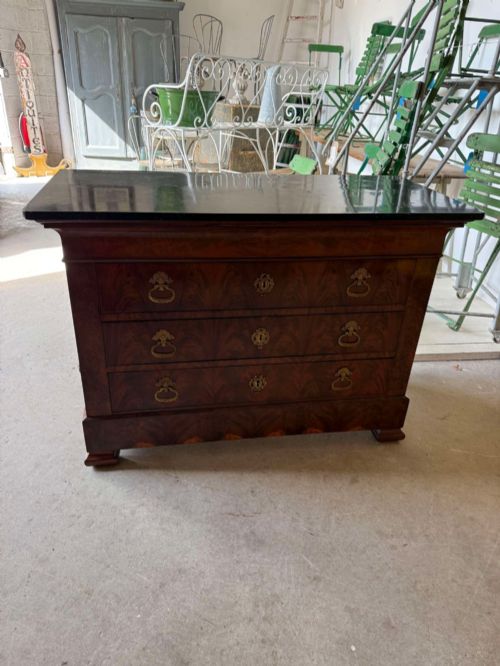
A victorian marble top chest of drawers combines heavy stone slabs with timber carcases ranging from mahogany to burr walnut. These pieces originate from the nineteenth century, including specific dates such as eighteen fifty and eighteen eighty.
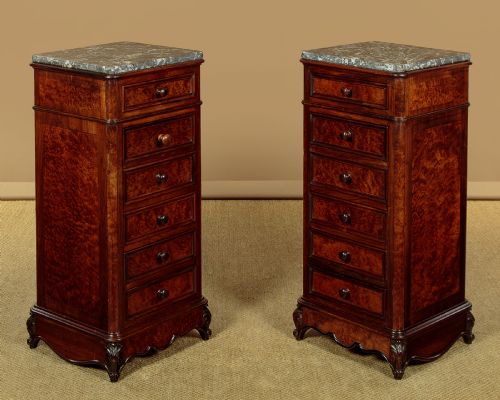
Commodes and washstands dominate the forms on this page, alongside dressing tables and bedside pedestals. Continental influences appear frequently through French Rococo and Louis Philippe revival styles.
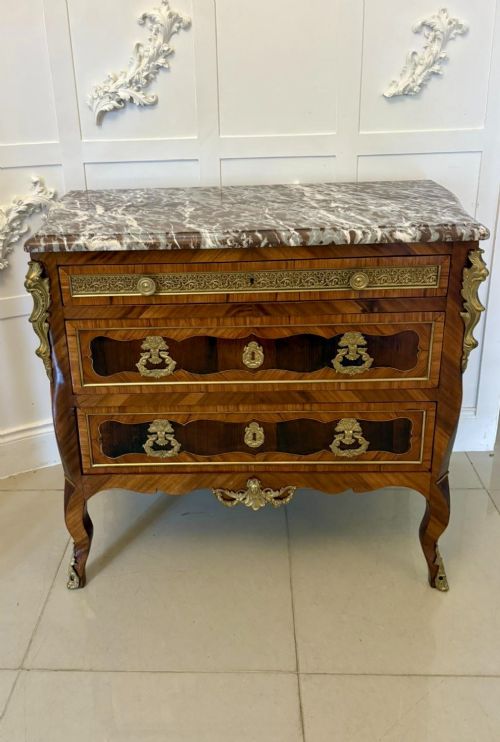
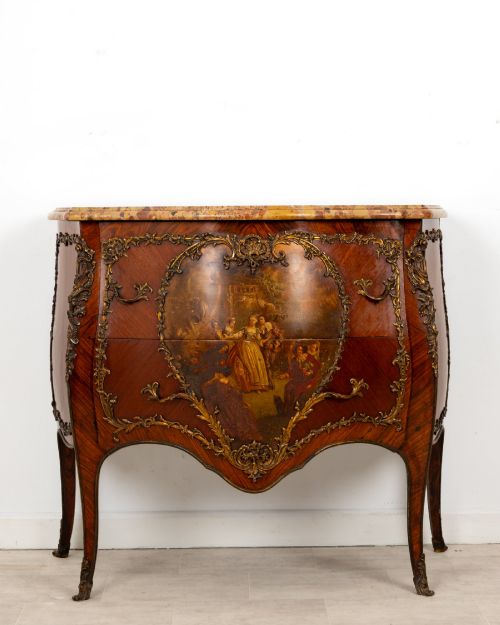
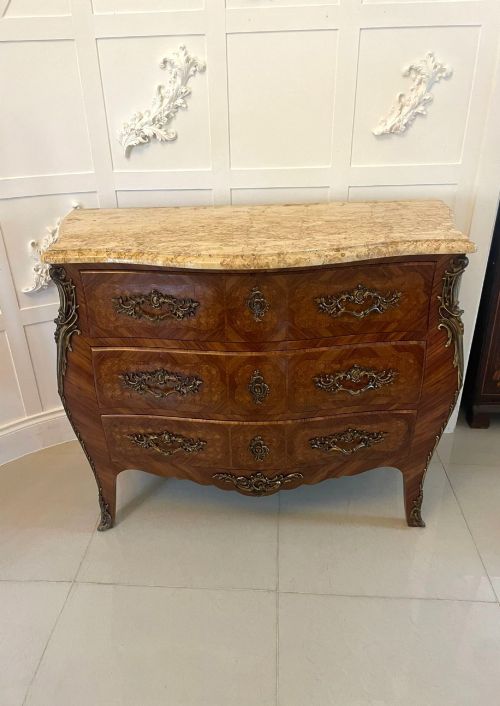
Buyers encounter variations spanning simple mahogany drawer units to elaborate parquetry commodes mounted with ormolu. The integration of marble provides a durable, smooth surface distinct from standard timber tops.
Materials and construction
Carcases rely on dense hardwoods like mahogany, walnut, and flame mahogany, often enhanced by burr walnut or kingwood veneers. Brass and gilt-bronze mounts frequently secure handles and corners on continental examples.
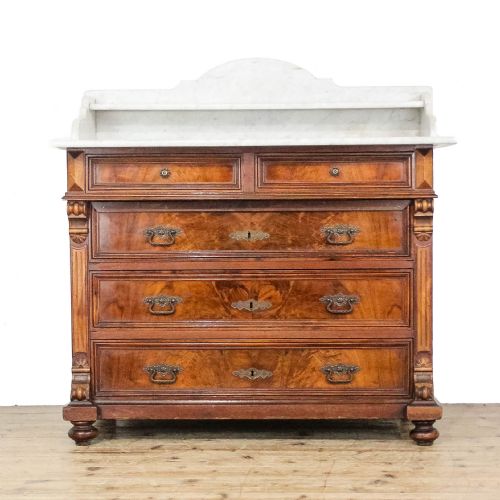
Slabs of white or rouge marble sit directly upon the timber frames, supported by sturdy drawer construction using traditional joinery. Secondary woods and glass details appear in specific dressing chests and washstands.
Victorian Marble Top Chest of Drawers Retail Price Guide 2026
Typical asking prices for victorian marble top chest of drawers among the pieces listed under this phrase on Sellingantiques today, from the lower quarter to the upper quarter. They describe what is for sale here now, not the wider market.
Listings span the nineteenth century, featuring woods such as mahogany, walnut, rosewood, and bird's eye maple paired with marble.
Evaluating the standard
Quality rests upon the selection of timber veneers, such as figured burr walnut or flame mahogany, matched symmetrically across the drawer fronts. Finer examples incorporate parquetry work, ormolu mounts, or intricate bronze detailing.
The thickness and integrity of the marble slab, alongside the precision of its edge moulding, separate standard utilitarian washstands from high-status salon commodes. Drawer action and the retention of original brass hardware further define the grade of each piece.
The Victorian Marble Top Chest of Drawers Glossary
- Commode
- A decorative chest of drawers, often of French origin, featuring a stone top and fine veneer work. These pieces typically served domestic chambers as both storage and display surfaces.
- Ormolu
- Gilded bronze mounts applied to furniture for decorative effect during the nineteenth century. This technique highlights corners, feet, and key escutcheons on revival pieces.
- Parquetry
- Geometric wood-veneer patterns laid down in mosaic arrangements across drawer fronts or tops. Artisans used contrasting timbers to create visual depth and complexity.
- Rouge marble
- A deep red variety of stone quarried for prominent decorative surfaces. Its distinct coloration marks out high-status washstands and commodes.
Victorian Marble Top Chest of Drawers: Frequently Asked Questions
What is a marble top chest called?
These items are frequently designated as commodes, washstands, or dressing chests depending on their specific nineteenth-century function. Continental pieces often retain the commode classification.
Craftsmen built them using timber carcases topped with heavy stone slabs designed to resist moisture and wear.
How do I clean marble tops?
Maintenance requires mild soapy water and a soft cloth to avoid scratching the polished stone surface. Harsh acidic cleaners damage the mineral structure of the marble.
Dry the slab thoroughly after washing to prevent water spotting on older stone.
Were these used in bedrooms?
Nineteenth-century households placed these units in bedrooms and dressing rooms for personal storage and washing routines. The stone surfaces provided waterproof areas for basins and jugs.
Later adaptations often repurpose washstands as general hallway or bedroom storage.
How to date these drawers?
Dating relies on timber choices, construction techniques, and stylistic revivals associated with the Victorian era. Characteristics like flame mahogany and burr walnut point to specific mid-to-late nineteenth-century periods.
Hardware styles and secondary woods offer further clues to the decade of manufacture.