



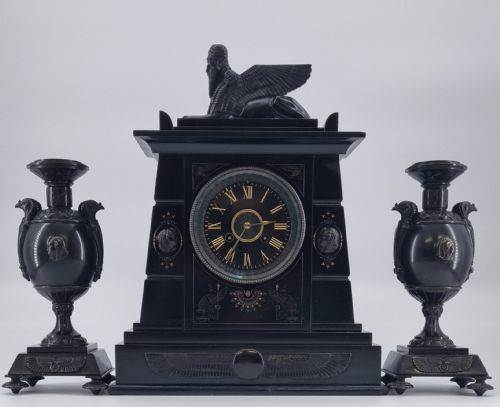

Victorian Mantel Urn
When you search for a victorian mantel urn, you are looking at substantial decorative vessels and garnitures designed to anchor a room.
Victorian Mantel Urn
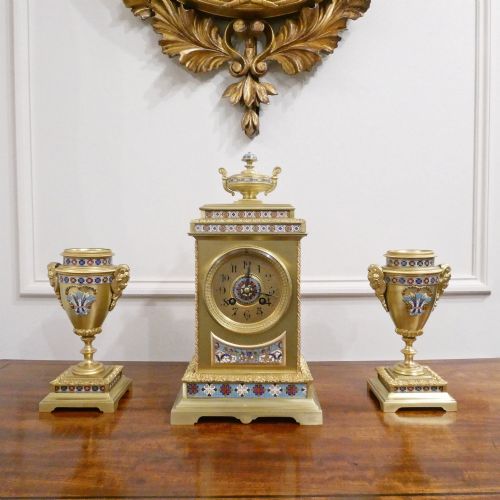
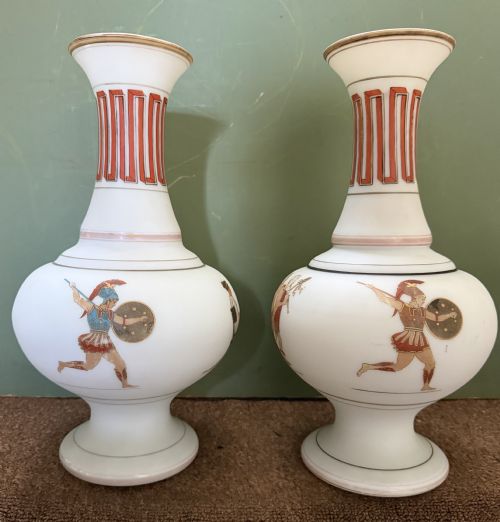
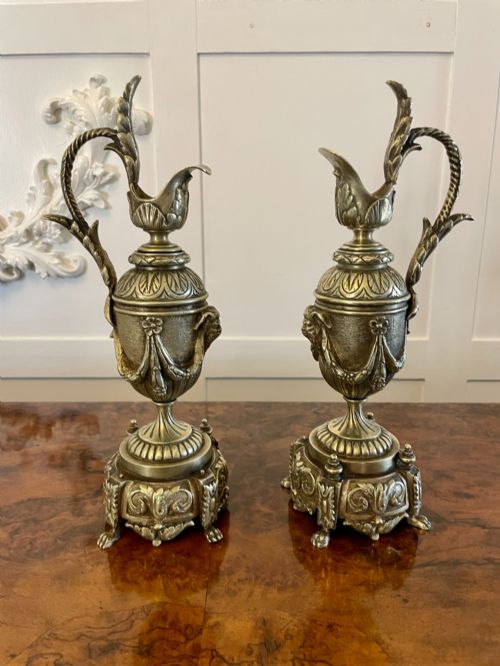
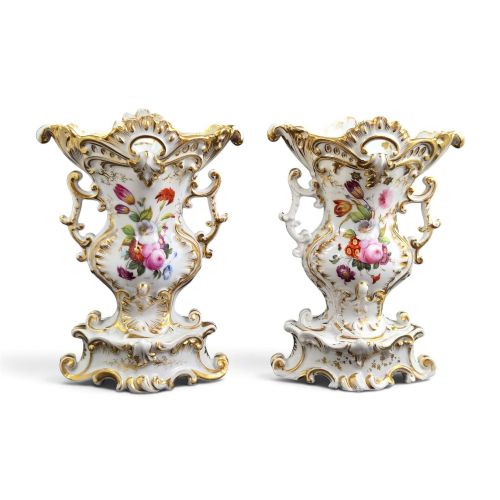
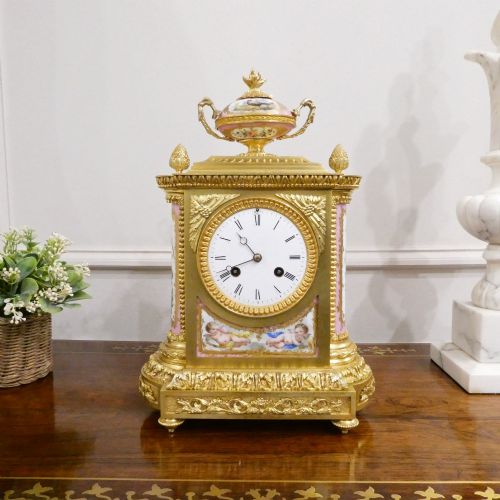
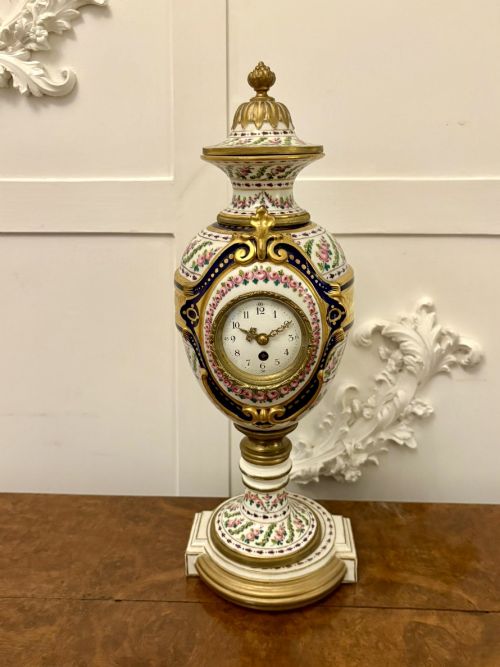
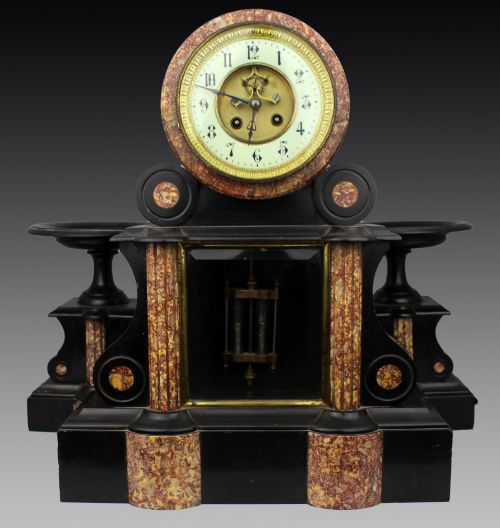
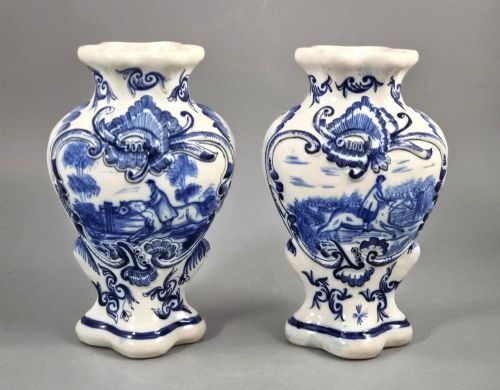
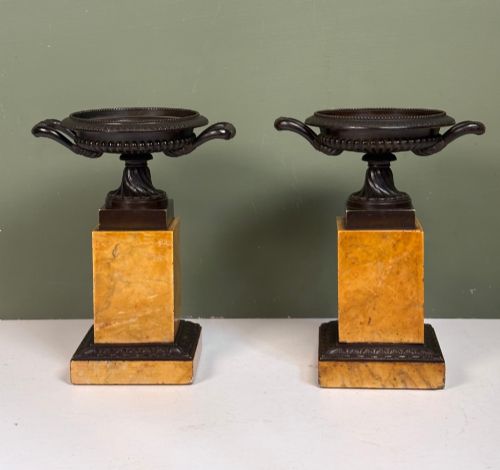
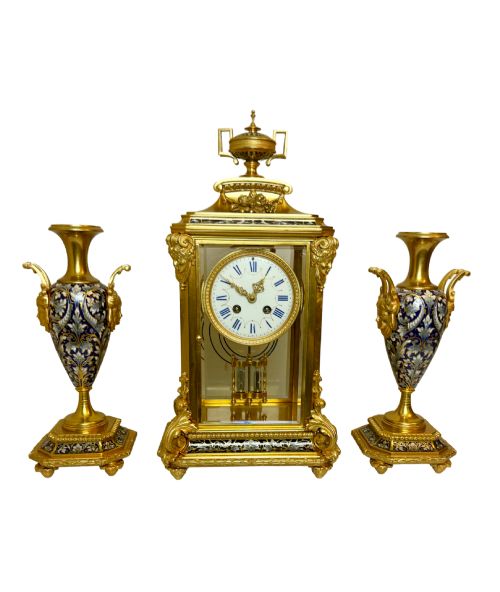
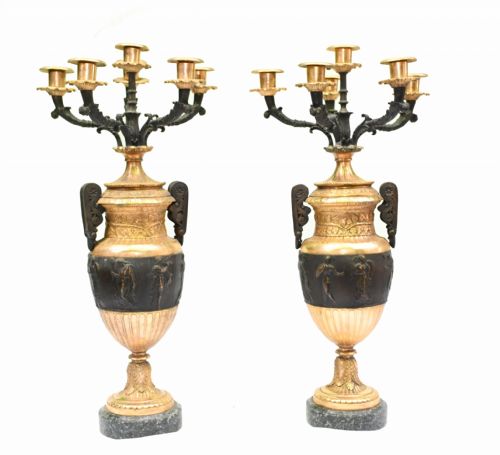
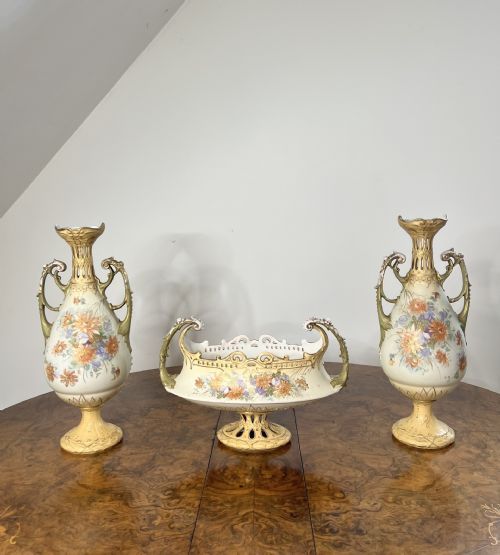
A victorian mantel urn on this page typically appears as part of a clock garniture set, flanked by matching vases or candelabra, or displayed individually upon a marble or onyx plinth. These decorative items originate predominantly from nineteenth-century French and English workshops, taking forms such as classical amphorae, cassolettes, and lidded jars.
The materials span from hand-painted porcelain and enamel to cast bronze, marble, and gilt brass, reflecting the eclectic revival styles popular during the period.
Buyers encounter designs rooted in Neoclassical, Rococo, and Egyptian Revival aesthetics, often produced to dominate the chimney-piece or central salon table.
How they were made
Manufacturers combined metal casting with stone carving, mounting cast gilt bronze or spelter mounts onto turned marble, onyx, or slate bases. Gilding, champlevé enamel, and hand-painted floral or figural panels decorate the porcelain and glass bodies, executed through specialised factory and studio processes.
Many examples utilise modular construction, where individual cast elements, handles, and lids are screwed or pinned together to form complex garniture sets.
Victorian Mantel Urn Retail Price Guide 2026
Typical asking prices for victorian mantel urn among the pieces listed under this phrase on Sellingantiques today, from the lower quarter to the upper quarter. They describe what is for sale here now, not the wider market.
Listings feature nineteenth-century French and English works in marble, bronze, porcelain, and enamel.
What varies in quality
The standard of the casting and the crispness of the chasing separate ordinary production from superior examples. Finely finished ormolu shows sharp detail in the foliate mounts and figures, whereas lesser pieces exhibit softened edges from worn moulds.
Hand-painted porcelain elements display varying degrees of artistic skill, where delicate brushwork on floral or portrait panels elevates an object above standard factory decoration.
Jean-Baptiste Delettrez·Japy Frères·Jacob Petit·Fourmaintraux-Courquin·Royal Vienna·Thomas Hope·Royal Doulton·Wolfsohn Dresden·KPM Berlin·A.D Mougin·Mason·Achille Brocot
The Victorian Mantel Urn Glossary
- Garniture
- A matching set of ornamental objects for a mantelpiece, usually consisting of a central clock flanked by two vases, urns, or candelabra. These sets create a balanced, symmetrical arrangement.
- Ormolu
- Gilded bronze, applied to decorative hardware, clock cases, and mounts during the nineteenth century. The technique involves coating metal with a gold amalgam.
- Champlevé
- An enamelling technique where troughs or cells are sunk into the surface of a metal object and filled with vitreous enamel powder before firing. This creates colourful decorative patterns.
- Cassolette
- A decorative vase or urn with a reversible lid that functions either as a vessel or a burner for perfumes. They are frequently mounted on marble plinths.
- Spelter
- A zinc alloy used as a cheaper alternative to bronze for casting figures and decorative mounts. It is usually painted or bronzed to simulate heavier metals.
Victorian Mantel Urn: Frequently Asked Questions
What is a clock garniture?
A clock garniture is a matched set of three pieces designed to sit together on a mantelpiece, featuring a central clock accompanied by two side urns, vases, or candelabra.
These sets were arranged symmetrically to create an impressive decorative display in nineteenth-century drawing rooms.
How were mantel urns used?
Mantel urns served purely decorative purposes, placed on fireplaces, console tables, and pedestals to demonstrate the taste and wealth of the household.
Some variants, such as cassolettes, doubled as burners for scented oils or perfumes during grand gatherings.
How do I identify French revival styles?
French revival pieces incorporate distinct historical motifs, such as the asymmetrical scrolls and shell work of Rococo revival or the strict symmetry and urn shapes of Neoclassical design.
Makers frequently utilised gilt bronze mounts and hand-painted porcelain to emulate earlier royal aesthetics.
How should I clean marble and gilt bronze?
Marble surfaces respond best to gentle dusting with a dry microfibre cloth, avoiding acidic cleaners that can etch the stone.
Gilt bronze and ormolu require minimal intervention, using only a soft brush to remove dust from recessed areas without disturbing the metal finish.