
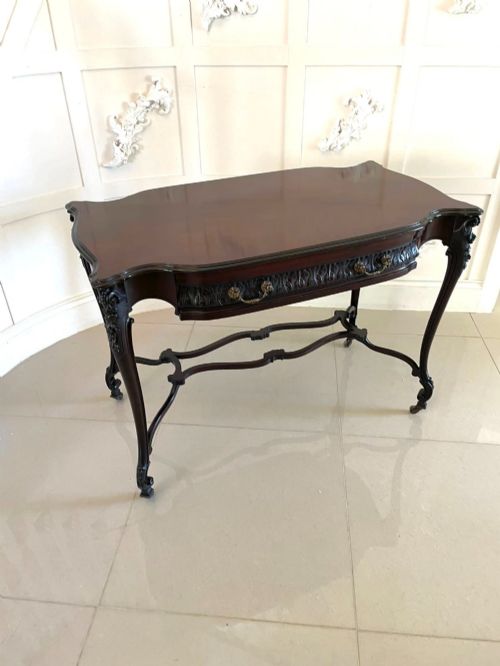
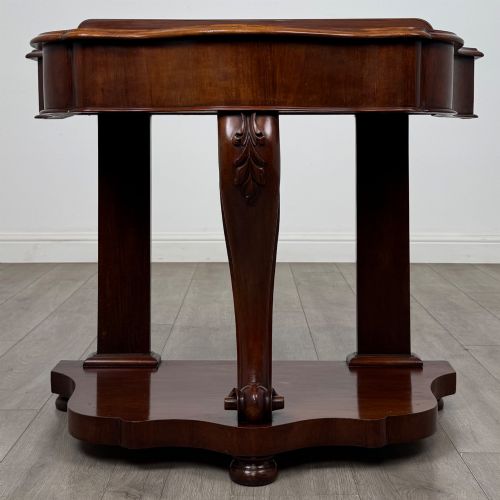
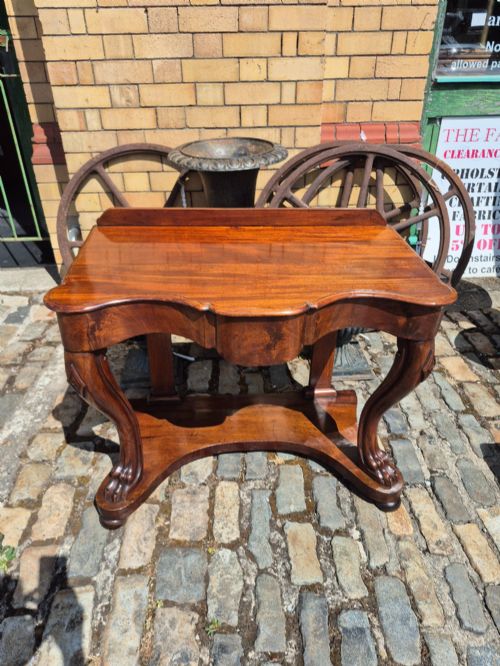
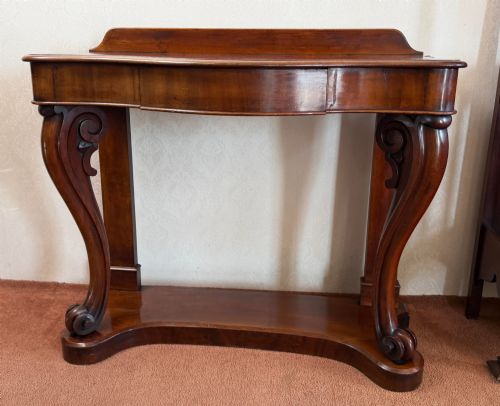

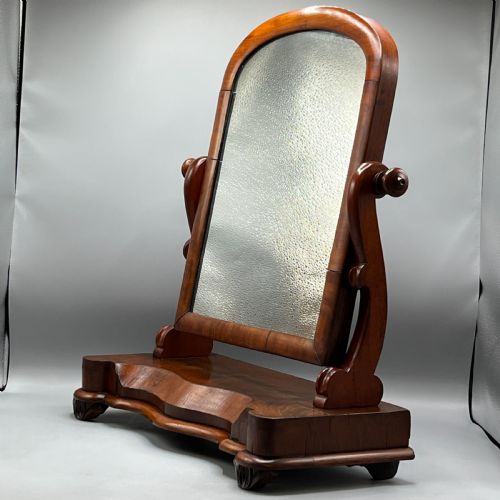
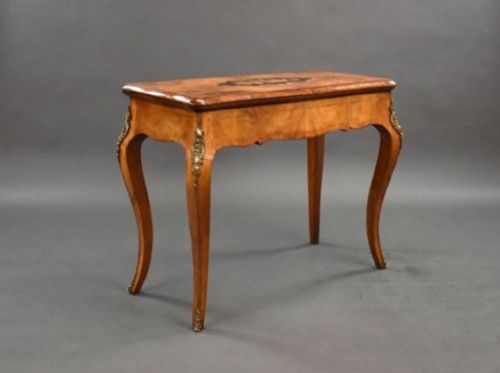


Victorian Mahogany Serpentine Table
A victorian mahogany serpentine table brings fluid, undulating curves and rich timber grain directly into a room.
Victorian Mahogany Serpentine Table
A victorian mahogany serpentine table encompasses a distinct group of nineteenth-century furnishings defined by their bowed and concave fronts. Buyers searching for this phrase seek functional furniture that combines structural timber with graceful, sweeping lines. Console tables and centre tables dominate the forms, alongside card tables and dressing mirrors.
The pieces emerge predominantly from the Victorian period and the broader nineteenth century, utilising durable timbers shaped with confident curves. Makers of the era employed the serpentine outline on hall tables, tea tables, and writing desks to soften domestic interiors. These items range from compact wall consoles to substantial freestanding centre pieces.
How they were made
Makers constructed these tables primarily using solid and veneered mahogany, often selecting figured or flame varieties to accentuate the curved surfaces. Secondary woods provided internal stability while the dense exterior timber took a high polish. Satinwood inlays and brass mounts frequently highlight the drawer fronts and borders.
Technique focused on the precise cutting of the undulating serpentine edge from thick timber or built-up laminates. Carved details appeared on cabriole legs and aprons, while specialised joints allowed for tilt-top mechanisms and fold-over card surfaces. Marble tops also feature on select console variants.
The site's listings record these tables appearing across the Victorian era alongside broader nineteenth-century and early twentieth-century revivals.
What varies in quality
Quality rests heavily on the selection of the mahogany veneer and the fluidity of the serpentine curve. Superior examples display symmetrical flame grain patterns that follow the sweeping contours without disruption. Lesser pieces rely on plain timber with rigid, uninspired shaping.
The depth and crispness of hand-carving on the base distinguish finer examples from standard production. Well-executed cabriole legs and substantial structural framing elevate the status of a console or centre table. The integration of secondary woods and intact mechanisms further separates ordinary items from exceptional ones.
The Victorian Mahogany Serpentine Table Glossary
- Serpentine
- A shape characterised by a central convex curve flanked by two concave curves. This outline creates a gentle, undulating movement across the front of a table.
- Console table
- A table designed to stand against a wall, frequently supported by wall brackets or front legs. These items served formal display purposes in nineteenth-century halls and reception rooms.
- Tilt-top table
- A table featuring a mechanism that allows the tabletop to pivot into a vertical position when not in use. This design saved space in domestic interiors.
- Figured mahogany
- Timber exhibiting distinctive natural grain patterns such as flame, fiddleback, or mottle. Craftsmen prized these boards for prominent display surfaces.
Victorian Mahogany Serpentine Table: Frequently Asked Questions
Where did these tables stand?
Console variants stood flat against walls in entrance halls and reception rooms, often positioned beneath mirrors. Freestanding centre tables occupied the middle of large Victorian parlours.
Smaller card and tea tables sat near seating areas until needed for evening games or hospitality.
How do I care for mahogany?
Keep the timber away from direct sunlight and heat sources to prevent the wood and veneer from drying out. Regular dusting with a soft, dry cloth preserves the polished surface.
Apply occasional traditional wax polish to nourish the grain without building up heavy residues.
Are these tables solid wood?
Most examples combine solid structural framing with carefully applied mahogany veneers over secondary timbers. This technique prevented warping on wide surfaces while displaying decorative grain.
Heavier components like legs and mouldings typically consist of solid mahogany.
How do I identify the period?
Examine the construction methods, timber choice, and decorative vocabulary visible on the piece. Nineteenth-century examples often feature dense mahogany, hand-cut dovetails, and stylistic nods to earlier revivals.
Subtle variations in edge moulding and leg profiles help narrow down the decade of manufacture.