

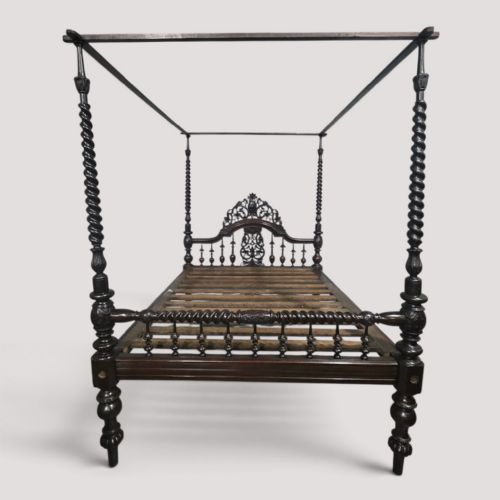
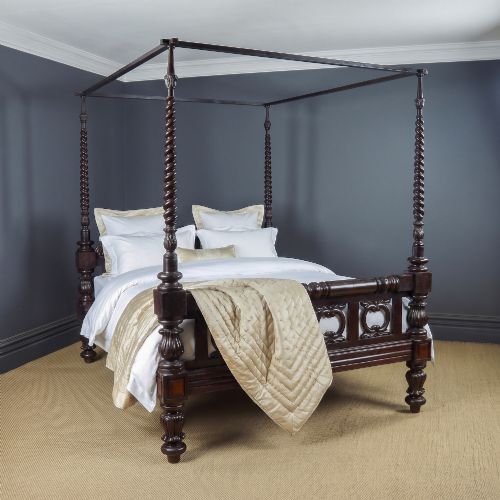
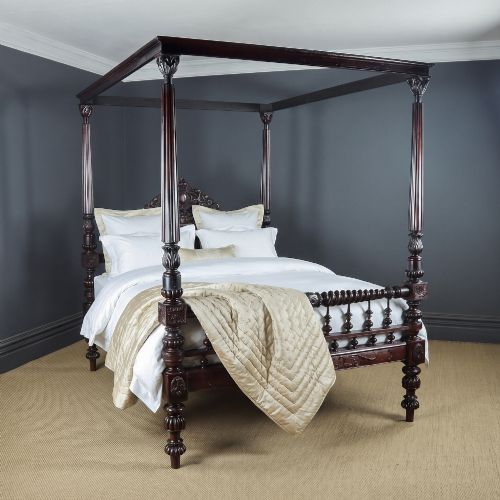
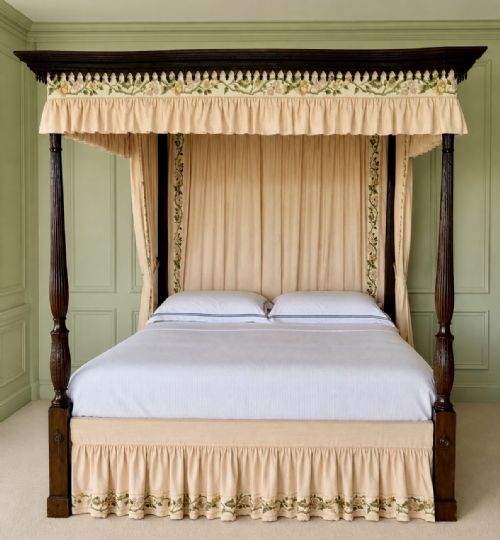


Victorian Mahogany Poster Bed
These substantial pieces of furniture offer deep timber tones and imposing architectural presence, making a victorian mahogany poster bed the centrepiece of any grand bedroom.
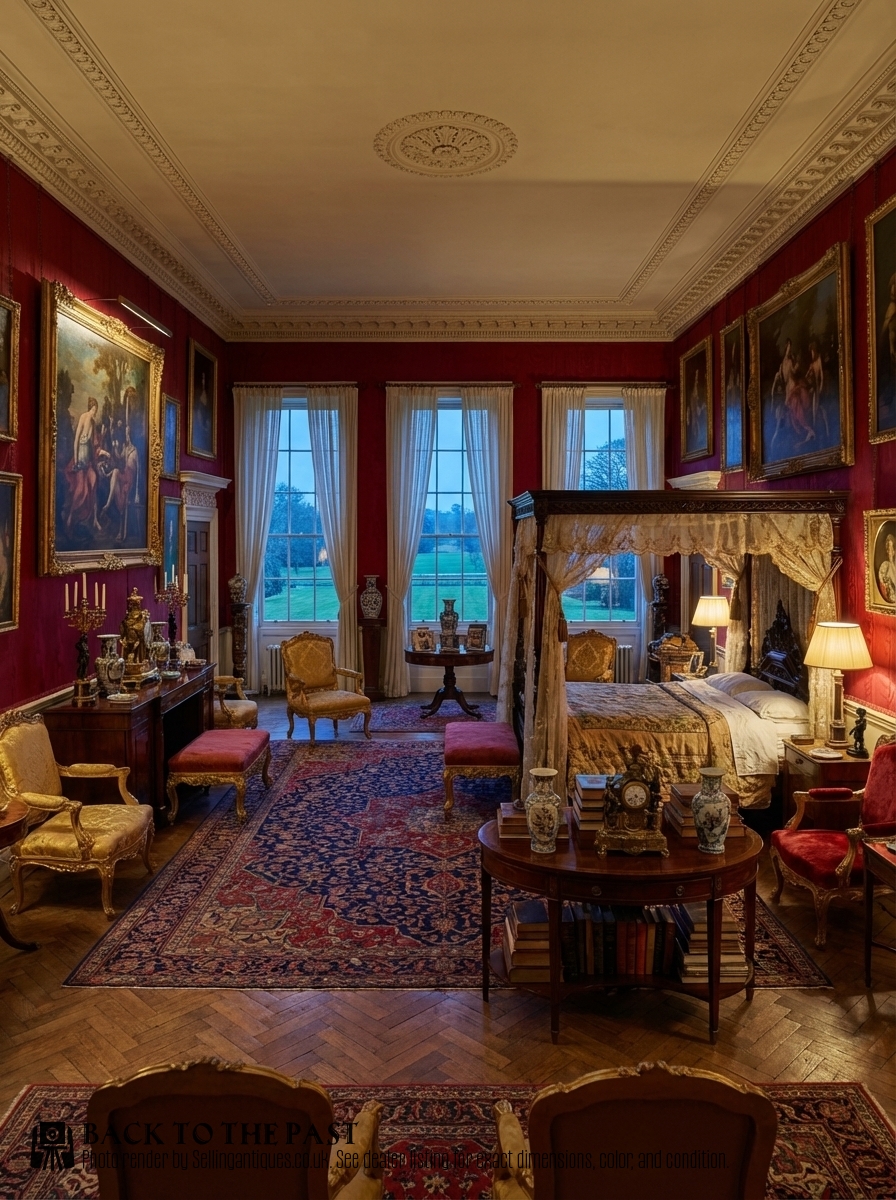
Victorian Mahogany Poster Bed
A victorian mahogany poster bed combines heavy architectural timber framing with tall upright posts designed to support a tester canopy. Buyers searching this phrase encounter substantial bedframes and four poster beds spanning the nineteenth century.
Most examples originate from the Victorian period alongside Anglo-Indian colonial workshops and British colonial influences. Sizes vary considerably from single widths up to super king dimensions and bespoke pet furniture.
The form ranges from traditional British Victorian designs to elaborate Anglo-Indian colonial and William IV revival interpretations. Half tester beds also appear within this category, offering a suspended canopy over the head of the mattress.
Materials and construction
Makers utilised solid mahogany and flame mahogany veneer laid over secondary timbers such as pine. Hardwood structures provide the necessary rigidity to support heavy tester frames and substantial cornices.
Carving is a defining decorative technique, seen in hand carved posts and structural woodwork. Selected pieces incorporate secondary elements of fabric, porcelain, gilt wood, teak and rosewood to enrich the design.
Victorian Mahogany Poster Bed Retail Price Guide 2026
Typical asking prices for victorian mahogany poster bed among the pieces listed under this phrase on Sellingantiques today, from the lower quarter to the upper quarter. They describe what is for sale here now, not the wider market.
Listings feature pieces spanning the 19th century, incorporating specific dates from 1850 through to 1900.
Judging the standard
The refinement of the hand carving on the posts dictates the visual distinction of the piece. Crisp, deep relief work on the timber separates standard joinery from superior workshop output.
The selection of mahogany timber grain, particularly the use of figured flame mahogany veneer, defines the aesthetic appeal. Structural proportions and the integrity of the original joints determine overall execution.
Howard & Sons
The Victorian Mahogany Poster Bed Glossary
- Half tester
- A wall-mounted or post-supported canopy that covers only the upper portion of the bed. This configuration was common in mid nineteenth century chambers.
- Flame mahogany
- A veneer cut from timber fork joints where the grain forms a distinctive flickering flame pattern. It was utilised on prominent surfaces to create visual movement.
Victorian Mahogany Poster Bed: Frequently Asked Questions
Will a four poster bed fit standard modern mattresses?
Many nineteenth century frames were built to bespoke dimensions rather than modern standard sizes. Checking the internal length and width measurements ensures compatibility with contemporary mattresses.
Custom mattress ordering is frequently required for antique beds originating from colonial workshops or specific nineteenth century periods.
How do I assemble a heavy wooden bedframe?
These large structures typically rely on heavy timber bolts, tenon joints and knockdown brackets to secure the posts, headboard and tester frame. Professional assembly is often recommended due to the sheer weight of the mahogany components.
Careful alignment of the tall upright posts ensures the overhead tester remains level and structurally sound during setup.
What is the difference between standard and colonial styles?
Standard British Victorian beds generally feature restrained classic revival lines and conventional turned or carved posts. Colonial and Anglo-Indian variants frequently exhibit denser, deeply carved botanical motifs and heavier proportions.
Regional workshops adapted British room forms using dense local hardwoods, resulting in distinct visual weight and detailing.
How should I care for mahogany timber?
Maintaining nineteenth century mahogany involves keeping the wood away from direct heat sources and sudden humidity shifts. Regular dusting with a dry, soft cloth preserves the natural lustre of the polished surface.
Harsh chemical cleaners should be avoided to protect the underlying timber polish and delicate veneer work.