



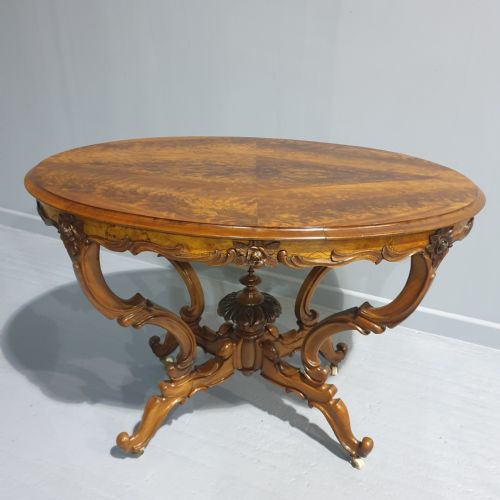


Victorian Mahogany Parlour Table
A victorian mahogany parlour table brings warmth and functional elegance to a room, offering the rich grain and solid construction characteristic of nineteenth-century furniture.
Victorian Mahogany Parlour Table
A victorian mahogany parlour table typically serves as a centre or side table, designed to sit prominently within a nineteenth-century interior. These pieces function as versatile surfaces for display, games, or everyday use within the home.
The selection ranges from circular top centre tables and shaped occasional pieces to nests of tables and games tables. Most examples date from the mid to late nineteenth century, spanning the eighteen fifties to eighteen nineties.
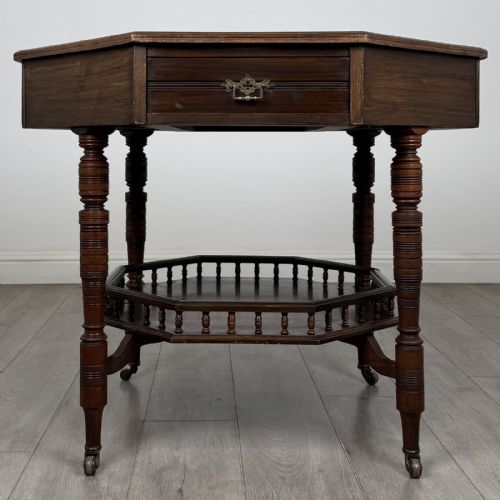
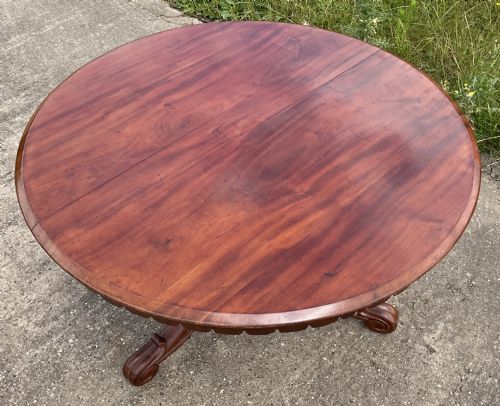
Buyers will encounter various top shapes, including circular, octagonal, and oval formats, alongside specialised forms like bagatelle or golf game tables. Mahogany remains the dominant timber across these forms, frequently paired with secondary woods and decorative inlays.
Materials and construction
Makers utilised solid mahogany and figured veneers to build these tables, often selecting timber for its rich grain patterns and deep colour. Secondary woods provided structural support beneath the visible polished surfaces.
Construction techniques include turned pedestals, cabriole legs, and multi-legged frames designed to support heavy tabletops. Surfaces frequently feature hand-carved foliate details, inlaid contrasting woods, or bevelled edges.
Victorian Mahogany Parlour Table Retail Price Guide 2026
Typical asking prices for victorian mahogany parlour table among the pieces listed under this phrase on Sellingantiques today, from the lower quarter to the upper quarter. They describe what is for sale here now, not the wider market.
Several tables doubling as game boards remind us that Victorian parlour life involved serious competition over golf, bagatelle, and squails.
Factors of quality
Quality in a victorian mahogany parlour table rests upon the choice of timber and the depth of its figuring. Well-chosen mahogany displays natural lustre and grain movement that enhances the overall presence of the piece.
The standard of carving and joinery distinguishes finer examples from simpler workshop output. Crisp hand-carved foliate motifs and stable, well-fitted structural joints indicate superior craftsmanship.
The Victorian Mahogany Parlour Table Glossary
- Centre table
- A freestanding table designed to be viewed from all sides and placed in the middle of a room rather than against a wall.
- Mahogany
- A durable tropical hardwood prized for its deep reddish-brown colour and stability in furniture construction.
- Cabriole leg
- A furniture leg that curves outward and then tapers inward, typically ending in a decorative foot.
- Foliate
- Ornamentation or carving styled after leaves and foliage found in nature.
- Nest of tables
- A set of graduated tables designed to fit neatly one beneath another when not in use.
Victorian Mahogany Parlour Table: Frequently Asked Questions
What is a parlour table?
A parlour table is a nineteenth-century freestanding surface used in the main reception rooms of a home for display, entertaining, or games.
These pieces reflect the social habits of the period, accommodating everything from tea services to parlour amusements.
Where should I place a centre table?
Centre tables are designed to sit away from walls as freestanding focal points in a room. They work effectively in the middle of a drawing room or study where people can walk around them.
Ensure there is sufficient clearance around the piece to appreciate its form and allow for comfortable movement.
How do I care for mahogany furniture?
Mahogany benefits from consistent indoor humidity levels and protection from direct sunlight to preserve its rich colour. Regular dusting with a soft, dry cloth maintains the polished finish.
Avoid placing damp items directly on the wood surface to prevent staining the polished timber.
How do I date a victorian table?
Dating relies on examining the construction methods, secondary timbers, and stylistic markers such as turned pedestals or carved foliage. The transition from mid-nineteenth-century forms to later styles provides clues to the decade of manufacture.
Comparing the edge profiles, leg designs, and overall proportions against known period examples helps establish a timeline.