
Victorian Mahogany Linen Press
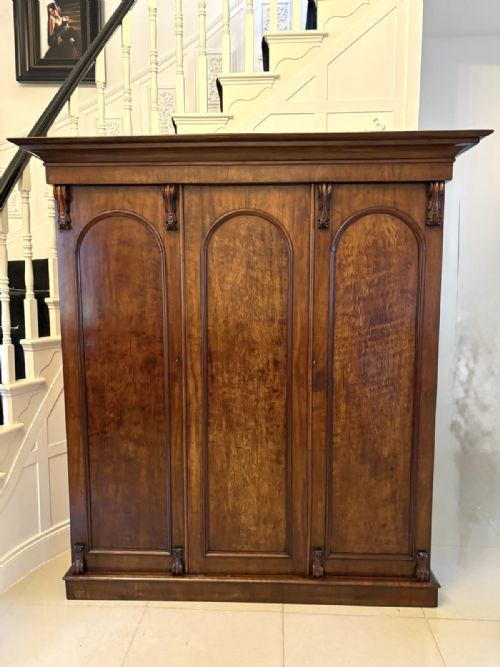
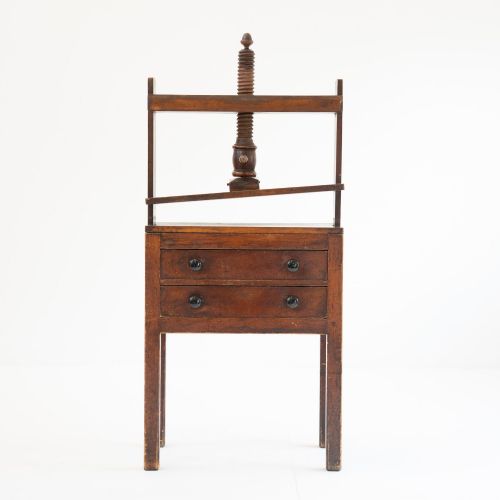
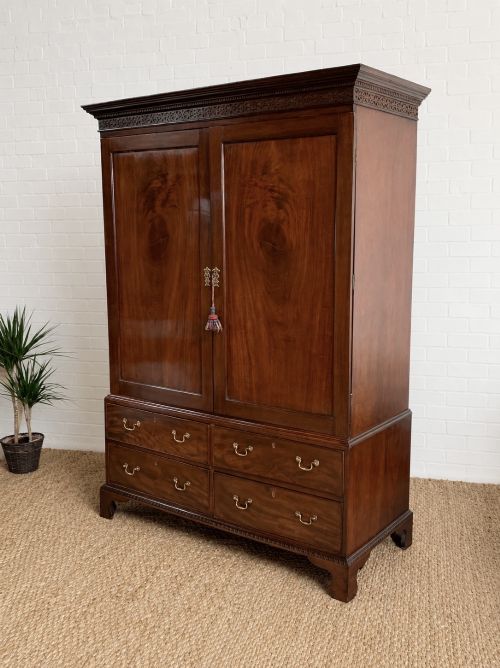
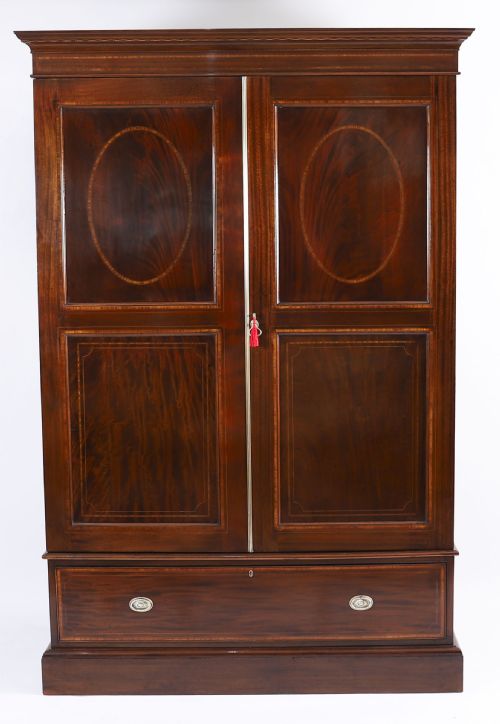
A victorian mahogany linen press offers grand storage with deep historical character, combining generous upper press cupboards and lower drawers.
Victorian Mahogany Linen Press
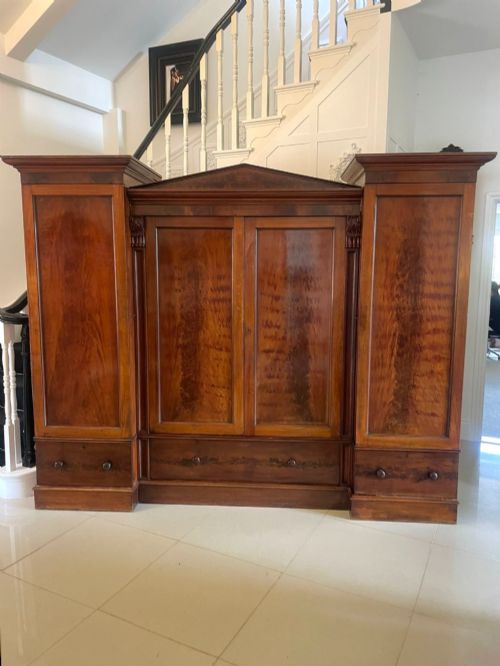
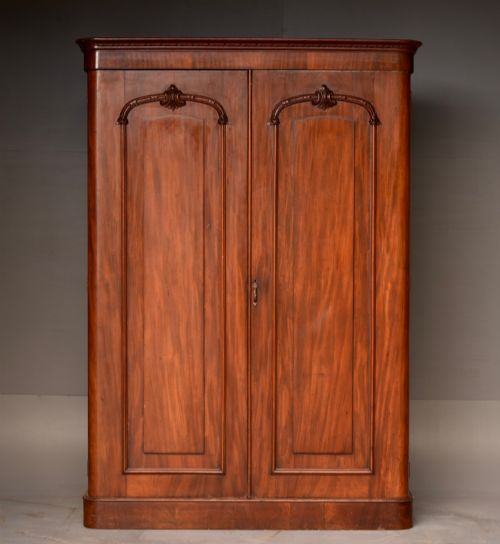
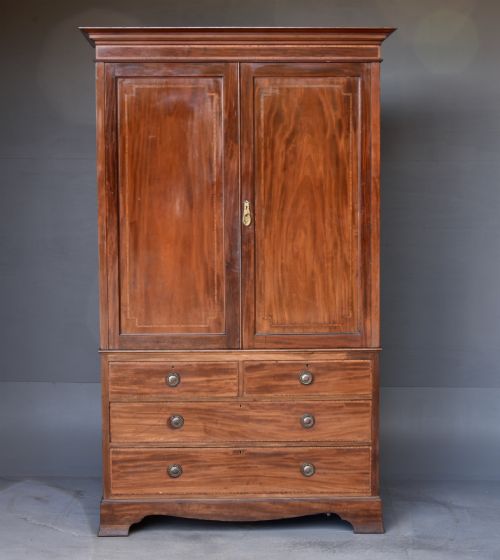
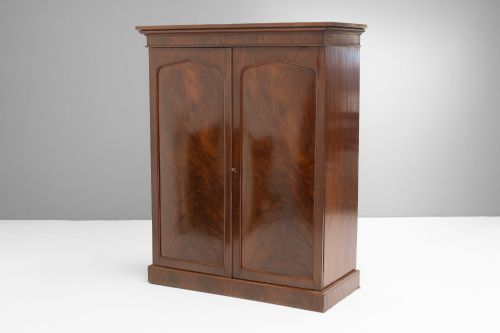
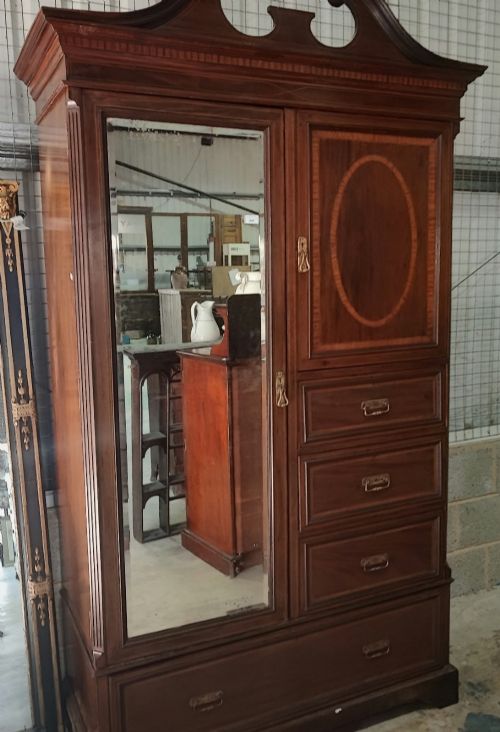
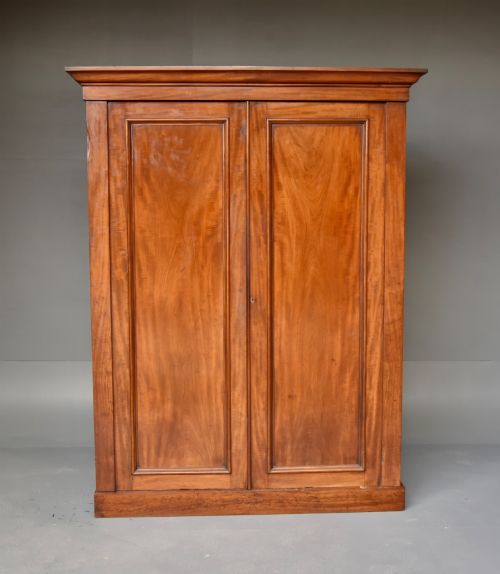
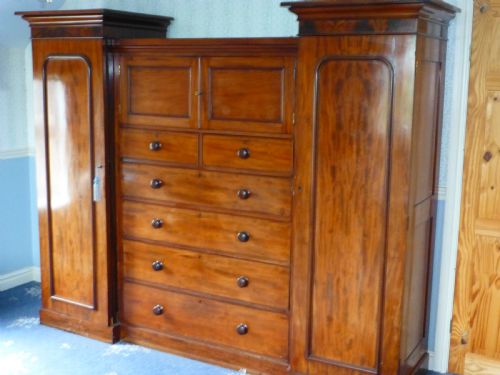
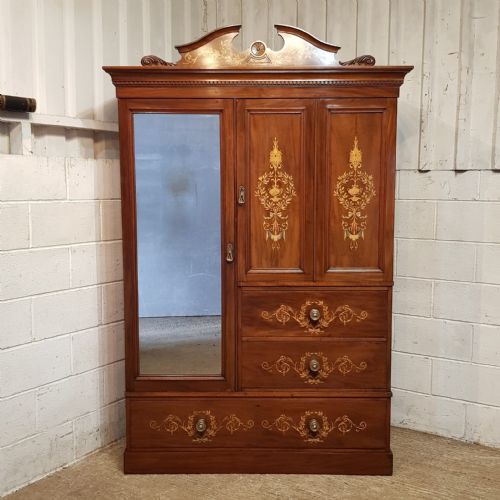
A victorian mahogany linen press is a substantial piece of bedroom furniture designed originally to store folded linens, shirts and garments. The form typically pairs a tall upper section of panelled doors enclosing sliding trays with a robust chest of drawers below.
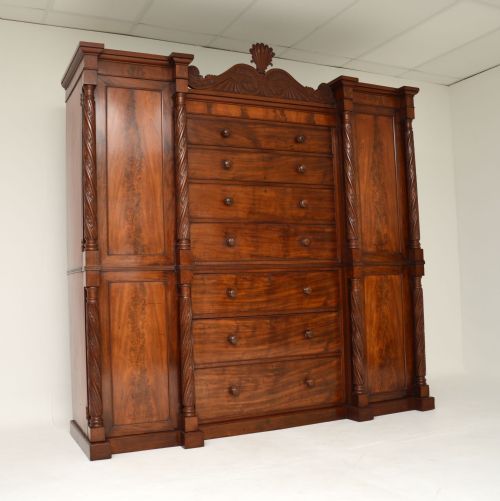
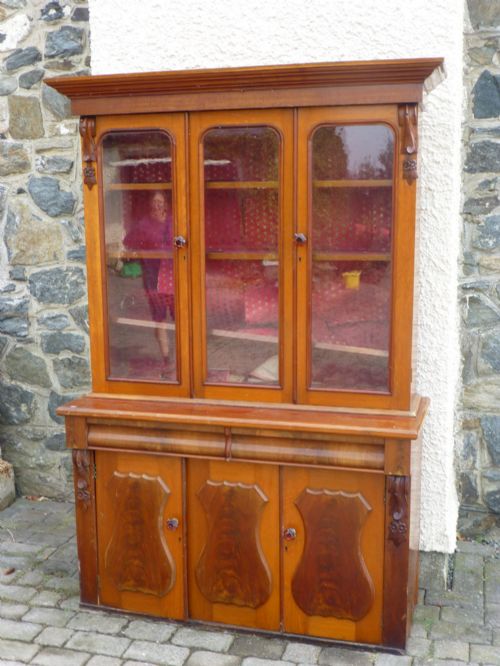
Most examples found on this page date from the nineteenth century, spanning standard Victorian production through to later Edwardian variations. You will encounter straightforward country house utility presses alongside elaborate breakfront designs with flame veneers and carved cornices.
While many retain their interior linen slides, some pieces have been converted internally for modern hanging space. The proportions remain reliably architectural, often demanding considerable ceiling height and dedicated floor space in a modern bedroom.
Materials and Construction
Makers built the carcase primarily from solid mahogany, frequently applying highly figured flame mahogany veneers to the principal door panels and drawer fronts to catch the light. Secondary interior elements often utilise sturdy oak, pine or satinwood for drawer linings and internal shelving.
Cabinetmakers employed traditional dovetailed joints for the drawer construction and sturdy pegged frames to support the heavy upper cupboard sections. Brass hardware, including original flush handles, lock escutcheons and door bolts, completes the structural assembly.
The inventory records various forms spanning standard wardrobes, compactums, and dressing chests across the nineteenth century.
Assessing Quality
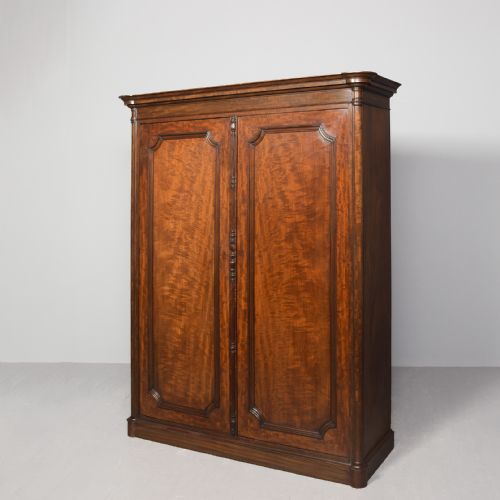
Quality rests significantly on the selection of the timber, where exceptional pieces display symmetrical, book-matched flame mahogany grain across expansive door surfaces. The depth of colour and the preservation of the original hand-polished finish distinguish superior cabinet work from standard utility pieces.
Construction details also dictate the tier of a piece, observable in the tightness of the drawer dovetails, the weight of the brass fittings, and the presence of fine decorative details such as blind fretwork cornices or subtle marquetry inlay. Maker attribution to known workshops further elevates the standing of an individual press.
maples & co·Edwards and Roberts·Johnston’s of London·Gillows·S & H Jewell·Heals·Robert Strahan of Dublin·Heal & Son
The Victorian Mahogany Linen Press Glossary
- Linen press
- A tall cupboard featuring sliding trays in the upper section for flat textiles, positioned above a chest of drawers. This configuration evolved to keep household linens clean and pressed before the widespread adoption of fitted wardrobes.
- Compactum
- A multi-compartment wardrobe combining hanging space, drawers, and linen shelves within a single unified piece. These clever designs maximise storage efficiency in smaller bedroom footprints.
- Flame mahogany
- A veneer cut from the fork of the mahogany tree where the branch meets the trunk, creating a distinctive flickering flame pattern. Cabinetmakers reserved this decorative timber for the most prominent exterior surfaces.
- Blind fretwork
- Carved ornamentation applied to a flat surface in imitation of pierced fretwork without actually cutting through the wood. Victorian makers utilised this technique to add architectural texture to cornices and friezes.
- Breakfront
- A piece of furniture featuring a central section that projects forward from the flanking wings. This configuration breaks up the flat facade and creates pleasing shadow lines across large wardrobes.
Victorian Mahogany Linen Press: Frequently Asked Questions
Can I use a linen press as a wardrobe?
Many presses have internal wooden sliding trays that are easily removed to create vertical hanging space for modern garments.
Before making changes, check whether the internal depth accommodates standard coat hangers without the doors catching.
How do I care for antique mahogany?
Protect the wood by keeping the piece away from direct sunlight and maintaining stable room humidity to prevent veneer splitting.
Apply a traditional beeswax polish sparingly to maintain the natural lustre without building up heavy chemical residues.
How do I date a victorian linen press?
Examine the drawer construction for hand-cut dovetails, the thickness of the timber, and the style of the cornice moulding.
Earlier Victorian pieces often display rich flame mahogany veneers and simpler lines, while late Victorian examples may incorporate heavier revival styling.