


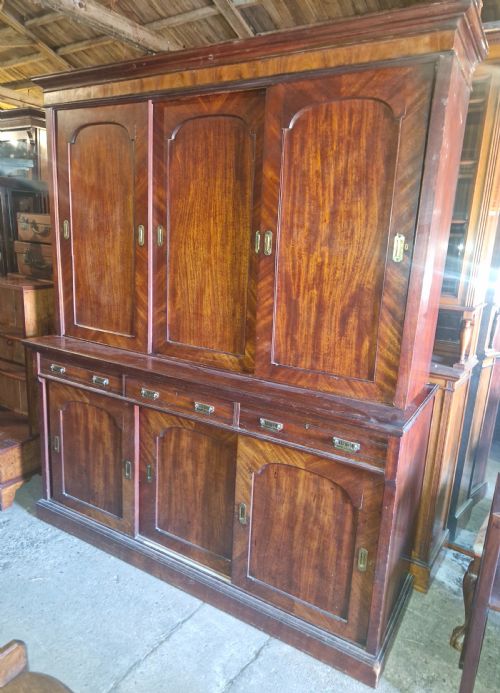
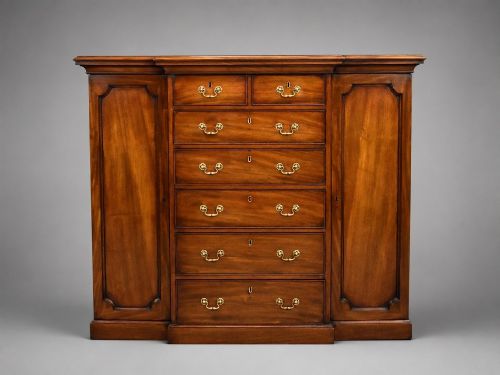
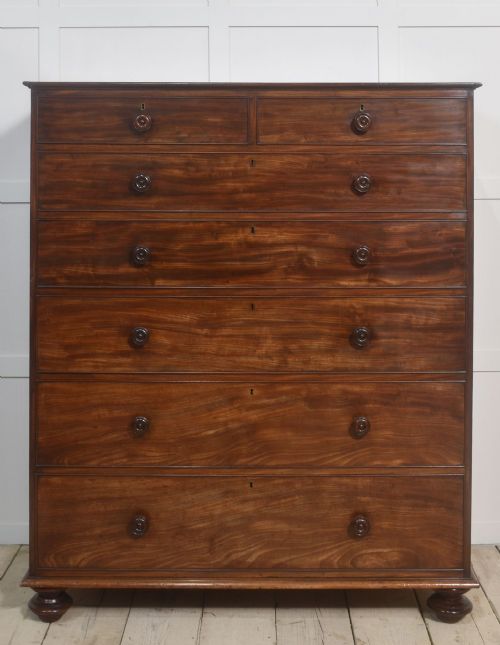
Victorian Mahogany Dresser Cabinet
These pieces carry the warmth and timber weight that define a Victorian mahogany dresser cabinet.
Victorian Mahogany Dresser Cabinet
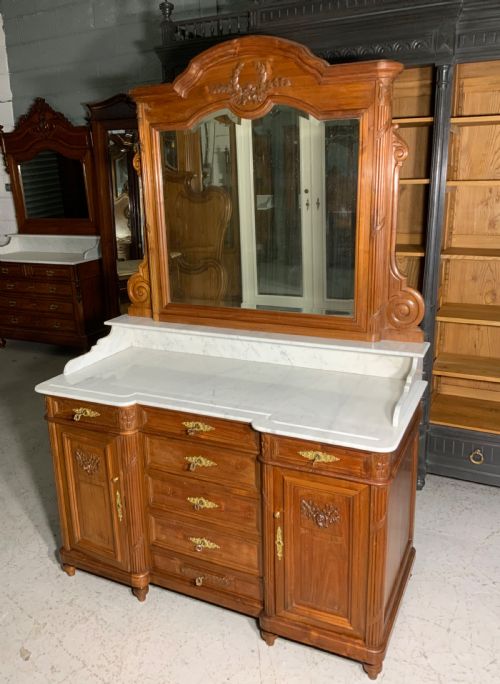
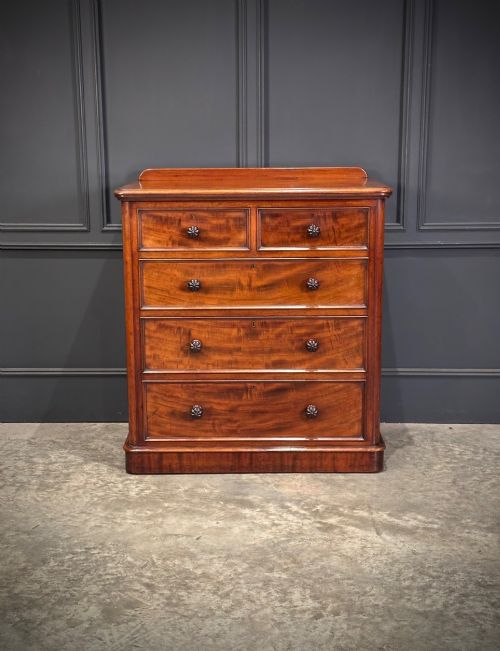
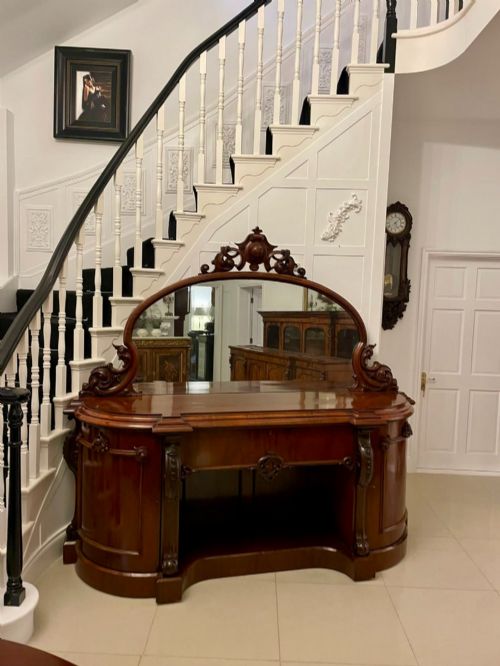
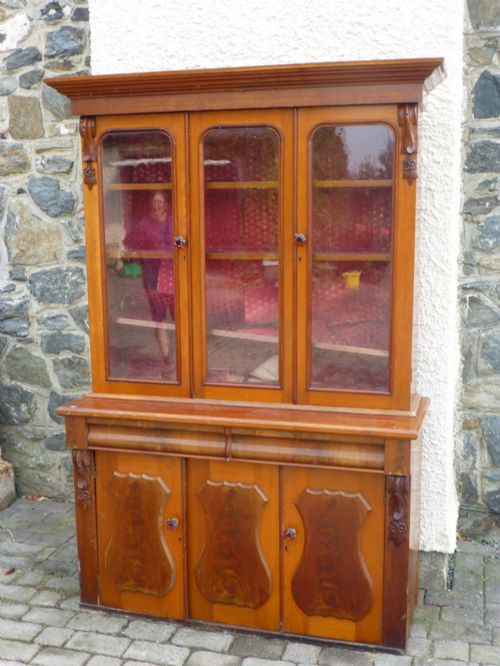
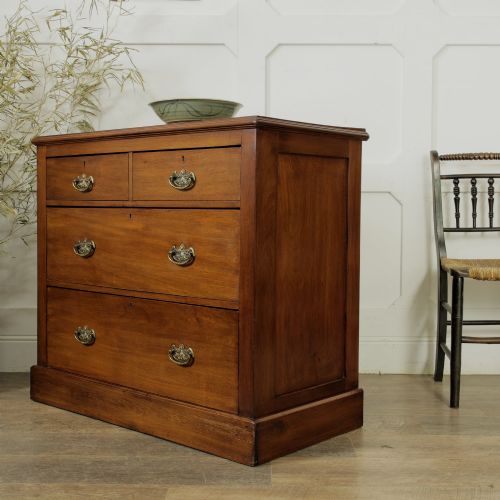
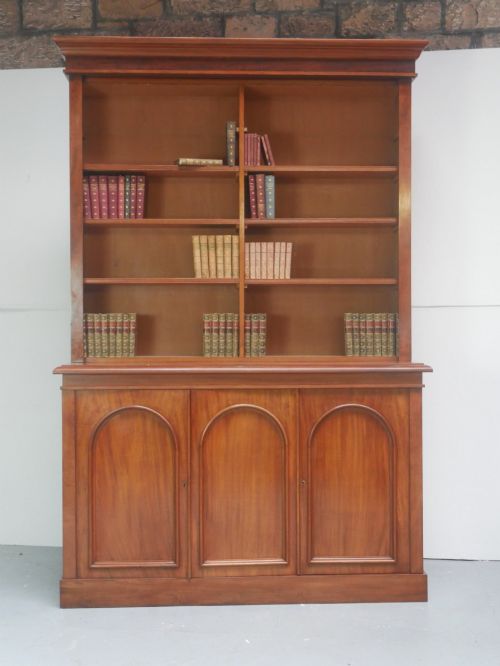
When you search for a victorian mahogany dresser cabinet, you encounter sturdy storage furniture built during the nineteenth century. These items span various forms, including sideboards, chests of drawers, bookcases, and kitchen dressers, alongside smaller apprentice or miniature pieces.
The majority of pieces originate from the Victorian period, though adjacent styles like Georgian, Edwardian, and nineteenth-century Scottish or Welsh vernacular appear. They function primarily as storage units or display pieces, combining deep drawers with shelving, cupboards, or glazed upper sections.
Regional variations emerge across the selection, from large country house estate office cabinets to industrial cupboards. Buyers often find combinations of timber such as oak and pine carcases faced with rich mahogany.
Materials and construction methods
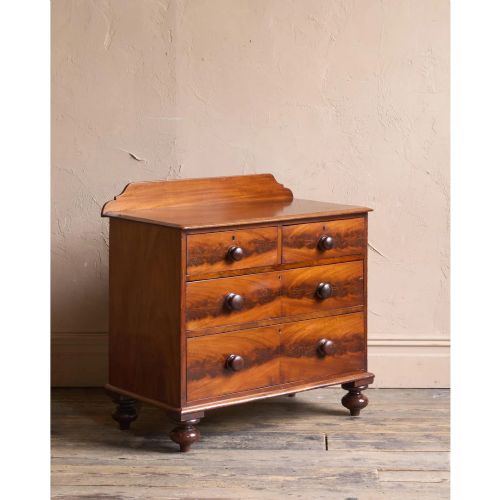
Makers utilised solid mahogany and flame mahogany veneer applied over secondary woods like pine and oak. Brass hardware, turned wooden handles, and mirror glass feature prominently in the construction of sideboards and cabinets.
Joinery methods rely on traditional cabinet-making techniques suited to heavy domestic storage. Crossbanding in satinwood and inlaid details add decorative contrast to the primary dark timber surfaces.
Victorian Mahogany Dresser Cabinet Retail Price Guide 2026
Typical asking prices for victorian mahogany dresser cabinet among the pieces listed under this phrase on Sellingantiques today, from the lower quarter to the upper quarter. They describe what is for sale here now, not the wider market.
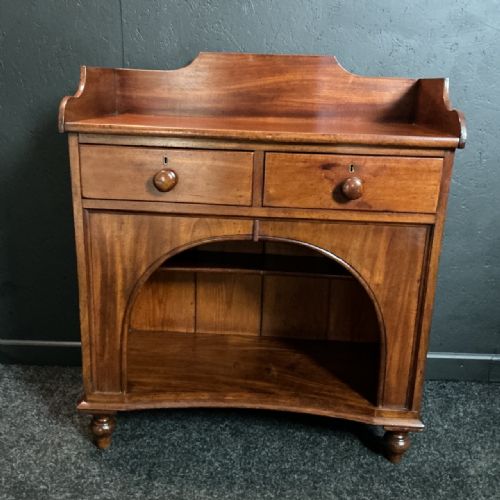
One extraordinary piece includes a dog kennel dresser, designed with a central aperture originally intended for a pet.
Judgments of quality and execution
Quality rests on the selection of timber figures, such as highly figured flame mahogany or careful satinwood crossbanding, which elevate the visual impact of a sideboard or chest. The crispness of carved details, such as mirror backs and turned handles, distinguishes finer items.
Structural integrity and the retention of original glass, brass fittings, and backboards govern how successfully a piece holds its character. Well-matched drawer linings and smooth operation of large banks of drawers indicate superior cabinet-making.
Mawer & Stephenson
The Victorian Mahogany Dresser Cabinet Glossary
- Flame mahogany
- A veneer cut from timber fork joints that creates a distinctive, swirling flame-like grain pattern. This figuration appears frequently on drawer fronts and sideboard doors.
- Crossbanding
- A strip of veneer applied across the grain direction around the border of a panel or drawer. It provides a neat contrasting frame.
- Bow front
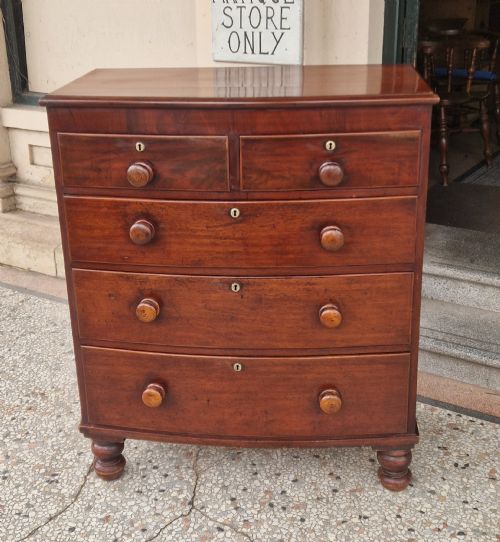
- A convex curved cabinet or chest front that swells outward in the centre. This curved shape requires specialist joinery.
- Chiffonier
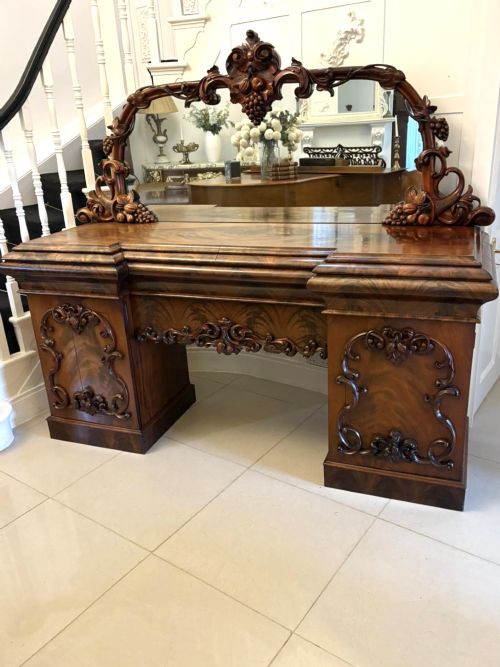
- A compact sideboard or low cabinet equipped with a shelf or mirrored back above. They gained popularity during the nineteenth century for dining and drawing rooms.
- Breakfront
- A piece of furniture whose central section projects forward from the flanking wings. It adds architectural depth to large bookcases and sideboards.
Victorian Mahogany Dresser Cabinet: Frequently Asked Questions
What is a Victorian mahogany dresser cabinet?
A Victorian mahogany dresser cabinet is a nineteenth-century storage piece made primarily from mahogany timber. These items range from kitchen dressers and sideboards to glazed bookcases and chests of drawers.
They provide substantial domestic storage, often featuring a combination of enclosed cupboards, open shelving, and fitted drawers built to last.
How do I use a dresser cabinet at home?
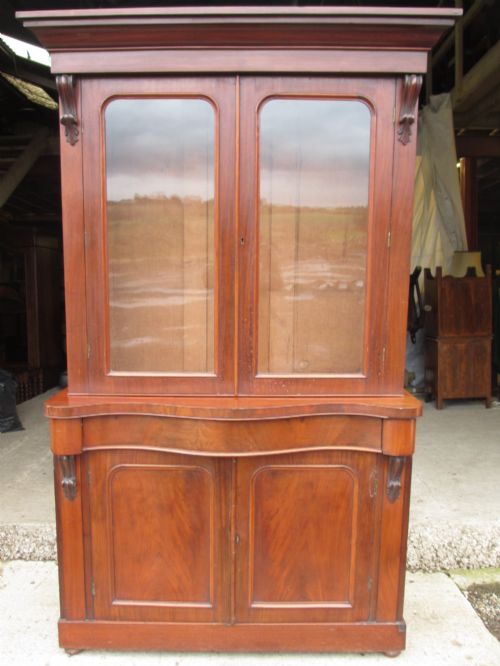
These cabinets suit dining rooms, kitchens, and living spaces for storing tableware, books, and linens. Glazed upper sections allow you to display ceramics while keeping dust away.
Lower drawer bases offer heavy utility storage, making them practical for everyday use in modern interiors.
How can I tell Victorian from Georgian pieces?
Victorian furniture often incorporates heavier proportions, bolder carved details, and sometimes mirror glass or flame mahogany veneers. Georgian pieces tend toward simpler structural lines and distinct cabinetry proportions.
Stylistic overlaps occur because cabinet-makers carried traditional designs across reigns into the mid-nineteenth century.
Are miniature dressers authentic period pieces?
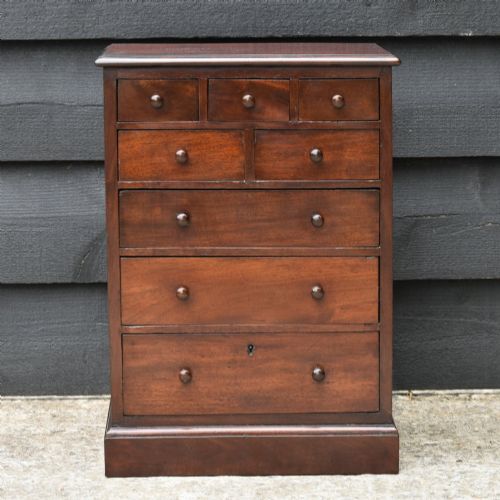
Miniature and apprentice chests or dressers are genuine nineteenth-century artefacts produced by makers as trade samples or demonstration pieces. They feature the same timber selection and joinery techniques as full-sized items.
Collectors prize them for their precise scale and accurate replication of larger furniture forms.