



Victorian Mahogany Dinner Server
A victorian mahogany dinner server offers solid timber utility and formal presence for the dining room.
Victorian Mahogany Dinner Server
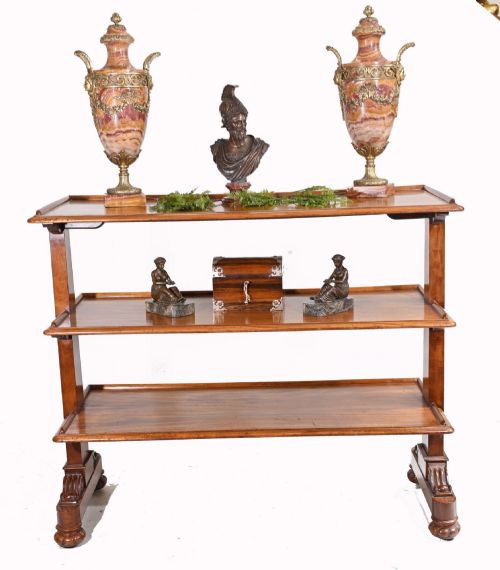
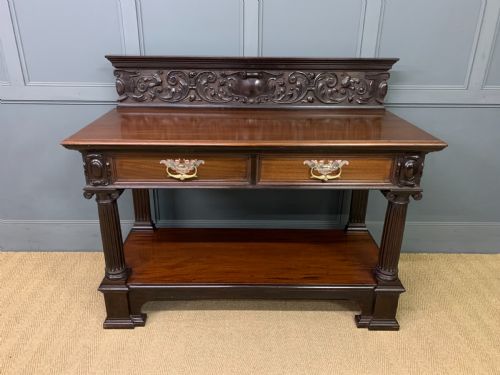
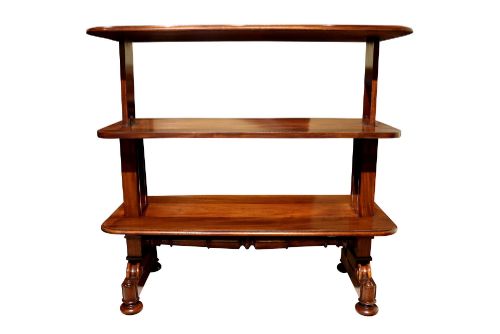
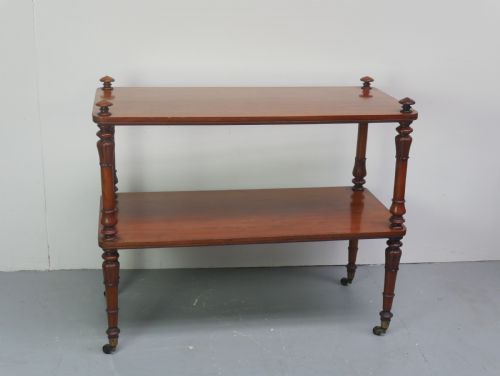
When you search for a victorian mahogany dinner server, you encounter robust dining room furniture designed to hold dishes and serving ware during large meals. The pieces on this page primarily take the form of multi-tiered buffets, serving tables, and dumb waiters originating from the nineteenth century.
Makers of the period built these items to function as practical side units in dining spaces, incorporating tiers, shelves, and occasionally cabinets or rise and fall mechanisms. The examples range from simple three-tier stands to large side cabinets attributed to prominent workshops.
How They Were Made
Makers constructed these servers using dense mahogany, selected for its rich grain and structural strength. Workshops frequently mounted the multi-tiered pieces on original castors to allow smooth movement across dining room floors.
Additional materials such as brass fittings and ceramic elements appear on specific designs, particularly on moving or extendable stands. Carved ornamentation adorns the structural supports and edges of the higher quality items.
Victorian Mahogany Dinner Server Retail Price Guide 2026
Typical asking prices for victorian mahogany dinner server among the pieces listed under this phrase on Sellingantiques today, from the lower quarter to the upper quarter. They describe what is for sale here now, not the wider market.
The listings combine mahogany timber with brass and ceramic elements across nineteenth-century buffets, dumb waiters, and serving tables.
What Varies in Quality
The standard of carving and the selection of timber figures create distinctions across the range. Pieces bearing attribution to known makers or workshops demonstrate superior cabinet-making execution in their joinery and proportions.
The inclusion of original elements, such as working castors and rise and fall mechanisms, separates standard utility pieces from more complex architectural server tables.
Gillows and Co·Gillows of Lancaster and London·Maple & Co
The Victorian Mahogany Dinner Server Glossary
- Buffet
- A side table or cabinet designed for holding food and tableware in a dining room. These items often feature multiple tiers or lower storage cupboards.
- Dumb Waiter
- A tiered serving stand with revolving or fixed shelves used to hold dishes without requiring an attendant servant. Versions on this page include three-tier stands and bookcase combinations.
- Rise and Fall
- A mechanical column system allowing shelves or tiers to adjust in height. This mechanism appears on specialised nineteenth-century serving furniture.
- Castor
- A small wheel mounted on the base of a furniture leg to facilitate movement. Original castors remain an important feature for period authenticity.
- Mahogany
- A durable tropical hardwood prized for its deep reddish-brown colour and stable grain. It served as the primary material for high-end Victorian dining furniture.
Victorian Mahogany Dinner Server: Frequently Asked Questions
What is a victorian mahogany dinner server used for?
These pieces served as auxiliary storage for heavy dishes, serving platters, and glassware during formal meals in nineteenth-century dining rooms. They kept food and utensils within arm's reach of the dining table.
Today, buyers utilise them similarly for serving food during gatherings or as display cabinets for books and decorative objects in living spaces.
How do I distinguish a dumb waiter from a buffet?
A dumb waiter typically consists of multiple open circular or rectangular tiers stacked vertically on a central pillar or upright supports. They often incorporate specialised functions like telescopic or rise and fall mechanisms.
By contrast, a buffet or serving table generally presents a wider surface area with solid lower cabinets or drawers designed specifically for substantial tableware storage.
Are these servers suitable for modern dining rooms?
Their substantial timber construction and functional shelving make them practical additions to contemporary dining spaces for extra storage and serving utility. The narrow footprint of tiered stands fits well against dining room walls.
They also function effectively in hallways or living areas as display surfaces and storage units for books and collections.
How can I tell the period of a mahogany server?
Nineteenth-century pieces display specific design markers such as turned wooden columns, hand-carved ornamentation, and original brass or ceramic castors. Construction techniques like hand-cut joints provide further indication of age.
Attributions to recorded nineteenth-century firms or specific stylistic periods like William IV help narrow down the exact manufacturing era.