



Victorian Mahogany Campaign Chest
A victorian mahogany campaign chest provides sturdy portability for officers on the move, combining rich timber with metal mounts to endure harsh travel.
Victorian Mahogany Campaign Chest
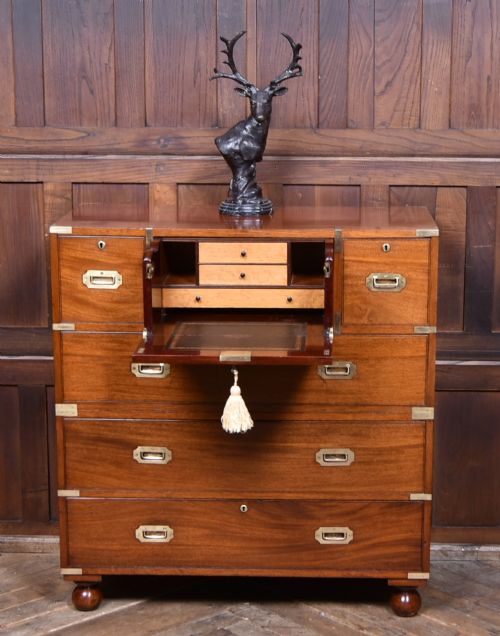
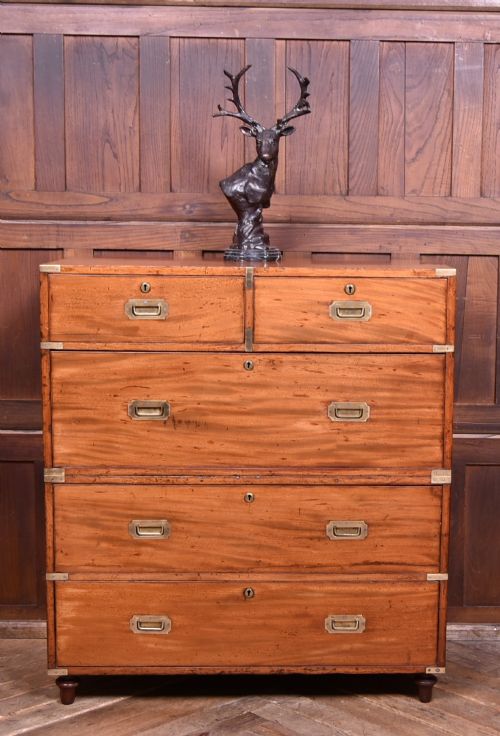
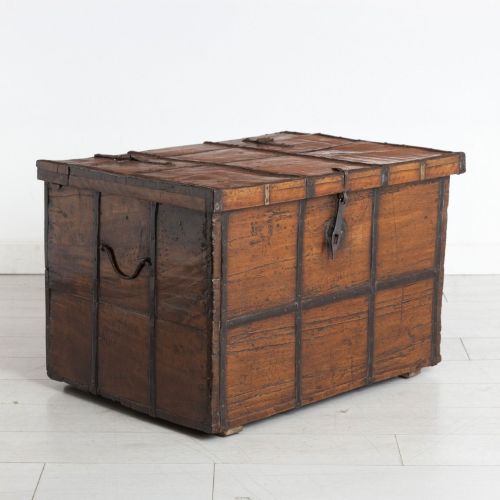
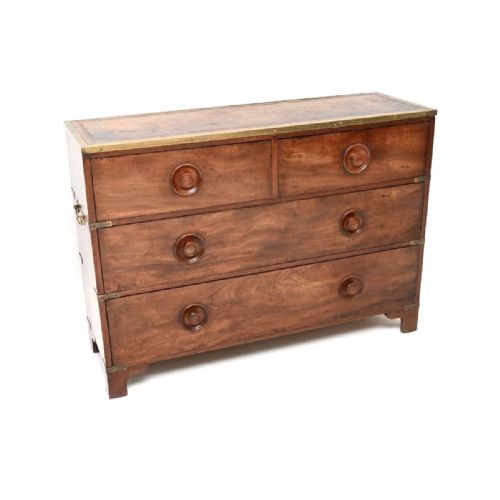
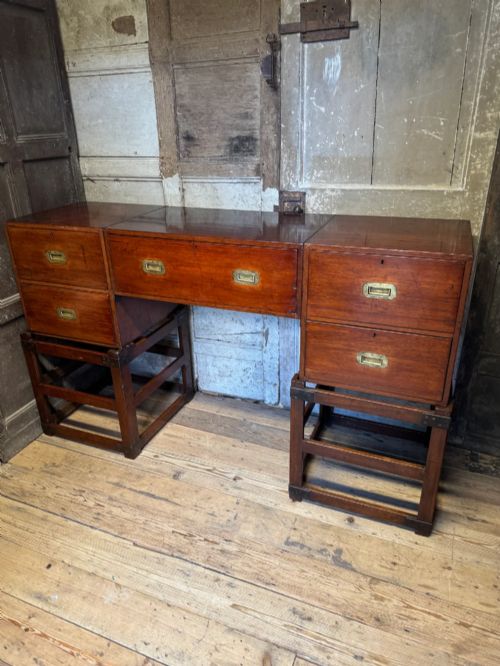
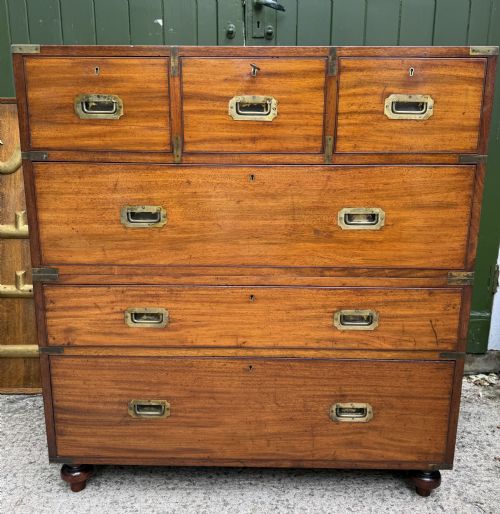
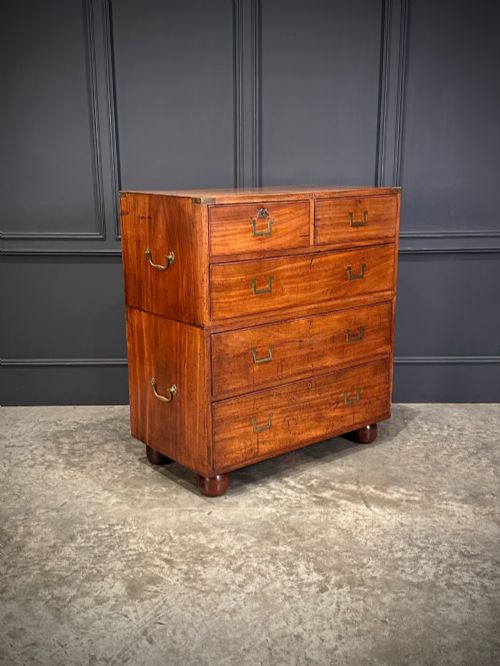
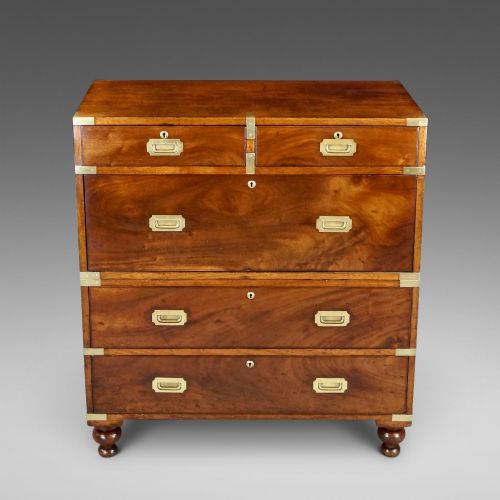
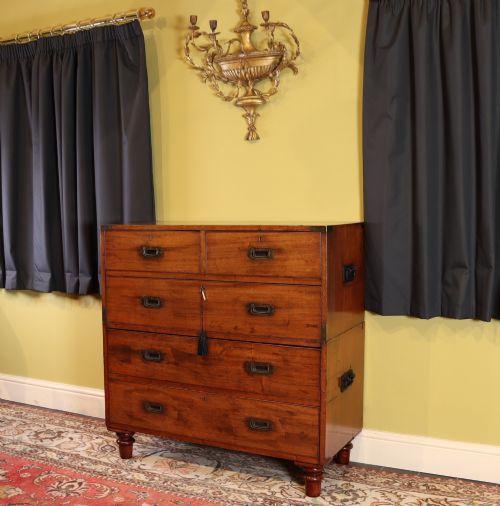
A victorian mahogany campaign chest takes the form of a sectional chest of drawers or trunk designed for military travel. These pieces separate into two distinct stacked sections to facilitate transport on horseback or ship.
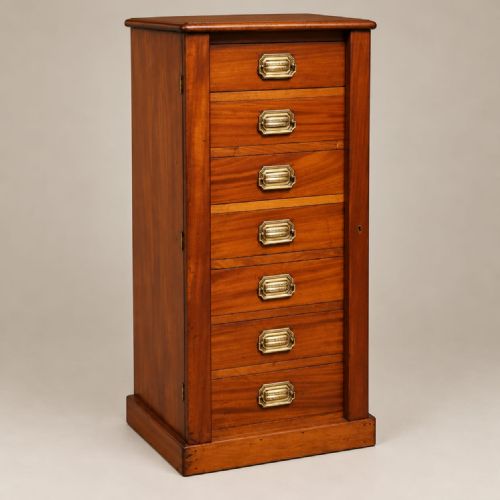
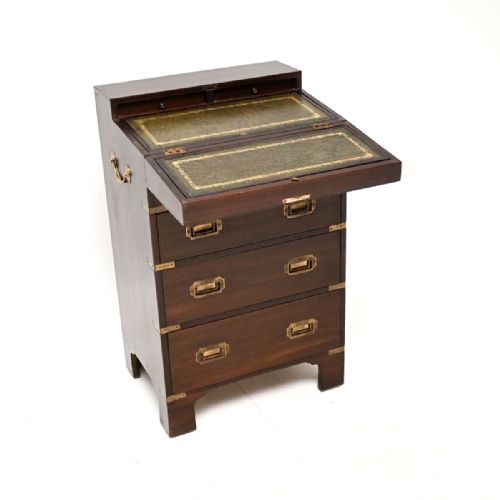
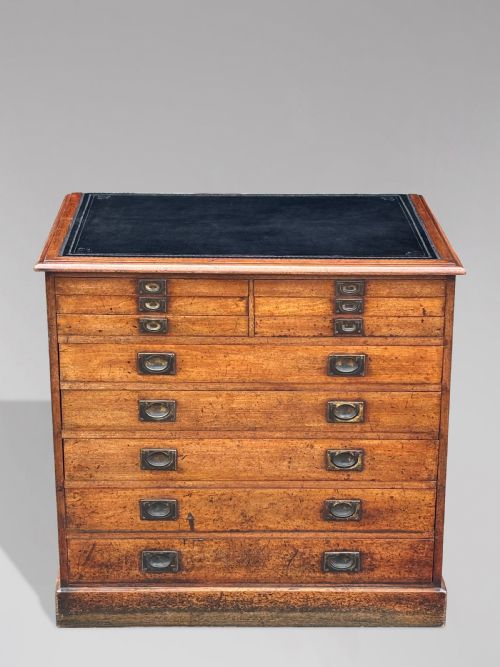
Most examples found here date from the nineteenth century, built from dense timber to withstand rough handling. Buyers encounter standard drawer configurations alongside fitted secretaire desks and specialised cabinets.
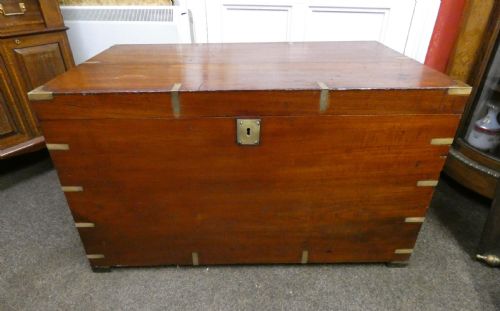
The aesthetic relies on flush brass handles and corner brackets that protect the edges from impact. This utilitarian design ensures the furniture remains functional after repeated journeys.
How They Were Made
Cabinetmakers constructed these pieces primarily using solid mahogany, selected for stability and resistance to warping in humid climates. Secondary timbers appear inside the drawers, while iron or brass bindings reinforce every corner and edge.
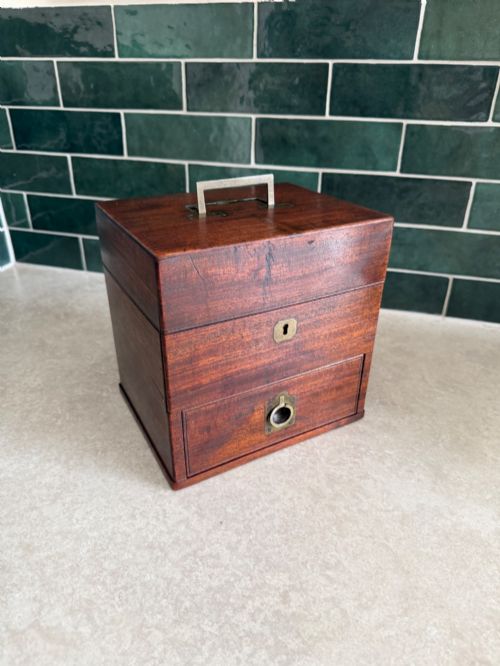
Hardware is typically recessed into the wood so that handles and plates do not project during transit. Lock escutcheons and carrying handles sit flush with the surfaces, secured by numerous small screws.
Victorian Mahogany Campaign Chest Retail Price Guide 2026
Typical asking prices for victorian mahogany campaign chest among the pieces listed under this phrase on Sellingantiques today, from the lower quarter to the upper quarter. They describe what is for sale here now, not the wider market.
Listings feature nineteenth century pieces incorporating mahogany, brass, leather, and iron across various desk and chest formats.
What Varies in Quality
Construction standards differ between standard transport furniture and pieces made for high-ranking officers. Superior items feature dovetail joints, well-fitted secretaire drawers, and substantial brass mounts rather than plated substitutes.
The integrity of the original polish and the completeness of the brass fittings influence the overall standard. Pieces retaining their dividing brackets and original carrying handles demonstrate better original manufacture.
S. W. Silver And Co·Ross And Co
The Victorian Mahogany Campaign Chest Glossary
- Campaign chest
- A sectional chest of drawers designed to be dismantled for military travel. These items feature recessed hardware and reinforced corners.
- Secretaire chest
- A chest of drawers containing a fitted writing drawer with a drop-front surface. This internal compartment often includes small drawers and pigeonholes.
- Brass bound
- Furniture edged with metal strips and corner pieces to prevent impact damage. This technique secures vulnerable joints during transport.
- Two-part chest
- A case furniture item built in upper and lower halves that separate for moving. Carrying handles are fitted to the sides of each section.
Victorian Mahogany Campaign Chest: Frequently Asked Questions
Why do these chests split in half?
The two-part construction allowed officers to pack and transport their belongings easily during military deployments. Each section moved independently on wagons or ships.
This modular design minimised damage to the timber and made handling heavy loads manageable for personnel on the move.
What is a secretaire drawer?
A secretaire drawer pulls out like a standard drawer while the front folds down to create a writing desk. Inside, small compartments hold stationery and ink.
This dual function saved space in military quarters where separate desks were impractical.
How are these pieces dated?
Dating relies on construction methods, timber choice, and the style of the brass hardware. Nineteenth-century examples often feature hand-cut dovetails and specific lock mechanisms.
Makers' stamps or brass plaques embedded in the wood provide further chronological evidence.
Where were campaign chests used?
British officers utilised these chests in military tents, barracks, and temporary quarters across the empire. The sturdy build protected uniforms and personal documents from damp climates.
After service, many pieces returned to permanent homes in Britain.