


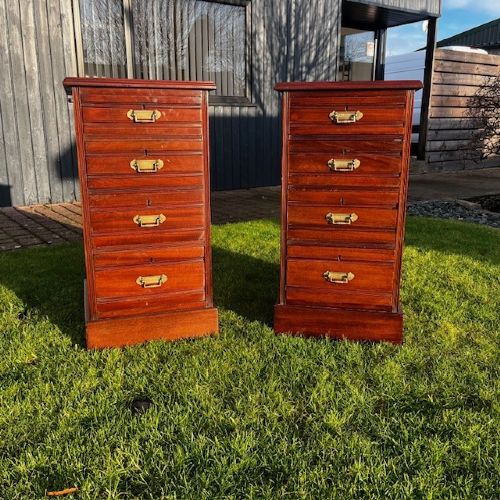


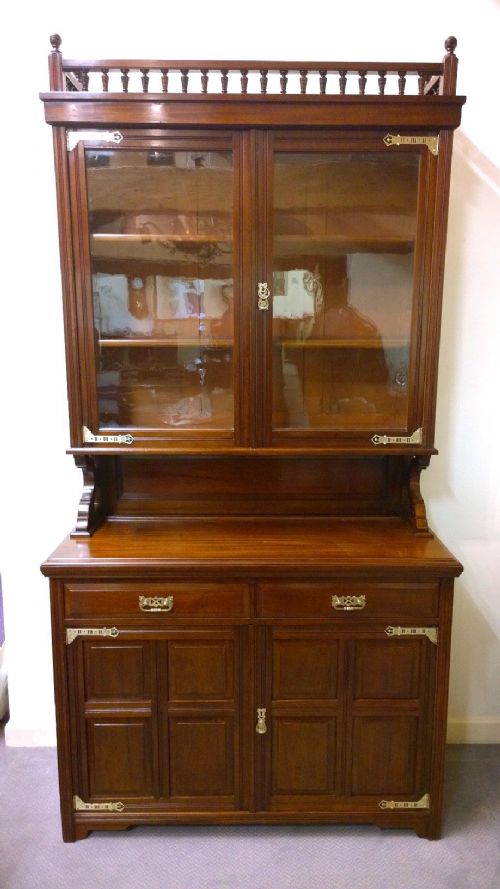


Victorian Mahogany Campaign Cabinet
These robust pieces of Victorian mahogany campaign cabinet furniture bring portable utility and rich timber grain directly into your home.
Victorian Mahogany Campaign Cabinet
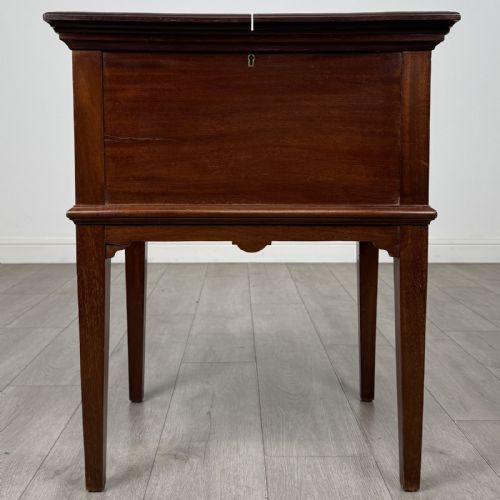
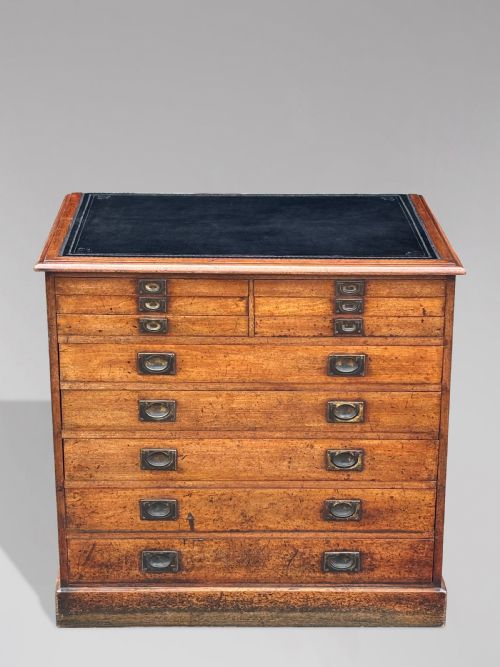
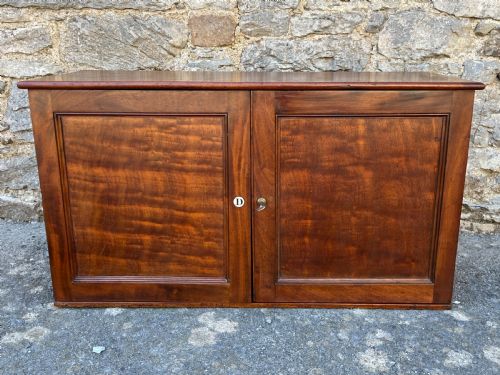
A victorian mahogany campaign cabinet takes many forms on this page, appearing as filing cabinets, bedside chests, secretaire desks, and collectors cabinets. You will frequently find these items built for military, naval, or colonial travel, designed to dismantle or withstand arduous transport.
The material palette is anchored in dense mahogany, often offset by walnut or paired with brass mounts for structural strength. Pieces span the nineteenth century, including specific decades such as eighteen-sixty and eighteen-eighty alongside broader Victorian eras.
Forms range from compact lockers and ship washstands to large cabinets on secretaire chests and cutlery boxes. Each item reflects the portable engineering required by officers and travellers of the period.
Materials and construction
Cabinet makers utilised solid mahogany for its durability and resistance to warping during transport across changing climates. This dense timber was frequently selected for campaign furniture because it handled knocks well while maintaining a dark, polished surface.
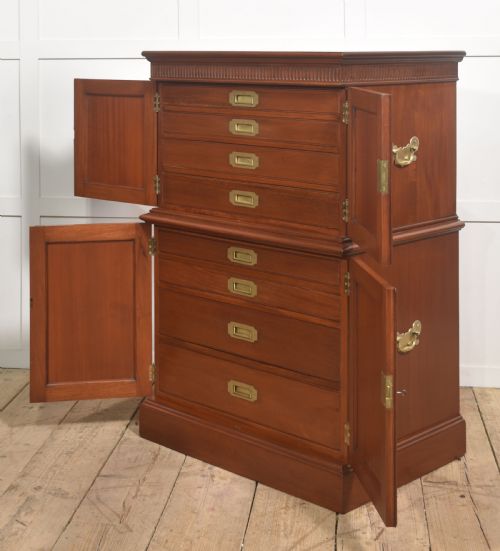
Brass fittings and corner braces were integrated to protect vulnerable edges and secure joints during frequent movement. Leather inserts appear on desk surfaces, while bone, glass, and ceramic details occasionally contribute to handles and internal fittings.
Victorian Mahogany Campaign Cabinet Retail Price Guide 2026
Typical asking prices for victorian mahogany campaign cabinet among the pieces listed under this phrase on Sellingantiques today, from the lower quarter to the upper quarter. They describe what is for sale here now, not the wider market.
Judging quality in campaign furniture
Quality rests in the precision of the brass hardware and the tightness of the joinery where sections meet or fold. Superior examples maintain stability and smooth drawer operation despite the inherent stresses of portable construction.
The choice of timber grain and the crispness of secondary woods like walnut dictate the overall standard of the piece. Better execution is also visible in the thoughtful arrangement of internal compartments, secretaire drawers, and fitted compartments designed for travel.
Captain James John Stopford RN
The Victorian Mahogany Campaign Cabinet Glossary
- Campaign cabinet
- A piece of portable furniture designed for military or naval officers on the move. These items often feature recessed brass handles and reinforced corners to endure transit.
- Secretaire chest
- A chest of drawers incorporating a fitted writing drawer with a drop-front desk surface. This dual-purpose form saved valuable space in officers quarters.
- Wellington chest
- A tall, slender stack of drawers secured by a locking side flap held in place with a key. It provides secure storage for papers or valuables in a compact footprint.
- Brass bound
- Furniture edged or reinforced with brass strips and corner pieces to prevent splintering. This method protects the wood from heavy impact during travel.
Victorian Mahogany Campaign Cabinet: Frequently Asked Questions
What is a campaign cabinet?
A campaign cabinet is a piece of portable furniture designed for officers on military or naval service during the nineteenth century. These items were built to withstand frequent travel and harsh conditions.
They often feature specialised hardware like recessed brass handles and reinforced corners to protect the wood during transit.
How do I use one today?
These cabinets work well as bedside storage, compact desks, or specialist display units in modern rooms. Their sturdy construction makes them practical for everyday use.
Drawers and secretaire sections provide organised storage for paperwork, collections, or daily essentials.
Are all campaign cabinets made of mahogany?
Mahogany is the primary timber seen across these listings, valued for its strength and rich grain. Walnut also appears alongside the main mahogany pieces.
Secondary materials include brass for reinforcement, alongside occasional leather, glass, and ceramic elements.
How can I tell the period?
Dating relies on construction methods, hardware styles, and timber characteristics typical of the nineteenth century. Listings span specific decades such as eighteen-sixty and eighteen-eighty as well as the broader Victorian era.
Examining the brass work and internal fittings helps distinguish mid-century military pieces from later Victorian variations.