



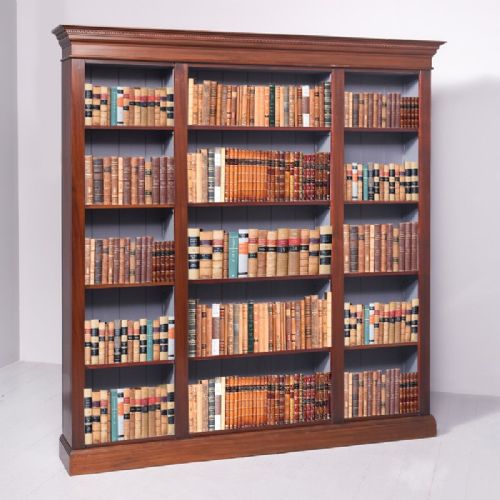


Victorian Mahogany Book Rack
These Victorian mahogany book rack pieces organise your volumes with timber and brass, holding the desk tidy or extending across the table.
Victorian Mahogany Book Rack
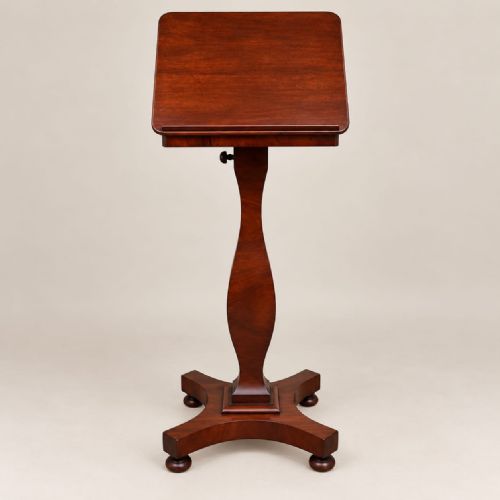
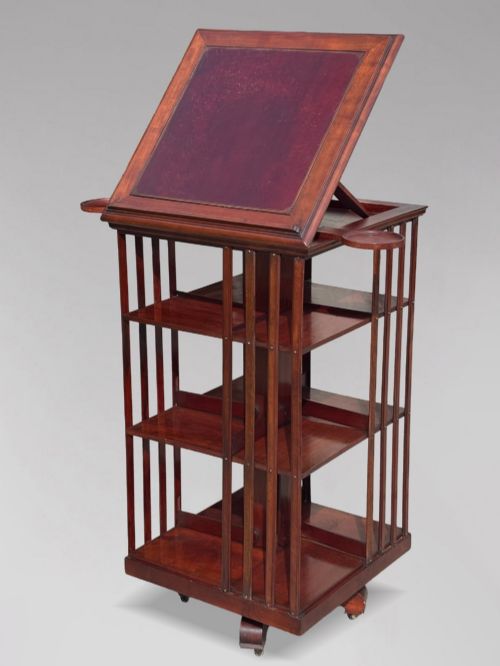
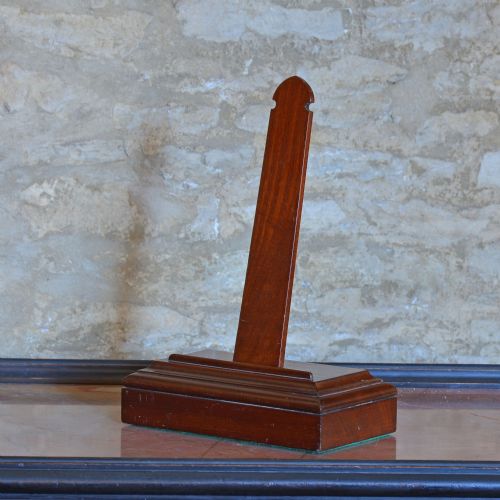
A victorian mahogany book rack encompasses portable bookshelves, extending book rests, and revolving table stands designed to keep library volumes close at hand. The pieces span the nineteenth century and the Edwardian era, taking the form of desk tidies, trough stands, and small shelf units.
You meet sliding and extending formats most often on this page, alongside rotating table stands fitted with brass mounts. These items reflect the domestic study habits of the period, accommodating everything from heavy law digests to everyday reading matter.
Materials and construction
Makers utilised solid and veneered mahogany alongside contrasting timbers like rosewood and walnut, often selecting flame figures for visible surfaces. Metal components, particularly brass, form sliding mechanisms, hinges, and corner mounts that reinforce the timber structures.
Additional detailing includes inlaid decorative motifs, felt protection pads, and inset stone elements such as marble tops on revolving tables. Softwoods appear in secondary framing areas, whilst specialised hardware enables the extending and rotating functions seen in portable library furniture.
Victorian Mahogany Book Rack Retail Price Guide 2026
Typical asking prices for victorian mahogany book rack among the pieces listed under this phrase on Sellingantiques today, from the lower quarter to the upper quarter. They describe what is for sale here now, not the wider market.
Judging the work
Superior examples reveal themselves through the precision of their extending actions and the smoothness of their revolving pivots, which turn without binding or wobble. The choice of timber grain, particularly matched flame mahogany, distinguishes finer workshop production from standard utility pieces.
Integration of hardware marks the tier of a piece, where flush brass mounts and neat inlay demonstrate tighter tolerances. Simpler constructions rely on straightforward panel joints and basic shelving, whilst high grade items incorporate patented mechanisms by established makers.
Betjemanns
The Victorian Mahogany Book Rack Glossary
- Book slide
- An extending rack with sliding ends that expands to hold varying numbers of volumes upright on a desk. The mechanism often relies on a central wooden base with brass tracks.
- Revolving bookcase
- A rotating table stand or floor unit that permits access to multiple stacks of books from a single seated position. It sits on a concealed internal pivot and spider base.
- Whatnot
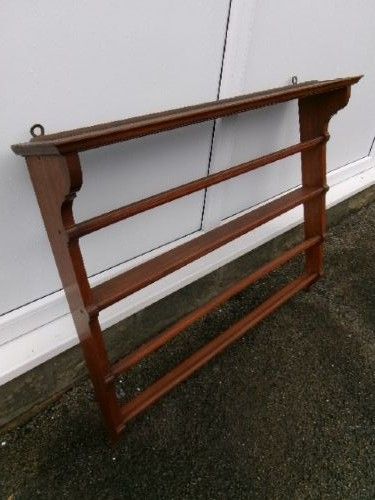
- An open shelving unit with multiple tiers supported by slender uprights, used for displaying books and small decorative objects. These structures date across the nineteenth century.
- Desk tidy
- A small compartmentalised stand designed to hold stationery alongside upright books. It rests on a table surface for daily study use.
Victorian Mahogany Book Rack: Frequently Asked Questions
How do extending book racks work?
Extending book racks use hinged or sliding ends connected to a central base platform. This allows the frame to lengthen or shorten depending on the number of volumes placed between the uprights.
The mechanism relies on brass tracks or scissor joints concealed within the timber construction. This ensures the sides remain parallel as the rack adjusts.
Where were revolving bookcases used?
Revolving bookcases stood beside desks, armchairs, or in the centre of studies where floor space permitted easy rotation. Their design granted immediate access to reference materials without requiring the reader to stand.
Smaller table versions sat directly on top of writing desks or sideboards for dictionaries and current reading. Larger floor-standing models served home libraries and professional offices.
What is flame mahogany?
Flame mahogany is a decorative wood veneer harvested from the fork where a branch meets the main trunk of the tree. The grain swirls in a distinct pattern resembling flickering fire.
Makers reserved this expensive timber for the most prominent surfaces of library furniture, such as table tops and book trough sides.
How do I date a book rack?
Dating relies on stylistic clues, construction methods, and patent marks stamped into the brass hardware. Mid nineteenth century pieces often feature Gothic revival brass mounts, whilst Edwardian examples tend toward simpler inlaid borders.
Patent dates on mechanisms provide a baseline after which the piece was manufactured. Secondary woods and fastener types further narrow the production era.