


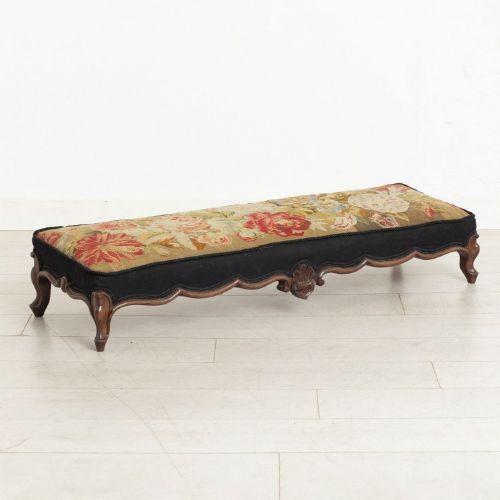

Victorian Long Bench
A victorian long bench brings substantial seating and architectural character to a hallway, window bay, or foot of a bed.
Victorian Long Bench
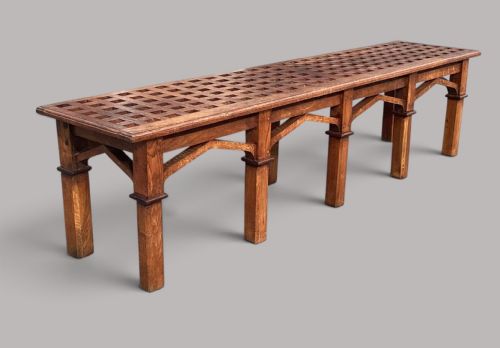
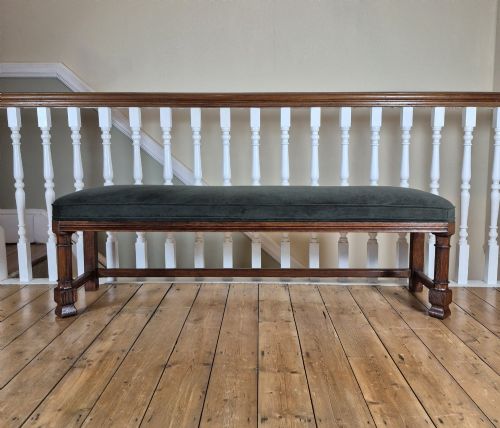
When searching for a victorian long bench, buyers encounter a diverse selection of extended seating forms originating from the nineteenth century. These pieces encompass oak and pine hallway benches, walnut window seats, mahogany daybeds, and long footstools produced across various decades from the eighteen-sixties onward.
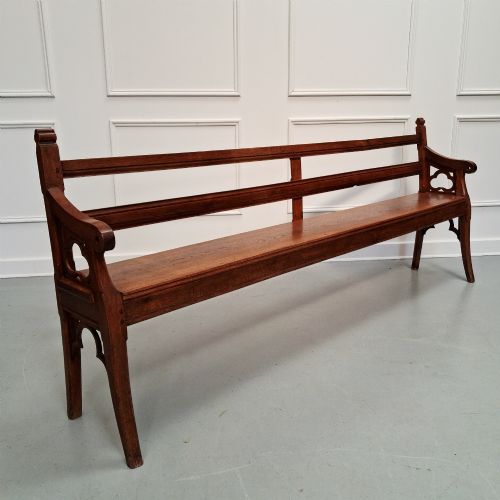
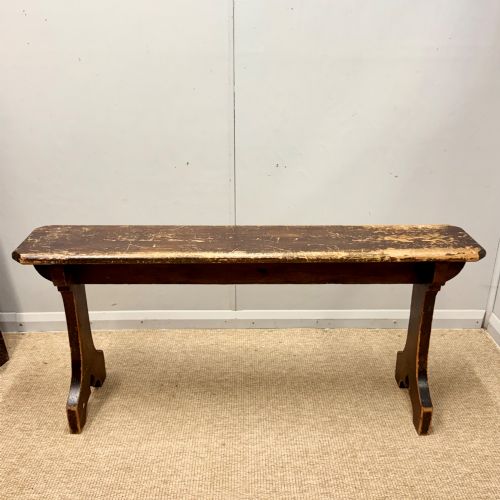
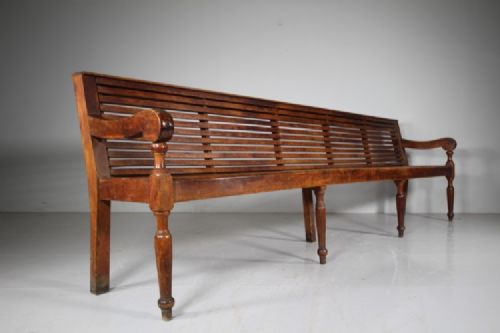
Origin and purpose dictate the physical structure, ranging from high-backed oak hall seats intended for grand entrances to low-slung pine benches built for functional use in public buildings, chapels, and waiting rooms.
Construction and Materials
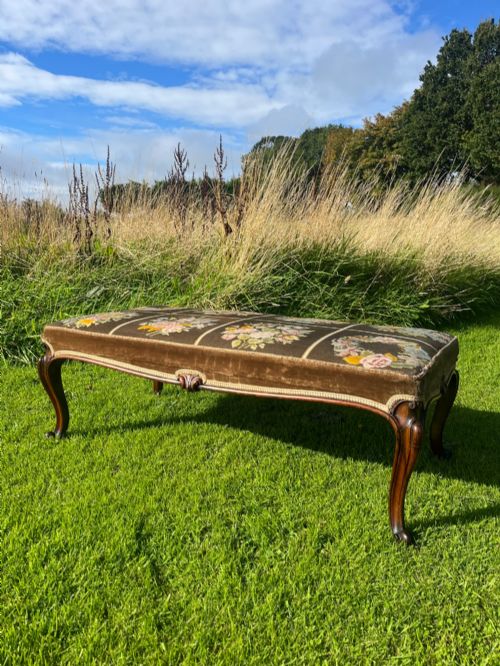
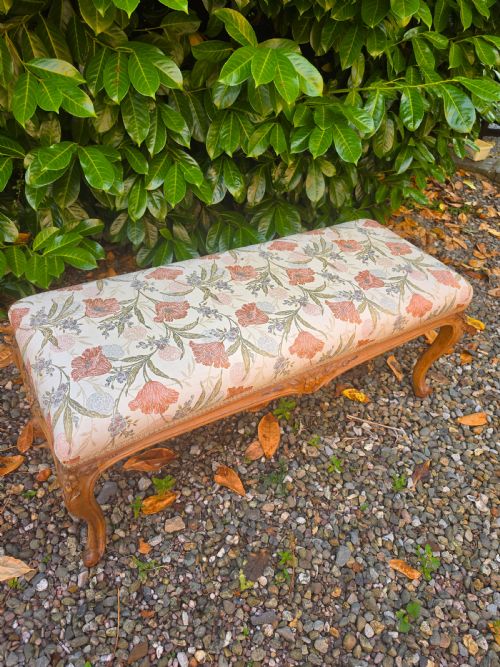
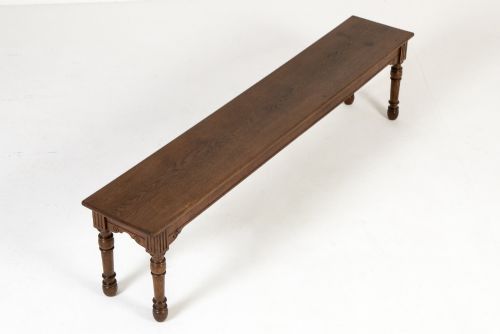
Timbers employed in these extended seats reflect both domestic utility and formal reception rooms, relying heavily on solid oak, pine, walnut, and mahogany. Cabinetmakers and country joiners utilised traditional mortise and tenon joinery to ensure structural rigidity across extended lengths, often incorporating turned legs, fluted supports, or cabriole shaping.
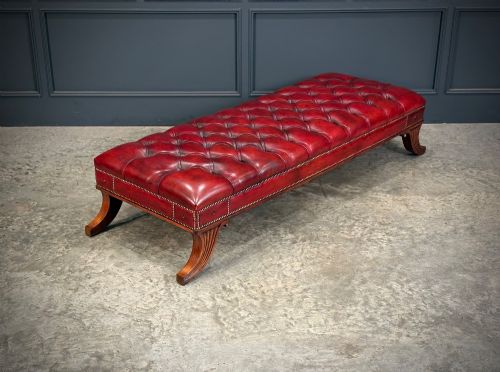
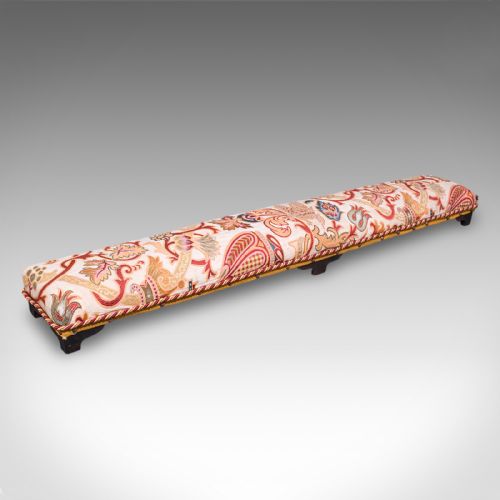
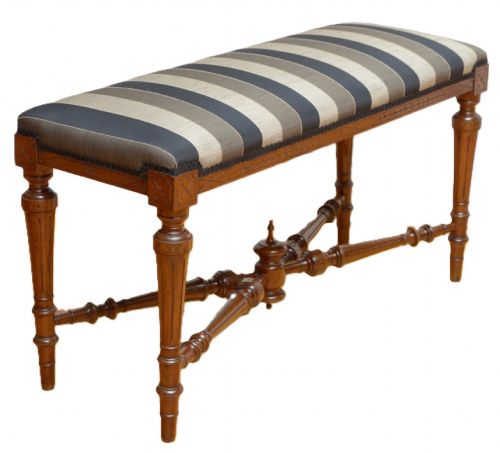
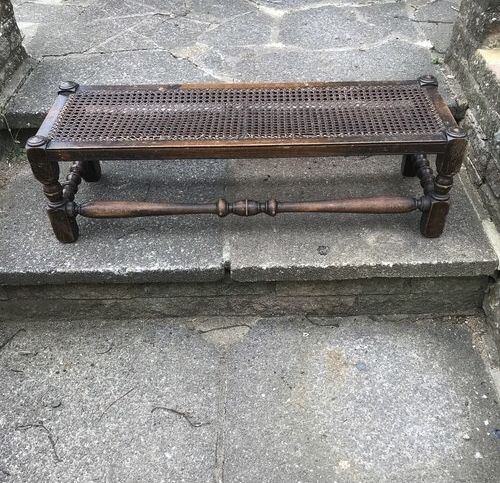
Upholstered variants rely on robust internal webbing and stuffing, finished with leather, velvet, linen, crewelwork, or original fabric. Details such as brass hardware, ebonised finishes, cane webbing, and partial gilding demonstrate the diverse decorative treatments applied during the nineteenth century.
One surviving pine bench bears an official mark for the chapel at Llanfair, having traded its Sunday sermons for domestic hallway duty.
Assessing Quality and Execution
The calibre of a nineteenth-century long seat depends heavily on the integrity of its timber selection and the restraint of its proportions over an extended span. Superior examples display dense, well-figured grain in hardwoods like walnut and rosewood, coupled with robust joinery that prevents sagging or twisting along the length.
Refinement in carving and turning separates standard utilitarian items from sophisticated commission pieces, whether expressed in crisp Gothic tracery, finely detailed cabriole legs, or hand-turned spindles. Original surface treatments and surviving period upholstery also distinguish pieces that retain their authentic character from those altered by later interventions.
The Victorian Long Bench Glossary
- Daybed
- An elongated seating form designed for reclining, combining elements of a chair and a bed. These often feature an elevated headrest or bolster at one end.
- Fender stool
- A low, long stool specifically designed to sit in front of a hearth fireplace. They typically possess narrow profiles to fit neatly along the brass or iron fender.
- Window seat
- A built-in or freestanding bench sized to fit the recess of a window bay. Nineteenth-century versions frequently incorporate upholstered tops and decorative turned legs.
- Caning
- A woven lattice technique utilising split rattan or cane strips for seat panels. It provides a lightweight, flexible surface commonly seen on nineteenth-century frames.
- Gothic Revival
- An architectural and decorative style popular in the nineteenth century. It borrows medieval motifs such as pointed arches, quatrefoils, and heavy tracery.
Victorian Long Bench: Frequently Asked Questions
Where should I place a long bench?
These extended seats suit wide hallways, long corridors, and large entrance spaces where they provide practical seating without obstructing movement.
They also function effectively at the foot of a bed or positioned beneath a wide window bay to make use of natural light.
How do I care for nineteenth century wood?
Protect timber surfaces by maintaining stable room humidity and keeping pieces away from direct heat sources and strong sunlight.
Apply high-quality beeswax periodically to nourish the grain and preserve the natural patina without building up heavy synthetic residues.
Were these benches used in homes?
Nineteenth-century long benches served various environments, ranging from grand country house halls and domestic bedrooms to institutional settings like schools, chapels, and railway waiting rooms.
Domestic versions generally featured finer hardwoods and upholstery, while institutional pieces prioritised robust pine or oak construction.
How can I identify the wood type?
Examine the grain pattern, colour variation, and weight to distinguish between dense hardwoods like oak, walnut, and mahogany and softer utility timbers like pine and elm.
Oak displays prominent medullary rays, walnut shows rich dark figuring, and mahogany exhibits a warm reddish-brown tone.