







Victorian Locking Tantalus
A victorian locking tantalus is a clever drinking cabinet designed to secure expensive spirits behind a mechanism of brass and wood.
Victorian Locking Tantalus
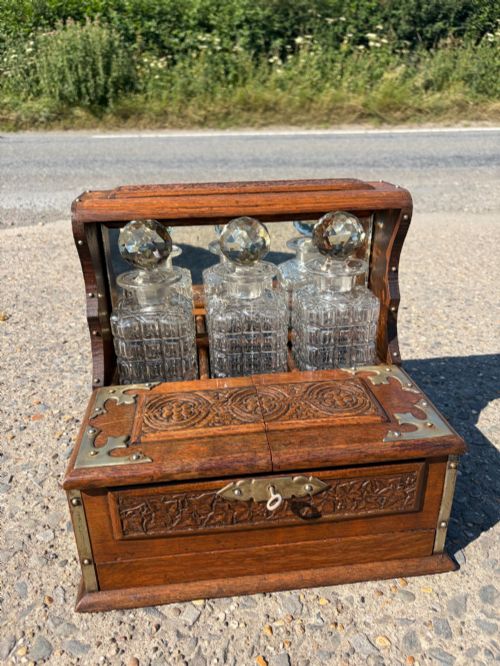
A victorian locking tantalus presents as a sturdy tabletop barware cabinet housing one, two, or three decanters securely within its frame. When the key turns in the lock, the retaining bar lifts to release the bottles, stopping guests or servants from helping themselves.
Most examples found here date from the Victorian period through to the early twentieth century, taking the form of oak, walnut, or coromandel cabinets. Many incorporate games compendiums, humidors, or dry bar compartments alongside the cut crystal bottles.
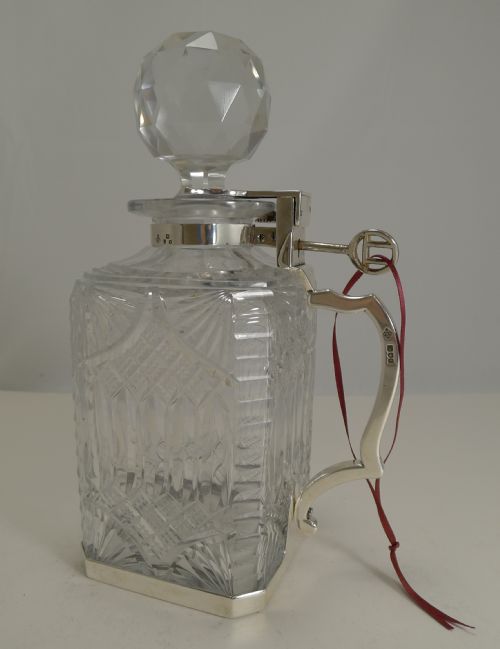
The primary styles range from plain late Victorian oak housings to elaborate inlaid walnut or pollard oak variants fitted with silver plated mounts. Decanters inside are typically cut glass or crystal, often accompanied by matching stoppers and occasionally marked with period silver details.
How they were made
Makers built the structural frames from dense hardwoods like oak, walnut, and coromandel, frequently incorporating mirror glass panels inside the back to reflect the bottles. Cabinetmakers used precise joinery to house the heavy decanters safely during transit and daily use.
Functional security relied on robust brass mechanisms and bars that locked into place over the bottle stoppers. Metalwork components, including carrying handles and corner mounts, were cast and polished, while alternative frames utilised silver plated fittings.
The glassware consists of heavy cut crystal or cut glass decanters, shaped specifically to fit the retaining collars of the locking bar. Craftsmen cut geometric patterns into the glass by hand to catch the light when displayed on a sideboard.
Victorian Locking Tantalus Retail Price Guide 2026
Typical asking prices for victorian locking tantalus among the pieces listed under this phrase on Sellingantiques today, from the lower quarter to the upper quarter. They describe what is for sale here now, not the wider market.
The name comes from Greek mythology, teasing guests with whiskey they can see clearly but cannot pour without the key.
What varies in quality
The grade of timber and complexity of the cabinetwork separate basic single bottle versions from elaborate multi-use pieces. Standard oak models contrast with richly figured pollard oak, inlaid walnut, and exotic coromandel housings.
Complexity of the internal fittings defines the upper tier of production, particularly pieces combining games compendiums, humidors, and three matching cut crystal decanters. The presence of documented silver mounts or maker signatures elevates the standing of the piece.
The engineering of the locking mechanism and the quality of the cast brass or silver plated mounts dictate the daily utility and finish of the item. Heavier, crisper glass cutting on the decanters similarly marks out superior examples.
Hukin and Heath
The Victorian Locking Tantalus Glossary
- Tantalus
- A locking drink cabinet holding decanters firmly in place so the contents remain visible yet inaccessible without a key. This frustrating design inspired the name, referencing the mythological figure Tantalus.
- Decanter
- A heavy glass or crystal vessel designed to hold and serve spirits. In these sets, they feature specially shaped necks that lock beneath the metal bar.
- Compendium
- A multi-purpose box containing fitted compartments for games, cards, or smoking accessories alongside the drinking vessels. These combine social pastimes into a single tabletop cabinet.
- Coromandel
- A dense, dark exotic timber with contrasting streaks, prized by nineteenth-century cabinetmakers for luxury furniture and boxes. It provides a heavy, highly polished finish.
- Silver Plated
- A thin layer of silver applied over a base metal foundation for decorative hardware and mounts. This treatment offered the bright look of solid silver at a lower production cost.
Victorian Locking Tantalus: Frequently Asked Questions
How does a tantalus lock work?
Turning the key in the lock operates a vertical rod or latch that holds the top metal retaining bar firmly across the necks of the decanters. This prevents the stoppers from being removed and stops the bottles from being lifted out of the wooden base.
When unlocked, the bar pivots or slides upward to free the glassware for serving. Most mechanisms require the decanters to be returned precisely to their designated slots before the bar can be locked down again.
What were these cabinets used for?
Victorian households utilised these locking stands in dining rooms, studies, and drawing rooms to store valuable spirits securely. They kept expensive whisky, brandy, or gin safe from unauthorized access by household staff.
Beyond holding drinks, many versions doubled as social hubs by incorporating compartments for playing cards, board games, or cigars. This made them versatile pieces of furniture for entertaining guests in the evening.
How do I care for the wood and brass?
Maintain the timber surfaces by applying a traditional beeswax polish sparingly and buffing with a soft cloth to preserve the finish. Avoid placing the cabinet in direct sunlight or near heat sources to prevent the wood from splitting.
Clean brass and silver plated mounts gently with a non-abrasive cloth, taking care not to let cleaning agents touch the surrounding wood. Crystal decanters should be washed by hand in warm water using bottle brushes to protect the cut glass.
Can replacement decanters be found easily?
Finding exact replacement decanters can prove difficult because each tantalus frame was built to fit specific glass dimensions and stopper heights. The spacing of the locking collar is rigid and rarely accommodates random bottles.
Buyers seeking complete sets should verify that the decanters match the frame and retain their original cut crystal stoppers. Mismatched replacements often fail to clear the locking bar correctly.