







Victorian Locking Decanter
A victorian locking decanter is a secure spirit cabinet designed to keep servants or guests from taking uninvited pours of fine whiskey.
Victorian Locking Decanter
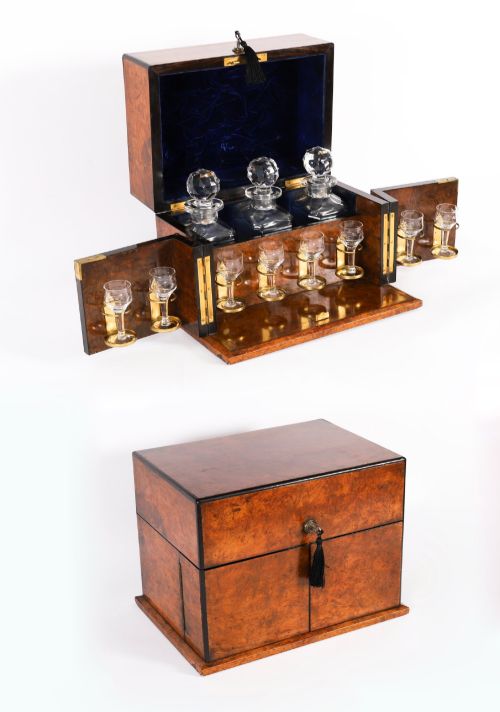
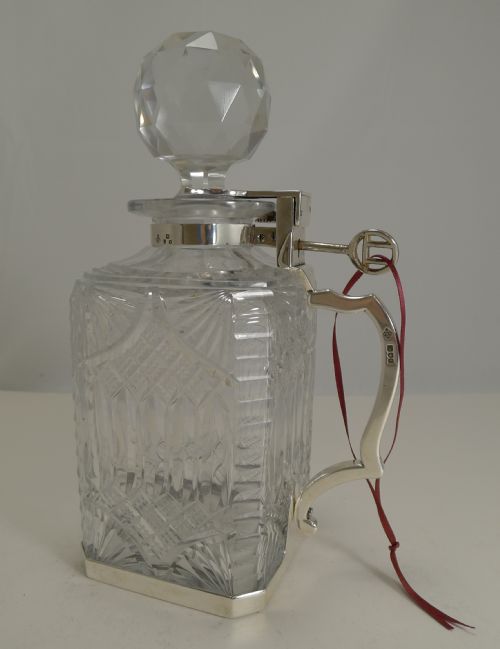
When you search for a victorian locking decanter, you are looking at nineteenth-century barware and tantalus cabinets that house crystal bottles under lock and key. These pieces span from the mid-nineteenth century into the Edwardian period, appearing as single-bottle cases, two-bottle carriers, and expansive three-bottle dry bars.
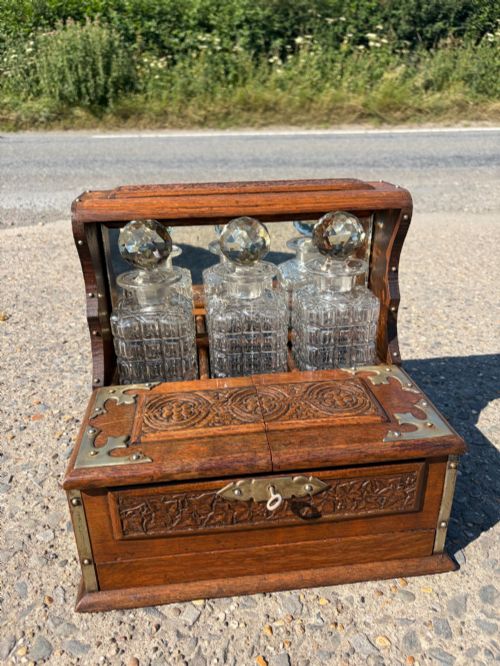
The version you are most likely to meet on this page is an oak or walnut tantalus fitted with cut glass or cut crystal decanters and secured with a brass mechanism. Many examples integrate games compendiums, humidors, or mirror glass backs into their frames.
Originating as practical security for valuable spirits in domestic settings, these pieces combine heavy timber construction with elaborate metalwork. They reflect the formal entertaining habits of the period, providing both display and containment for after-dinner drinks.
How They Were Made
Cabinetmakers utilised sturdy hardwoods such as oak, pollard oak, walnut, and coromandel to build the frames, frequently incorporating inlaid veneers or carved details. These timbers were selected to withstand the heavy weight of glass decanters and the mechanical stress of locking bars.
Metalworkers fashioned the securing bars, handles, and hinges from brass and silver plate, engineering drop-down locking mechanisms that held the glass stoppers firmly in place. The bottles themselves were formed from heavy cut glass or cut crystal, often finished with sterling silver collars.
Victorian Locking Decanter Retail Price Guide 2026
Typical asking prices for victorian locking decanter among the pieces listed under this phrase on Sellingantiques today, from the lower quarter to the upper quarter. They describe what is for sale here now, not the wider market.
Victorian hosts locked their whiskey away not from thieves, but from thirsty parlour maids.
What Varies in Quality
The distinction between standard production pieces and superior examples lies in the complexity of the cabinetwork and the integration of secondary functions. Finer pieces incorporate fitted interiors for games, multiple matching decanters, and luxury timbers like coromandel rather than plain oak.
Execution of the metalwork also separates tiers of quality, with substantial cast brass mounts and fully functioning, highly engineered locking bars distinguishing the best workshops from simpler domestic containers.
Betjemann Brothers·Hukin and Heath·Fenton Bros
The Victorian Locking Decanter Glossary
- Tantalus
- A locking spirit cabinet that holds decanters securely by their stoppers so they cannot be removed without a key. The name derives from Greek mythology, as the drinks are visible yet out of reach.
- Cut Crystal
- Glass containing lead oxide that is faceted by grinding and polishing to create sharp light refraction. This material provides heavier weight and greater brilliance than standard moulded glass.
- Pollard Oak
- Timber cut from pollarded oak trees, exhibiting a dense, clustered grain pattern highly prized for decorative veneer work. Cabinetmakers used it on high-end nineteenth-century furniture.
- Coromandel
- A dense, dark tropical hardwood with contrasting light streaks, used for luxury boxes and cabinet veneers during the Victorian era. It adds significant weight and visual richness to a piece.
- Silver Plate
- A base metal coated with a thin layer of silver through electroplating or older fusion methods. It allowed makers to achieve the look of solid silver on functional hardware.
Victorian Locking Decanter: Frequently Asked Questions
How does a tantalus lock work?
A vertical metal bar drops down over the glass stoppers of the decanters, preventing them from being lifted out of their wooden base. Turning a key in the lock secures this bar in place.
When unlocked, the bar slides or tilts back to free the bottlenecks, allowing the decanters to be lifted for pouring.
Why are they called tantalus cabinets?
The name comes from Tantalus in Greek mythology, who was punished by being placed in a pool of water beneath fruit trees with the branches and water forever just out of his reach.
Victorian makers adopted the name because the locked decanters display their contents clearly while keeping the spirits physically out of reach.
Were these used in public houses?
These cabinets were primarily designed for private domestic use in Victorian dining rooms, libraries, and drawing rooms to protect expensive imported whiskey and brandy.
Households utilised them to secure expensive stock from household staff while keeping hospitality ready for family and invited guests.
How do I date a piece to the Victorian period?
Dating relies on the combination of timber choices, lock mechanisms, and the specific style of the cut crystal decanters. Mid-century examples often feature simpler locking bars, while late nineteenth-century pieces frequently integrate elaborate games compendiums.
Maker marks stamped on the brass locking mechanism or silver mounts also provide precise chronological reference points.
Can I replace missing decanters easily?
Finding matching replacement decanters can be challenging because each tantalus was built to house bottles of specific dimensions that fit the locking bar precisely.
Collector pieces require exact neck heights and stopper shapes so the security bar engages correctly without scratching the glass.