


Victorian Locking Cabinet
These Victorian locking cabinet selections offer secure storage in dense timbers like mahogany and walnut, designed to protect valuables and spirits.
Victorian Locking Cabinet
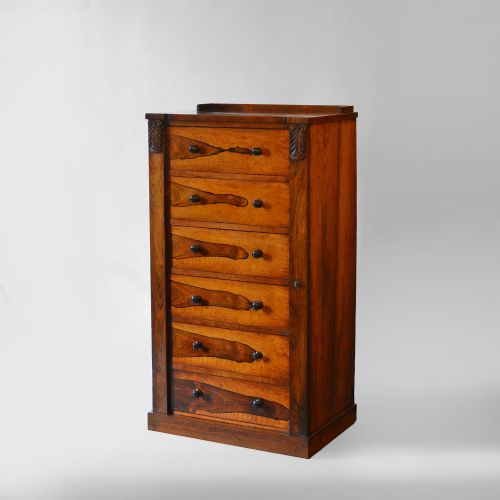
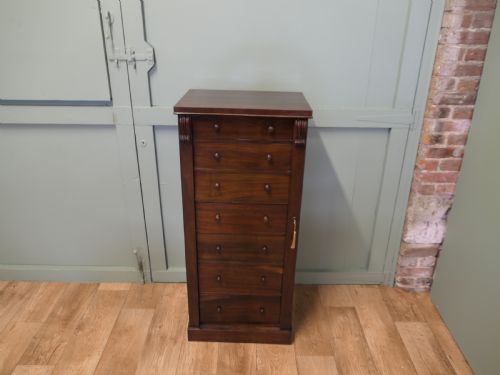
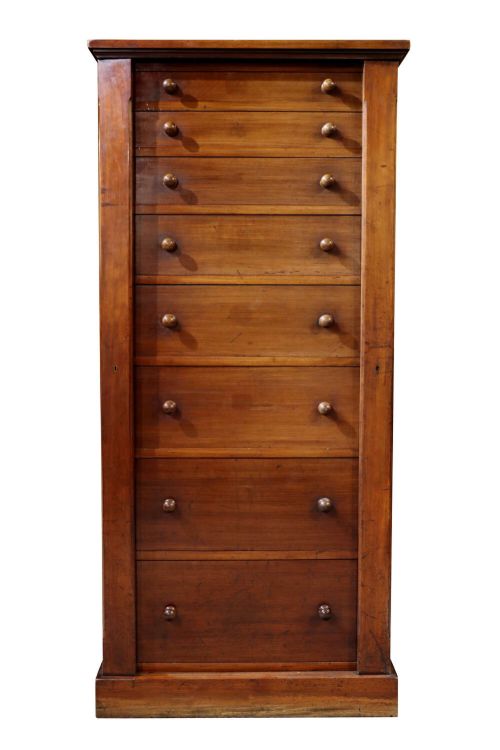
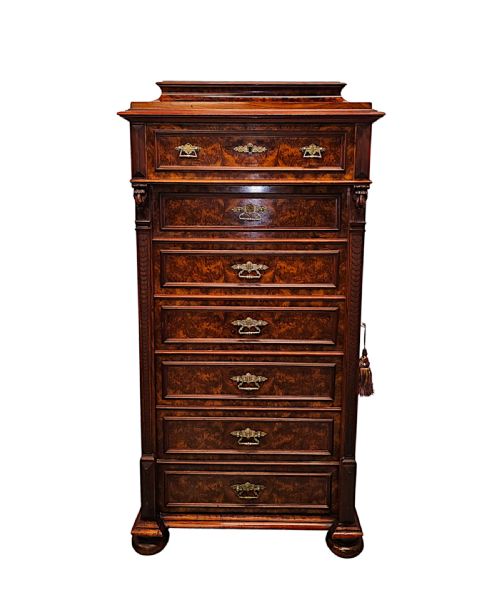
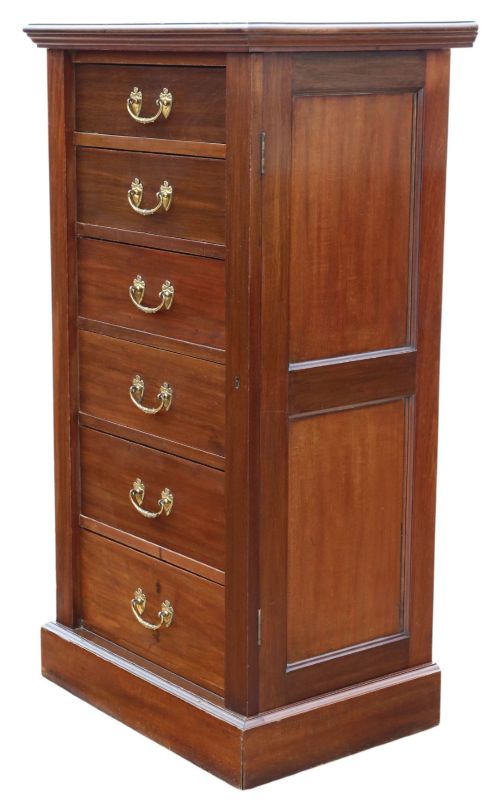
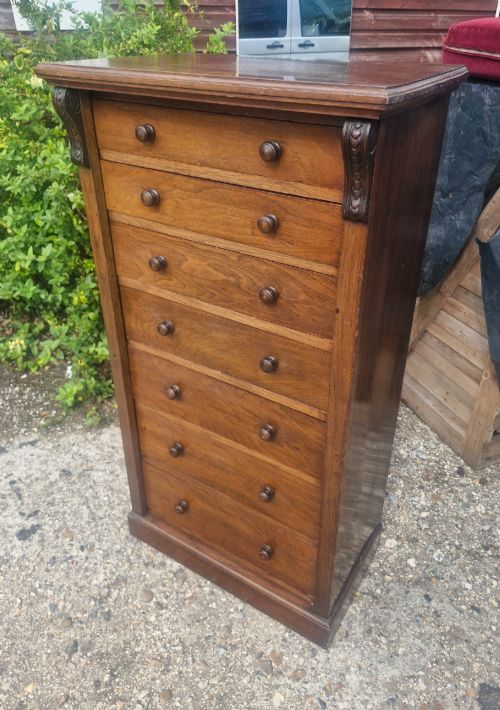
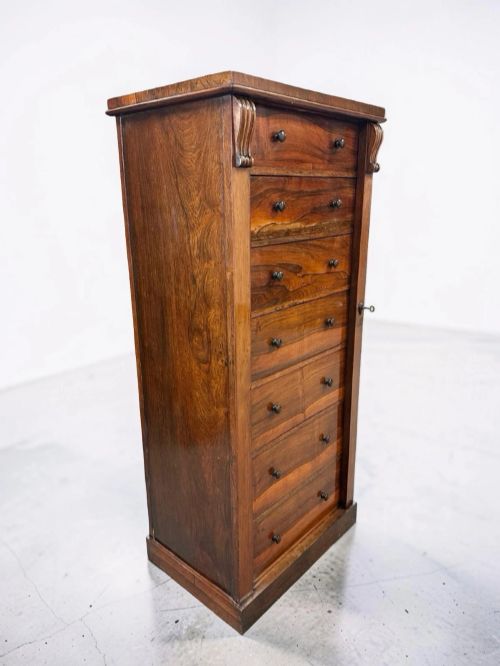
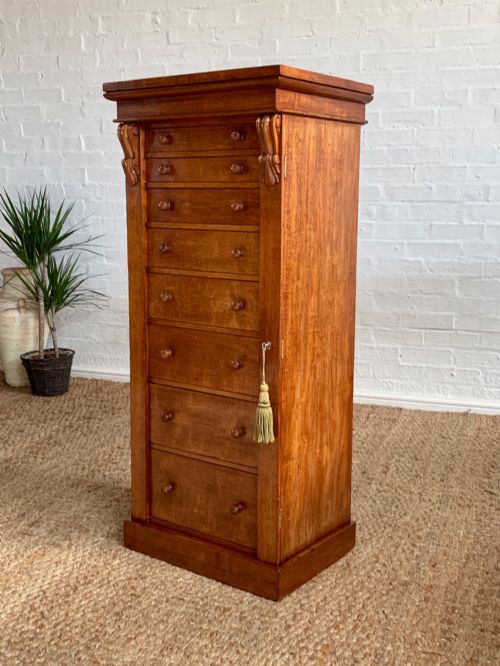
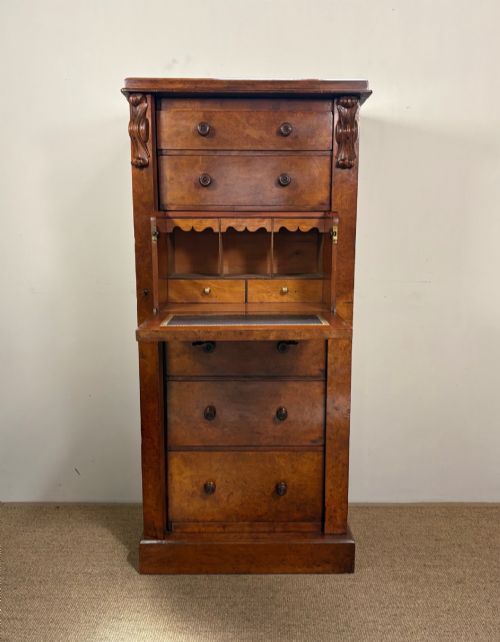
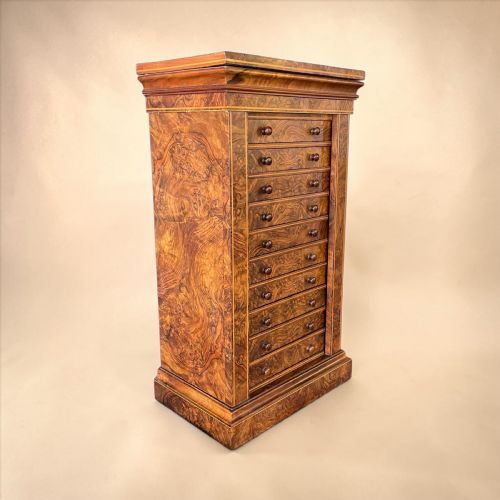
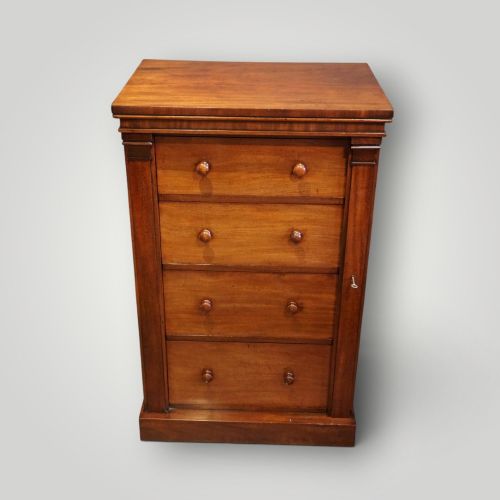
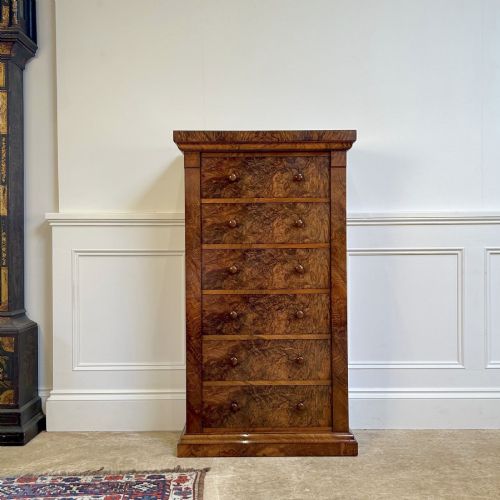
When you search for a victorian locking cabinet, you encounter a specialised category of nineteenth-century furniture built with locking mechanisms to secure private papers, spirits, or valuables. The most prevalent examples are Wellington chests, tall and narrow drawer units featuring a locking hinged pilaster.
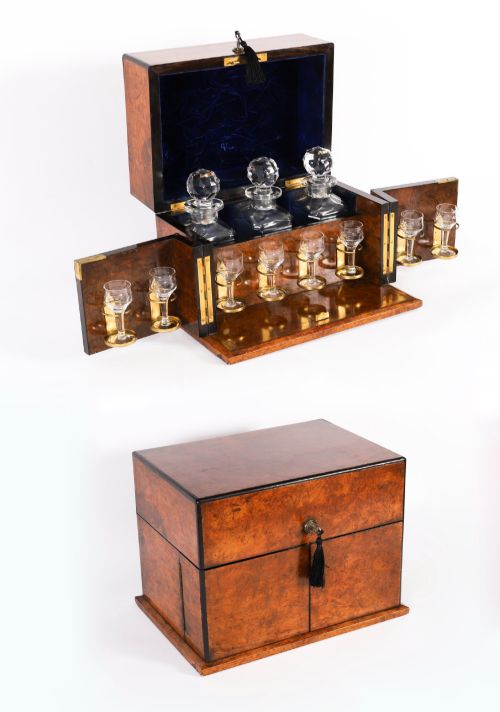
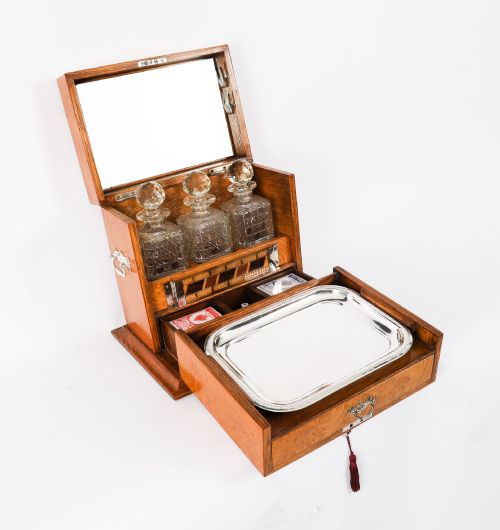
Beyond traditional chests of drawers, the selection includes tantalus dry bars, stationery boxes, cigar cabinets, and heavy safes. These pieces originate primarily from the Victorian era, spanning decades from the mid-nineteenth century through to nineteen hundred.
Woods vary significantly, ranging from standard mahogany and oak to burr walnut, rosewood, and pollard oak. Interiors frequently incorporate brass hardware, glass decanters, and fitted compartments designed for specific domestic uses.
How they were made
Cabinet makers utilised dense hardwoods such as mahogany, oak, and walnut, often applying burr walnut or pollard oak veneers to primary display surfaces. Solid timbers provided the structural rigidity required for locking mechanisms and heavy drawer contents.
Brass featured heavily in mountings, hinges, and locking arms, particularly on tantalus sets and campaign-style filing cabinets. Glass appeared in cut decanter bottles and panel doors, while turned wooden knobs completed the drawer fronts.
Victorian Locking Cabinet Retail Price Guide 2026
Typical asking prices for victorian locking cabinet among the pieces listed under this phrase on Sellingantiques today, from the lower quarter to the upper quarter. They describe what is for sale here now, not the wider market.
Some nineteenth-century gentlemen stored their cigars under lock and key to keep household hands away from private smokes.
What varies in quality
The sophistication of the locking mechanism and the choice of timber set finer pieces apart from standard utility furniture. Plain pine and simple drawer arrangements sit at one end, while figured mahogany, burr walnut veneers, and signed maker elements occupy the other.
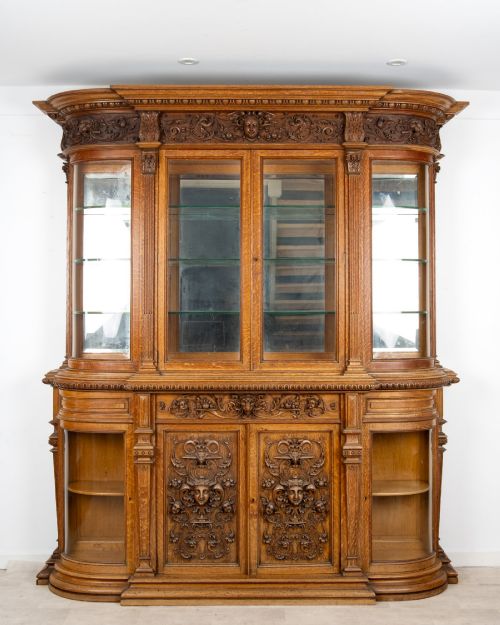
Proportion and scale also dictate distinction, with miniature versions, child-sized pieces, and massive proportions demanding greater joinery skill. Retaining original brass fittings, turned knobs, and functioning keys preserves the integrity of the piece.
Gillows·Holland & Sons·Chubb·Waring & Sons
The Victorian Locking Cabinet Glossary
- Tantalus
- A locking drink cabinet holding decanters in a frame that prevents their removal until a top bar is unlocked. They usually house cut glass bottles and sometimes incorporate games compendiums.
- Pilaster
- An architectural vertical element on the face of a cabinet that, in these pieces, swings open once unlocked to release the drawer stack. It forms the primary security feature of the design.
- Burr Walnut
- A highly prized wood veneer showing intricate, swirling grain patterns formed from tree growths. It was frequently used on luxury Victorian cabinet facades.
Victorian Locking Cabinet: Frequently Asked Questions
How does a Wellington chest lock?
A Wellington chest locks via a hinged vertical side piece, known as a pilaster, which closes over the drawer edges. When this side bar is secured with a key, the drawers cannot be opened.
This clever mechanism allowed nineteenth-century owners to secure an entire stack of drawers with a single lock.
What is a tantalus used for?
A tantalus functions as a lockable dry bar designed to securely display decanters of spirits while preventing unauthorized access to the contents. The metal locking bar passes over the glass stoppers.
Victorians used them in studies and dining rooms to keep expensive alcoholic beverages safe from domestic staff.
What timbers were used most often?
Mahogany and oak form the vast majority of these cabinets, valued for their strength and durability. Finer examples utilise decorative veneers like burr walnut, rosewood, and pollard oak.
Secondary woods like pine often appear in drawer linings and internal framing.