

Victorian Library Shelf
A victorian library shelf offers open access to books while anchoring a room with dense timber and practical proportions.
Victorian Library Shelf
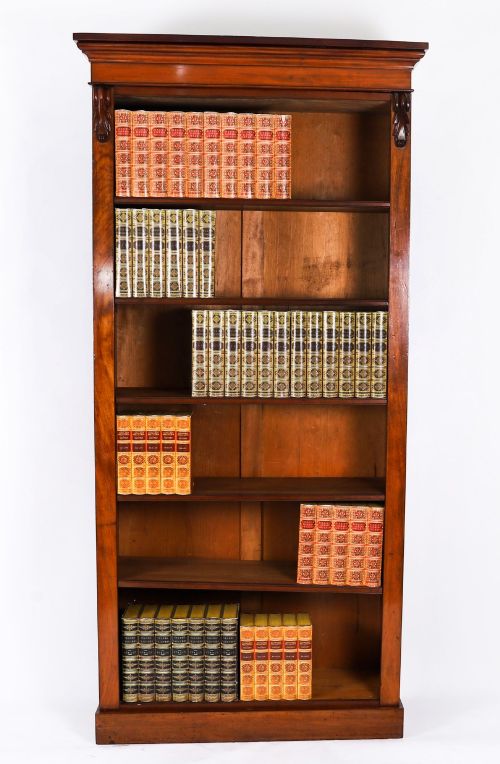
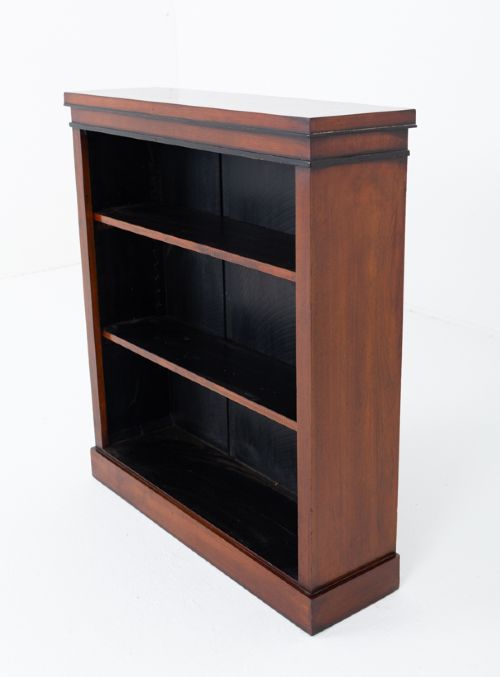
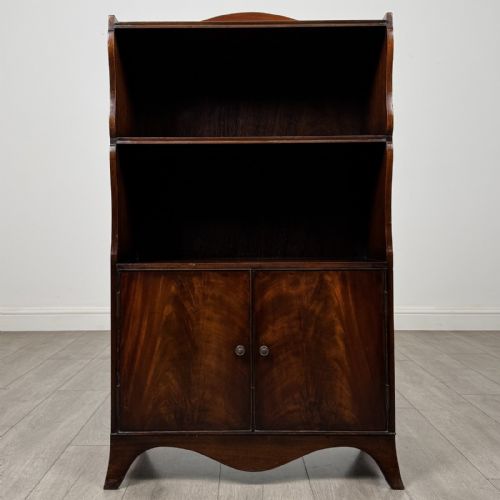
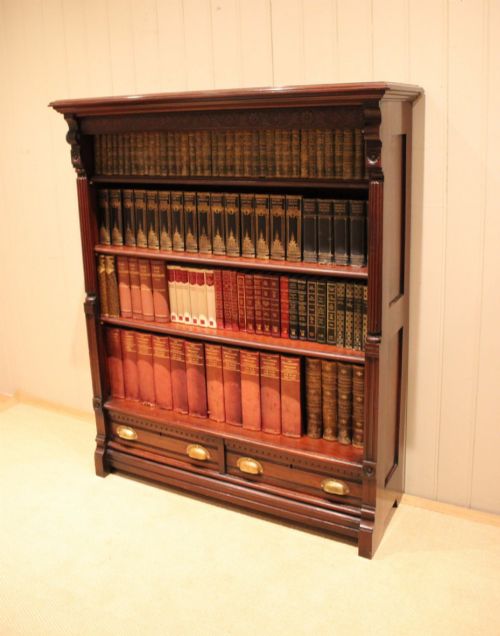
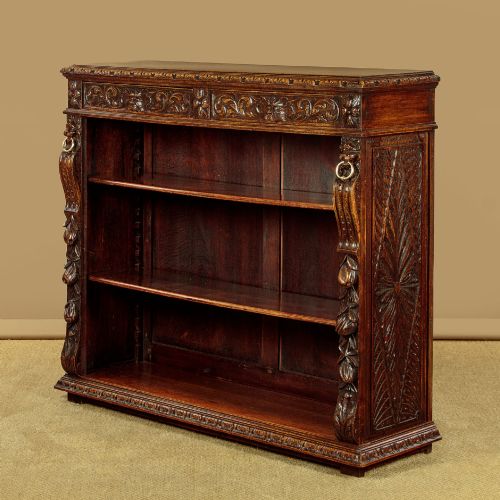
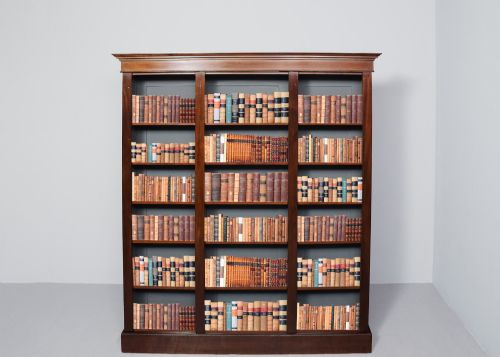
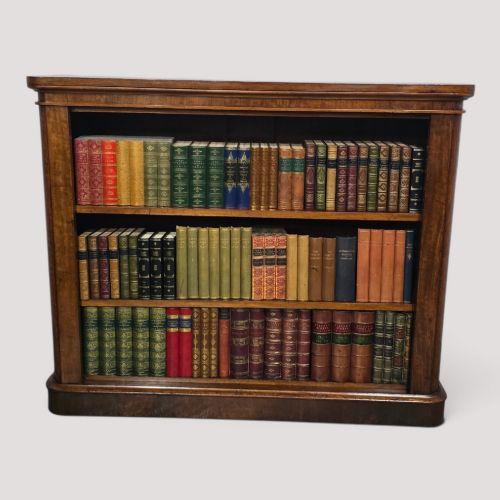
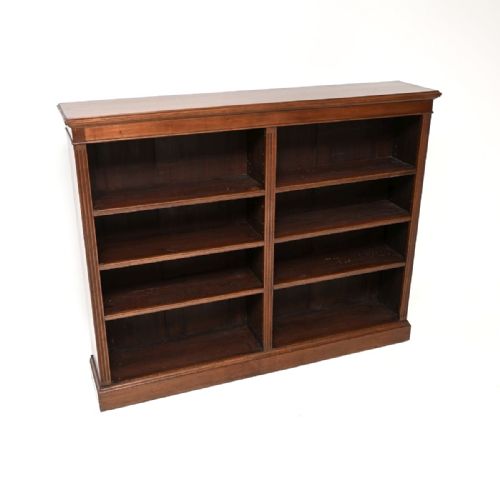
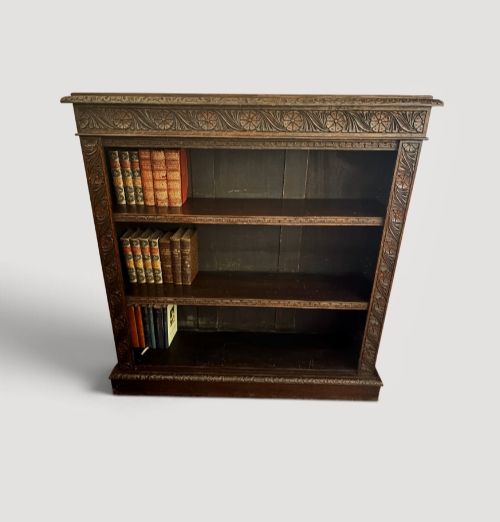
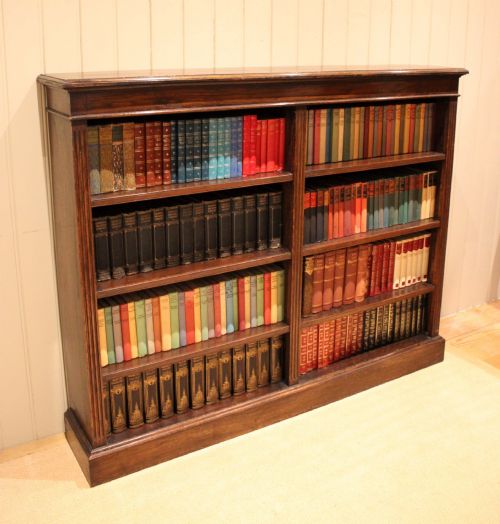
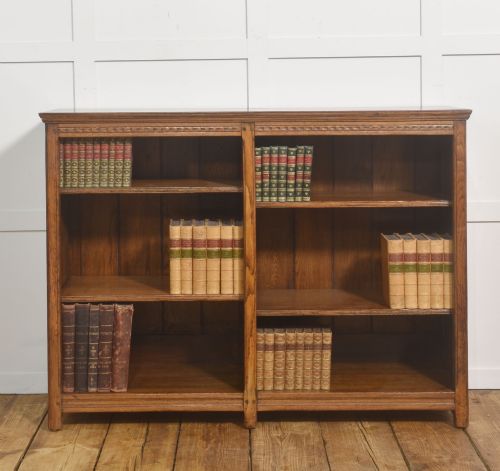
A victorian library shelf typically manifests as an open bookcase or set of bookshelves designed for domestic studies and formal libraries. These pieces originate across the nineteenth century, spanning periods from early nineteenth century examples to late Victorian and Edwardian iterations.
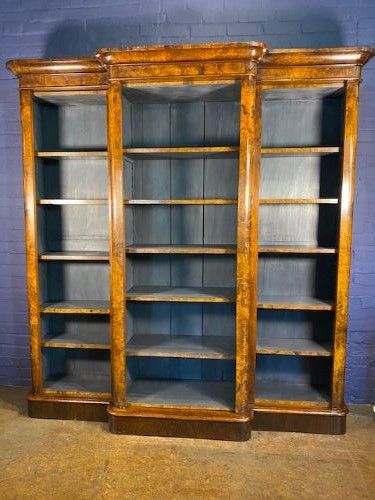
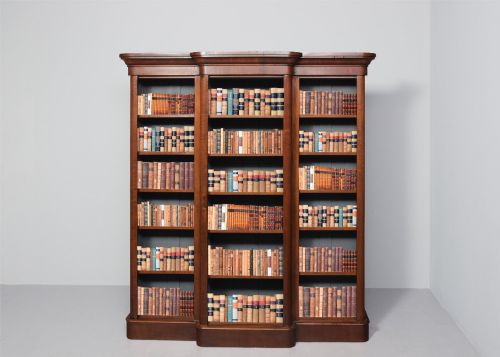
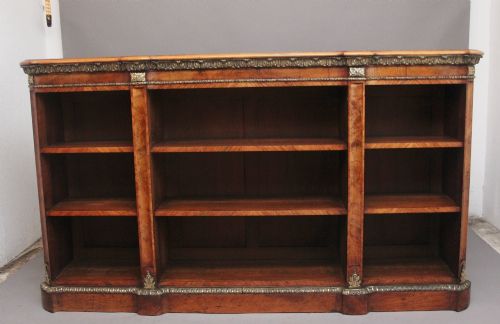
The version most commonly met on this page is the open front bookcase constructed in mahogany, oak, or walnut. Many incorporate adjustable shelving alongside raised galleries or breakfront configurations.
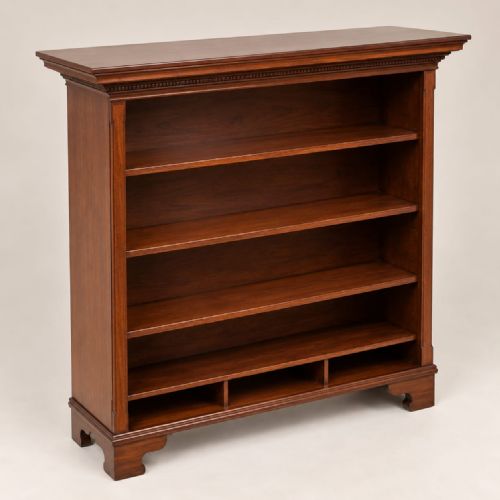
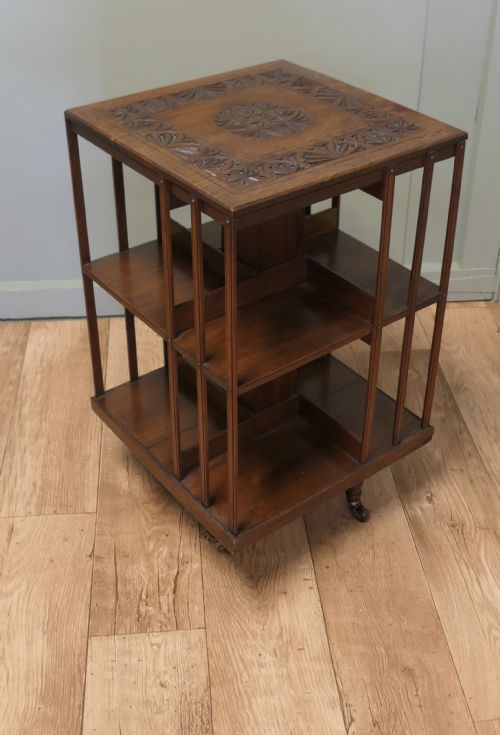
Makers and cabinetmakers produced these furnishings in single, two, or three-section formats, sometimes featuring revolving mechanisms or low dwarf profiles suited to placement beneath windows.
Markers of Distinction
Quality rests in the selection of timber figures, such as highly figured burr walnut or dense, richly toned mahogany, paired with crisp hand-carving. The integration of functional elements like smooth-working adjustable shelf mechanisms and substantial breakfront proportions separates standard utilitarian pieces from finer workshop productions.
Refinement shows in the architectural balance of the cornices, the precision of inlaid details such as Sheraton-style motifs, and the structural integrity of double-sided partners desks or revolving bases.
Period styles span Victorian, Edwardian, late Victorian, William IV, Regency style, Aesthetic Movement, and French Provincial.
Johnstone and Jeanes
The Victorian Library Shelf Glossary
- Breakfront
- A cabinet design where the central section projects forward from the flanking wings. This layout creates depth and architectural presence in larger library bookcases.
- Adjustable shelves
- Shelving supported by movable pegs or ratchets rather than fixed framing. This allows the internal layout to accommodate books of varying heights.
- Burr walnut
- Timber taken from the gnarled growths of a walnut tree, producing swirling, mottled grain patterns. Cabinetmakers used veneers of this wood on prominent surfaces.
- Gallery
- A raised railing or decorative border along the top edge of a piece. It prevents items from sliding off the surface.
- Ebonised
- Timber treated with a dark finish to imitate ebony. This treatment appeared frequently on nineteenth century aesthetic movement and revival pieces.
Victorian Library Shelf: Frequently Asked Questions
How do I adjust the shelves?
Most nineteenth century examples utilise a system of wooden ratchets or brass shelf studs set into the interior vertical panels. You simply lift the shelf slightly, reposition the supports into the desired slots, and lower the board back into place.
Take care to support the shelf evenly on both sides to prevent binding against the interior walls during adjustment.
Where should I place a low bookcase?
Low bookcases, often described as dwarf bookcases, suit placement beneath windows or against walls where full height shelving would block natural light. Their top surfaces provide functional display space for decorative objects or desk accessories.
Ensure the piece sits clear of direct heat sources to prevent the timber veneers from drying out or splitting.
Are these shelves strong enough for heavy books?
Solid mahogany and oak versions possess substantial structural strength capable of supporting heavy volumes and complete sets of reference works. The presence of thick timber boards prevents sagging across standard shelf spans.
Distribute heavier folios towards the lower sections of the bookcase to maintain overall stability.