



Victorian Leather Swivel Chair
A victorian leather swivel chair brings sturdy period comfort and smooth mechanical rotation to a study, workspace or library.
Victorian Leather Swivel Chair
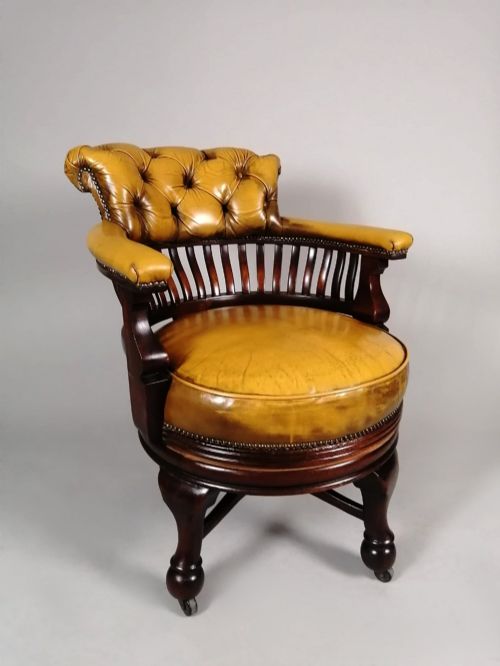
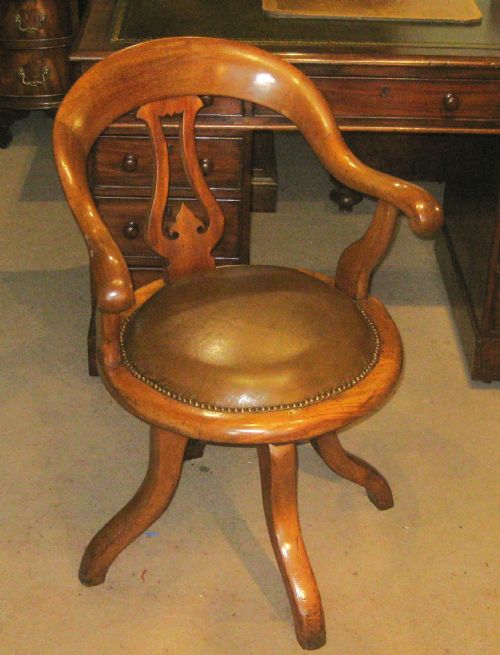
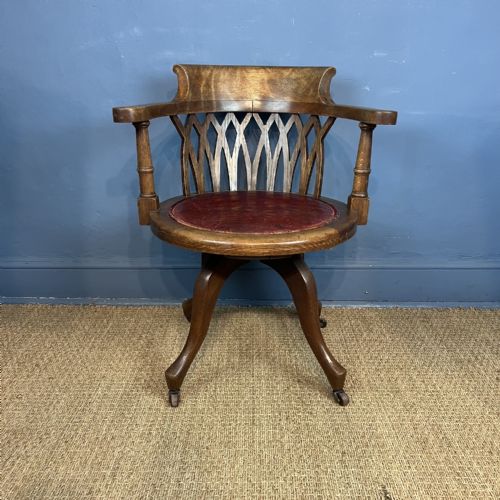
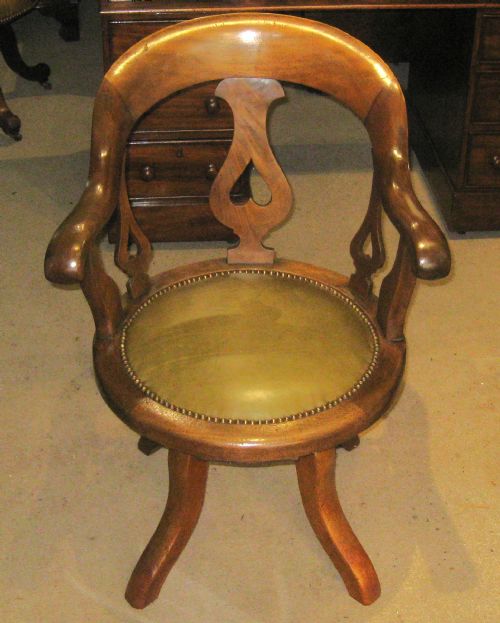
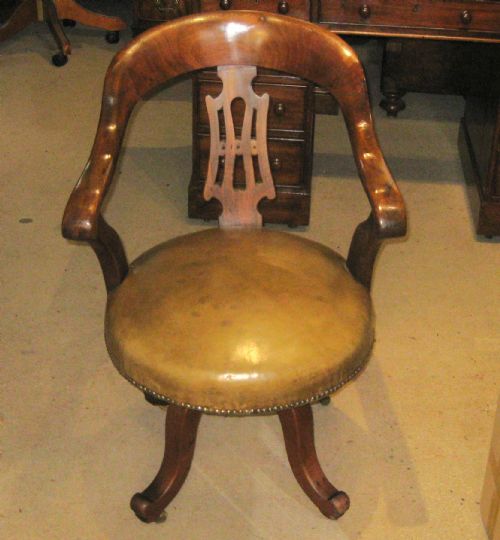
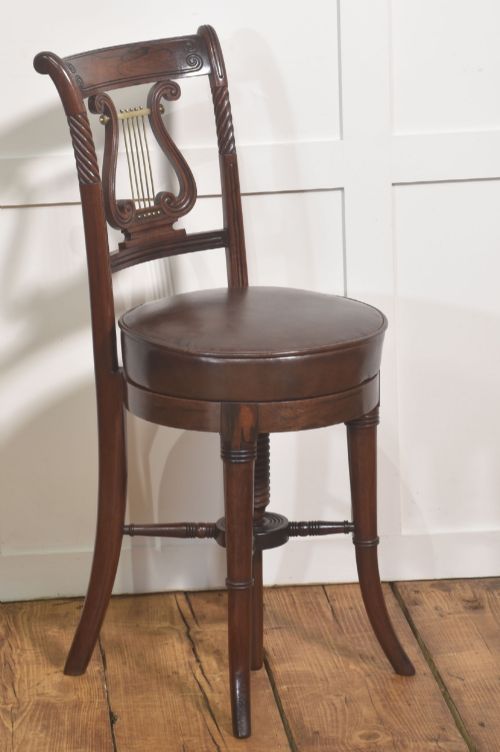
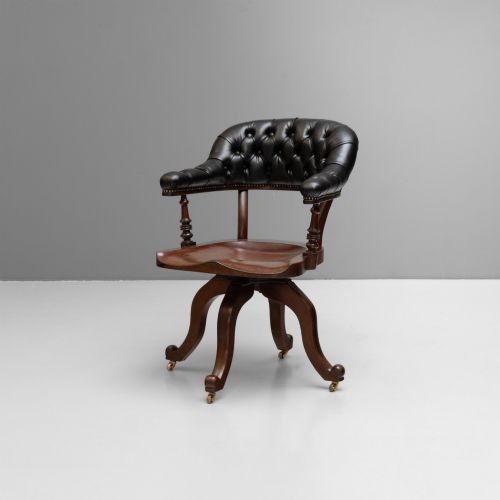
A victorian leather swivel chair is primarily found as a revolving desk chair, a captain's chair, or an adjustable piano stool from the nineteenth century. These pieces combine supportive upholstered seating with a rotating mechanism designed for practical daily use in studies and offices.
The materials span mahogany, golden mahogany, walnut, and oak, often paired with cast iron swivel mechanisms and brass details. Pieces range from plain nineteenth-century office seating to heavily carved oak ship's chairs and piano stools.
Most examples date from the Victorian era and the late nineteenth century, though related pieces stretch from the Georgian and Regency periods into the early twentieth century. Buyers encounter both straightforward mahogany office seats and more decorative styles incorporating bentwood or satinwood inlay.
Materials and construction
Makers built these chairs using hardwoods such as mahogany, walnut, and oak, shaping them into revolving frames supported by sturdy timber or metal bases. Leather upholstery formed the working seat, often secured with brass tacks.
Internal swivel mechanisms combined iron, cast iron, and brass components to allow rotation and height adjustment. Carved ornamentation, bentwood shaping, and satinwood inlay appeared on select library and desk armchairs.
Listings feature mahogany, walnut, and oak frames paired with brass and cast iron swivel mechanisms across the nineteenth century.
Craftsmanship and materials
Quality rests in the weight of the timber and the engineering of the revolving movement, where dense mahogany or oak paired with robust iron mechanisms provides lasting stability. Superior examples exhibit precise joinery, finely carved detailing, and well-fitted turning.
The grade of the leather and the execution of the upholstery distinguish finer pieces from standard utility seating. Original mechanisms that rotate smoothly without excessive play separate the best examples from ordinary office chairs.
S&H Jewell
The Victorian Leather Swivel Chair Glossary
- Revolving desk chair
- A seat fitted with a central pivot mechanism allowing the top to turn through a full circle. This design appeared frequently in nineteenth-century offices and libraries.
- Captain's chair
- A sturdy timber armchair with a rounded backrest supported by vertical spindles above a wooden or leather seat. These pieces often incorporated swiveling actions for easier movement at a desk.
- Bentwood
- Wood softened by steam and bent into curved structural forms. This technique created rounded chair backs during the Victorian period.
- Inlay
- Contrasting timber or material set flush into the surface of the wood for decoration. Satinwood was often used for this purpose on mahogany frames.
- Adjustable piano stool
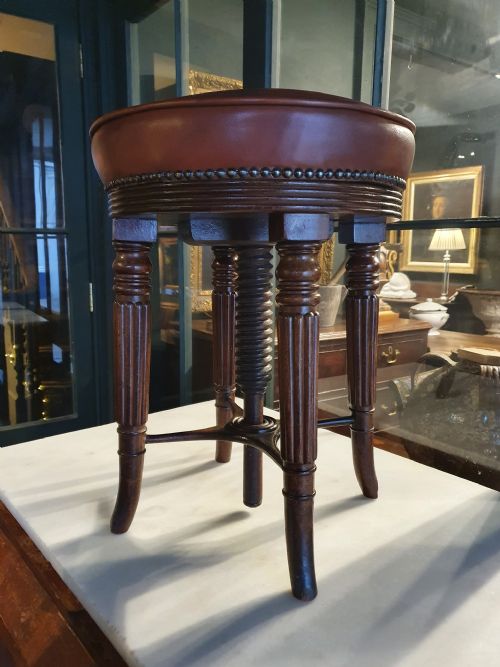
- A seating piece with a threaded central screw mechanism permitting height changes. These share mechanical similarities with swivel desk chairs.
Victorian Leather Swivel Chair: Frequently Asked Questions
How do I adjust the height?
Many Victorian swivel chairs adjust by spinning the seat itself on a threaded iron spindle, which raises or lowers the top relative to the base. Other models rely on mechanical levers or simply permit rotation while maintaining a fixed height.
Checking the mechanism beneath the seat reveals whether the height moves through a screw thread or remains stationary on a revolving pivot.
Are these chairs comfortable for daily work?
These chairs were built for long hours at a desk or in a library, offering supportive wooden armrests and padded leather seats. Their ergonomic curved backs suit prolonged sitting.
Selecting a model with adequate back support and a stable swivel base ensures it functions well for modern workspace requirements.
How do I tell Victorian from Edwardian?
Victorian pieces typically display heavier timbers, darker finishes, and more robust carving, particularly in oak and mahogany library chairs. Edwardian examples often feature lighter framing, simpler lines, or brighter polished surfaces.
Examining the turning and the construction of the revolving mechanism helps clarify the likely period of manufacture.
Did they use green leather originally?
Green and burgundy red leather both appeared frequently on nineteenth-century office and library seating. These colours were standard options supplied by makers for executive desks.
Both shades correspond to historical upholstery practices, whether surviving in original condition or replaced during later restoration.