
Victorian Kitchen Dining Chairs
Victorian kitchen dining chairs offer robust vernacular seating, built for domestic utility and prized for their honest construction.
Victorian Kitchen Dining Chairs
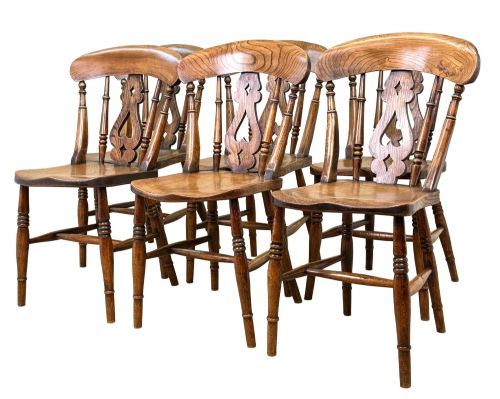
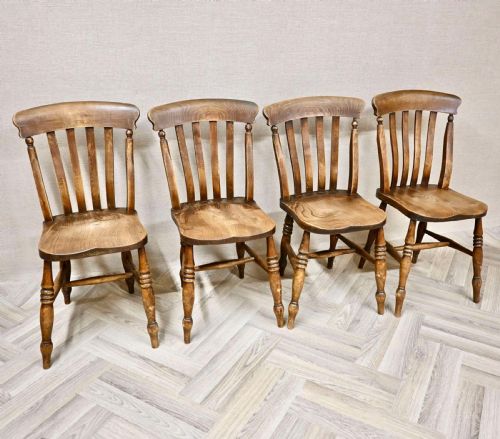
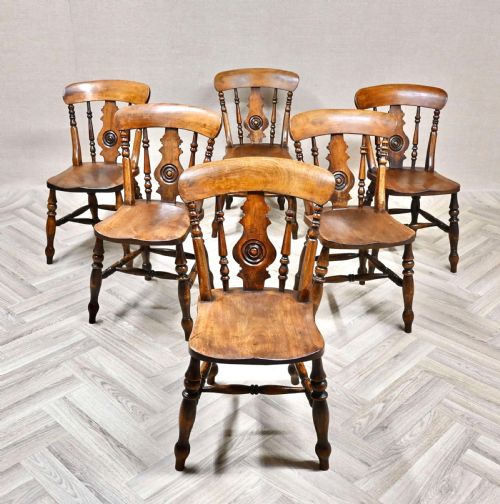
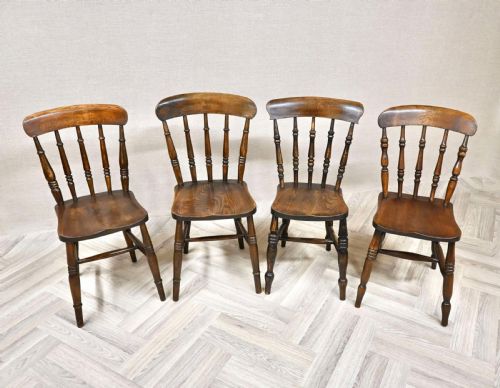
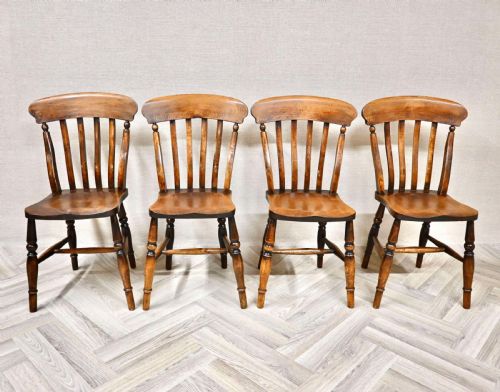
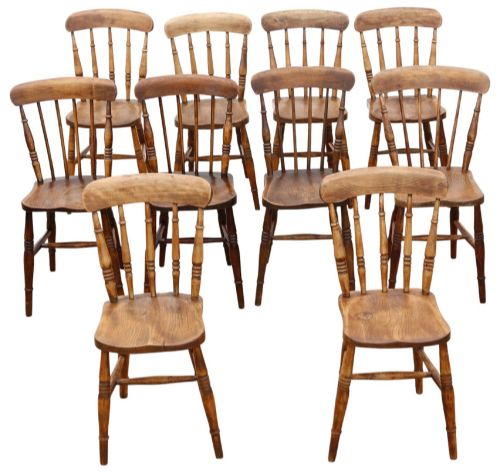
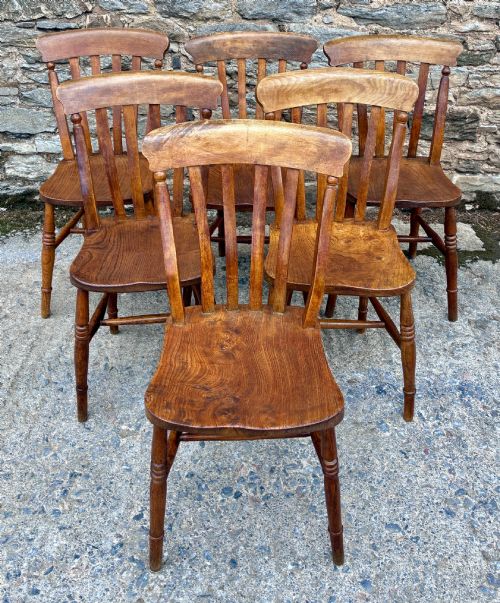
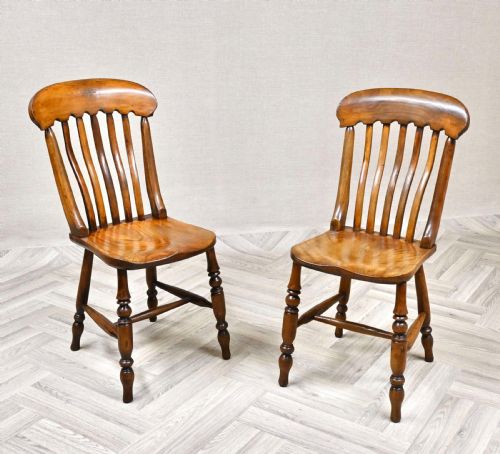
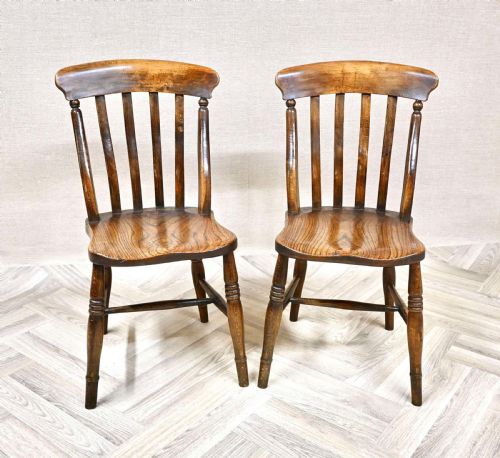
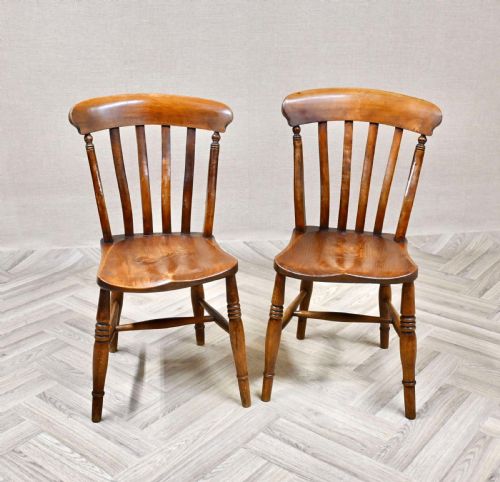
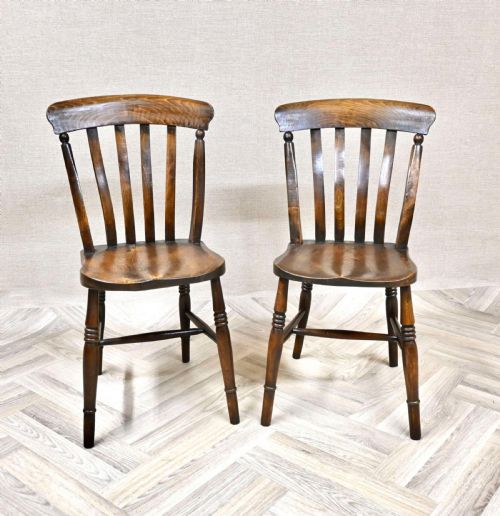
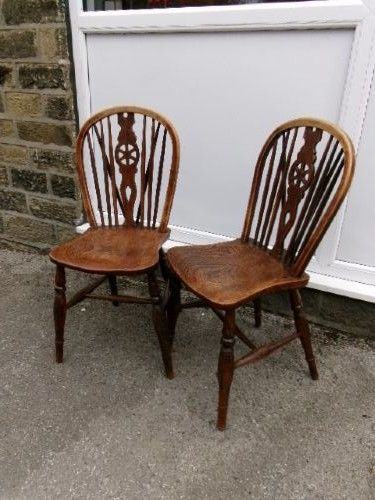
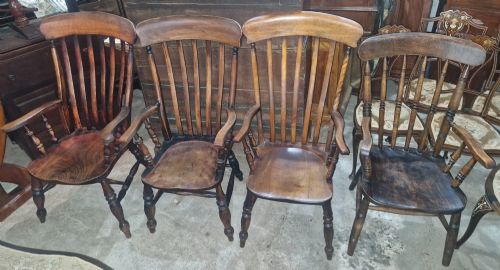
Victorian kitchen dining chairs encompass sturdy seating designed for everyday domestic use during the nineteenth century. These pieces frequently manifest as Windsor varieties, featuring distinctive stick backs, wheel backs, or lath backs anchored by solid wooden seats.
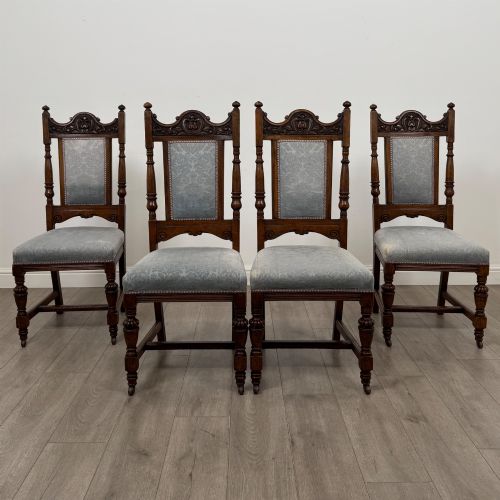
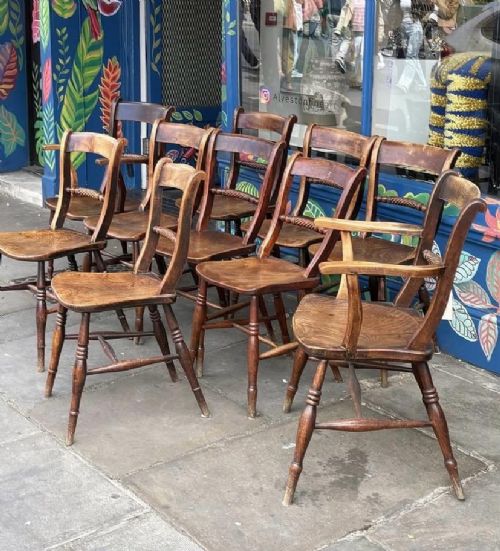
Buyers commonly encounter sets ranging from pairs up to large assemblies of ten or twelve, often gathered as harlequin sets matching in style rather than exact origin. Regional variations such as Thames Valley designs frequently appear alongside general rustic farmhouse interpretations.
How They Were Made
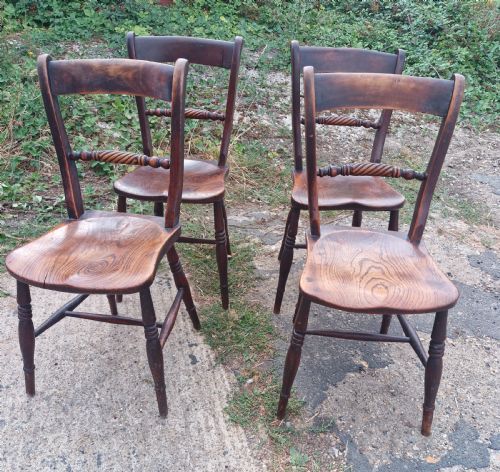
Maker construction relied on combining contrasting timber species to utilise the specific mechanical properties of each wood. Elm provided durable, split-resistant solid seats, while ash and beech offered flexible strength for steam-bent bowed backs and spindle components.
Traditional green woodworking techniques involved turning spindles on lathes and shaping components to fit tightly into drilled mortises within the seat block. Double stretchers were frequently employed between the legs to reinforce the structural integrity of chairs subjected to heavy daily use.
Listings feature woods including elm, beech, ash, oak, yew and hardwood, alongside rush and upholstery fabric.
What Varies in Quality
Quality differences depend heavily on the crispness of the turning work, the ergonomic sculpting of the elm seat, and the integrity of the original joints. Superior examples exhibit well-balanced proportions and comfortable rake to the back assembly.
The survival of matching sets and the retention of deep natural patina without excessive surface abrasion separate ordinary utility seating from higher-grade vernacular specimens.
Worksop best model
The Victorian Kitchen Dining Chairs Glossary
- Windsor
- A chair built with a solid wooden seat into which the legs, back staves and bow are independently inserted. This method creates a sturdy, resilient frame typical of country production.
- Harlequin set
- A collection of chairs assembled to match in style, period and general appearance rather than originating from a single workshop. These groups allow buyers to acquire larger quantities for a dining table.
- Lath back
- A chair back featuring a central vertical wooden slat or splat, often slightly curved for comfort. This form frequently appears alongside traditional spindle designs.
- Wheel back
- A Windsor chair variation incorporating a pierced wooden disc carved in the shape of a spoked wheel within the back splat. This decorative detail distinguishes certain regional nineteenth-century production.
- Stretcher
- A horizontal timber connecting the legs of a chair to provide bracing and stability. Double stretchers offer increased reinforcement against lateral movement.
Victorian Kitchen Dining Chairs: Frequently Asked Questions
How do I care for antique elm seats?
Maintain stable indoor humidity levels to prevent the timber from drying out and splitting over time. Apply traditional wax polishes sparingly to nourish the wood surface and preserve the natural sheen.
Avoid placing these chairs near direct heat sources or in strong sunlight, which can warp the aged joints and fade the finish.
Can I mix different styles around a table?
Harlequin sets demonstrate that pairing chairs with similar turnings and shared materials creates a coherent aesthetic. Combining wheel backs and stick backs works well if the overall scale and timber tones correspond.
Focus on matching seat heights and general proportions to ensure comfortable dining for everyone at the table.
What defines a Thames Valley chair?
Thames Valley pieces are regional nineteenth-century designs characterised by slender, elegant turnings and high-grade elm and yew timbers. These chairs often display sophisticated craftsmanship distinguishing them from heavier provincial farmhouse seating.
Local makers utilised native hardwoods to produce distinctively refined hoop and stick back variations.
How do I identify a true period set?
Examine the construction underneath the seat to observe handmade wedges securing the leg tenons and uniform wear patterns consistent with age. Genuine nineteenth-century examples show tool marks from adzes and drawknives used in the shaping process.
Component thickness and timber shrinkage around the joint holes provide reliable indicators of authentic period manufacture.