




Victorian Jewellery Caddy
These victorian jewellery caddy pieces are timber and metal caskets and boxes shaped for keepsakes, trinkets and tea, offering a handsome tabletop store for small valuables.
Victorian Jewellery Caddy
When you search for a victorian jewellery caddy, you encounter a selection of decorative boxes, keepsake cases, work boxes and tea caddies spanning the nineteenth century. These containers served varied domestic purposes before finding new life as repositories for rings, brooches and everyday trinkets.
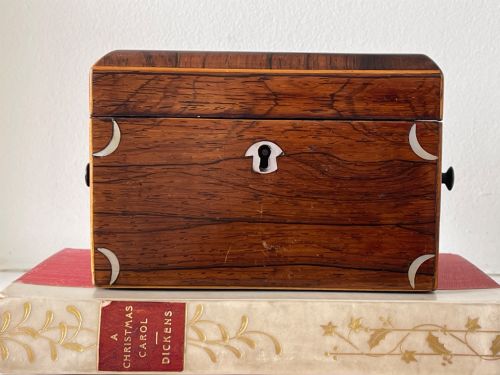
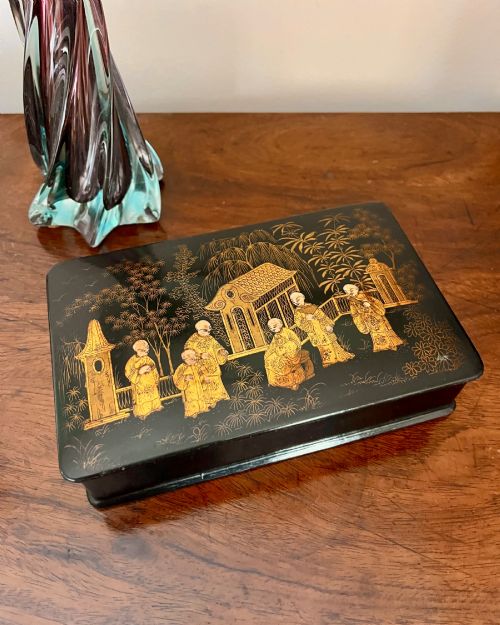
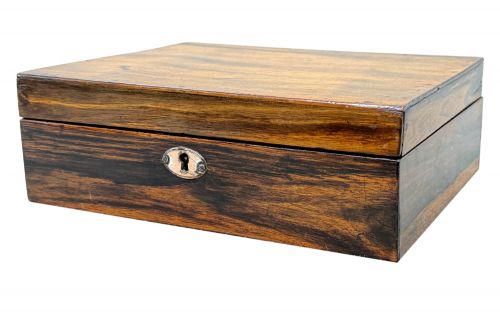
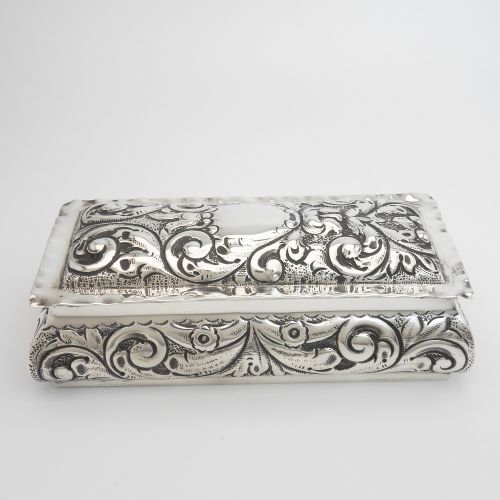
Rosewood and burr walnut dominate the pieces listed here, frequently accompanied by brass inlay, mother of pearl accents and Tunbridge ware decoration. You also discover occasional silver or silver plated examples alongside lacquered chinoiserie and oak constructions.
The forms range from sarcophagus shapes and domed top table boxes to rectangular work boxes and table top cabinets. Most items date from the Victorian era, supplemented by related nineteenth century and early twentieth century examples.
How they were made
Cabinet makers utilised dense exotic timbers such as rosewood and burr walnut, cutting them into choice veneers to display striking grain patterns across the lids and sides. These wooden carcasses frequently incorporate brass inlay, mother of pearl escutcheons and intricate Tunbridge ware mosaics.
Silversmiths hammered and cast sterling silver and silver plate, adding gilt linings to smaller trinket boxes produced in centres like Birmingham. Lacquered items deployed layered resin finishes often adorned with chinoiserie motifs on wooden foundations.
Victorian Jewellery Caddy Retail Price Guide 2026
Typical asking prices for victorian jewellery caddy among the pieces listed under this phrase on Sellingantiques today, from the lower quarter to the upper quarter. They describe what is for sale here now, not the wider market.
What varies in quality
The distinction between ordinary and superior boxes rests upon the crispness of the exterior veneer and the precision of any inlay work. Finer examples display harmonious grain selection across all surfaces, whereas simpler pieces rely on basic timber construction.
Internal appointments mark another division, with lined compartments, fitted trays and original hardware elevating a piece. Boxes retaining working locks, intact hinges and tidy silk or paper linings command greater attention from discerning buyers.
A & J Zimmerman Ltd
The Victorian Jewellery Caddy Glossary
- Sarcophagus-shaped
- A box design featuring a sloping domed lid and flared base, reminiscent of ancient stone coffins. This silhouette was particularly popular during the Regency and Victorian periods for larger tea and jewellery caddies.
- Burr walnut
- A prized timber harvested from the gnarled growths of the walnut tree, showing intricate swirling grain patterns. Cabinet makers valued it for veneering the principal display surfaces of fine nineteenth century boxes.
- Tunbridge ware
- A meticulous form of mosaic woodwork produced in Kent, utilising thousands of tiny tinted wood blocks to create pictorial or geometric mosaic designs. These panels decorate the lids of specialised nineteenth century boxes.
- Chinoiserie
- European decorative style imitating Chinese artistic traditions, featuring painted or lacquered motifs of figures, pavilions and landscapes. This technique appears on selected nineteenth century imported and domestic boxes.
- Escutcheon
- A small protective plate surrounding a keyhole, usually fashioned from brass, mother of pearl or bone. On antique boxes, it serves a decorative function while preventing the wood around the lock from splitting.
Victorian Jewellery Caddy: Frequently Asked Questions
Were these always meant for jewellery?
Many nineteenth century boxes began their lives housing tea, sewing implements, documents or writing materials rather than personal adornments. Their compartmentalised interiors and secure lids made them easily adaptable for storing rings and brooches later.
Over generations, owners repurposed these sturdy containers to safeguard small valuables, meaning a box labelled as a jewellery caddy today may have held loose leaf tea or buttons in the eighteen-eighties.
How do I distinguish walnut from rosewood?
Rosewood generally presents a deeper brown hue with darker blackish veining and a slightly oily lustre. Burr walnut exhibits lively golden brown tones dominated by circular knots and swirling grain patterns.
Examining the natural colour and grain movement under good daylight usually clarifies which exotic timber the cabinet maker selected for the exterior veneer.
Can I use these for daily storage?
These boxes function admirably as dressing table storage for modern rings, earrings and small keepsakes. Their velvet linings and partitioned trays keep delicate items separated and protected from dust.
Care should be taken to place them away from direct sunlight and central heating radiators to prevent the nineteenth century wood and veneer from drying out or warping.