

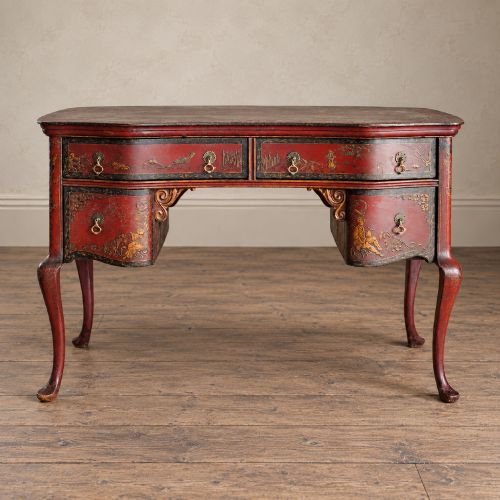
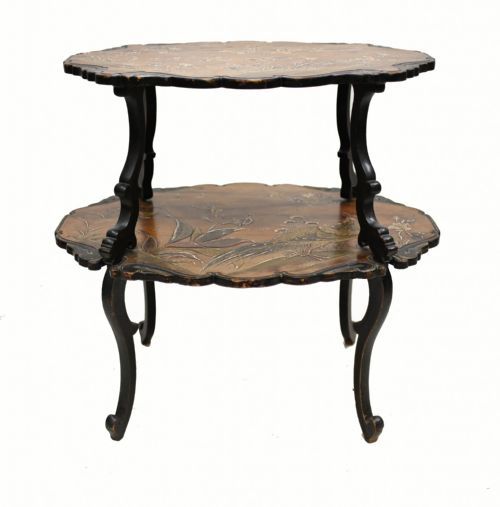
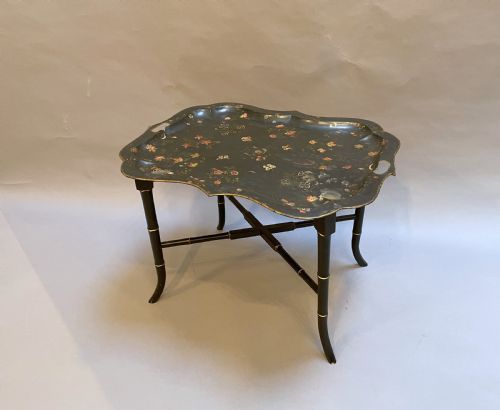
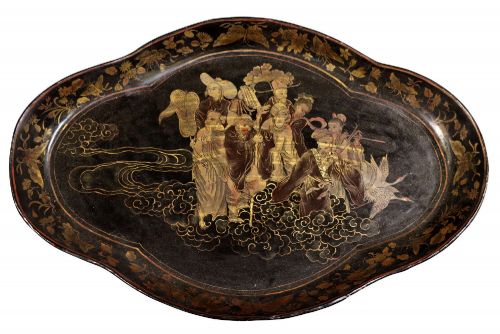


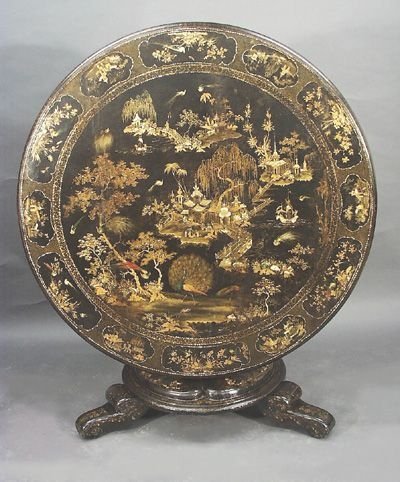


Victorian Japanned Table
A victorian japanned table brings rich orientalist lacquerwork and hand-painted detail into a room.
Victorian Japanned Table
A victorian japanned table encompasses various forms designed for daily utility and decorative display across nineteenth-century interiors. Buyers encounter occasional tables, side pieces, dressing tables, and folding bamboo designs decorated with oriental motifs.
The selection frequently includes papier-mache tray tables and tilt-top tables finished in black lacquer with gilt or hand-painted ornamentation. These pieces reflect broader nineteenth-century tastes for Chinoiserie and Aesthetic Movement aesthetics.
Makers adapted traditional oriental lacquer techniques to British furniture, producing versatile items ranging from wine tables to tiered sewing stands. Surviving examples demonstrate how homeowners integrated exotic decorative schemes into formal and informal spaces.
How they were made
Craftsmen built these tables using wood, ebonised timber, papier-mache, or tiger bamboo depending on the specific form and period. Structural frames supported layered lacquer surfaces finished with hand-painted details and gold leaf.
The japanning process involved applying multiple coats of varnish to imitate Asian lacquerware, often incorporating mother-of-pearl inlay or brass elements. Artisans executed raised or flat painted scenes depicting figures, landscapes, and floral motifs onto the dark ground.
Victorian Japanned Table Retail Price Guide 2026
Typical asking prices for victorian japanned table among the pieces listed under this phrase on Sellingantiques today, from the lower quarter to the upper quarter. They describe what is for sale here now, not the wider market.
Listings feature 19th century and Victorian pieces alongside Regency, Edwardian, and 1920s examples in lacquer, bamboo, and papier-mache.
What varies in quality
The distinction between standard production and superior craftsmanship rests in the depth of the lacquer finish and the precision of the hand-painted decoration. Finer pieces display intricate detail, well-preserved giltwork, and robust structural joinery.
Material selection also dictates the standing of a piece, with papier-mache trays and specialised bamboo frameworks representing distinct manufacturing traditions. The preservation of the original painted surface largely determines the overall character and visual impact.
Jennens and Bettridge
The Victorian Japanned Table Glossary
- Japanning
- European imitation of East Asian lacquerwork achieved through layered varnish and painted decoration. This technique created the glossy black surfaces characteristic of nineteenth-century decorative furniture.
- Chinoiserie
- European interpretation of Chinese and East Asian artistic traditions. The style influenced the pictorial scenes painted on tables, trays, and cabinets.
- Papier-mache
- A composite material made from paper pulp or layers of paper bound with glue, then pressed and dried. Makers utilised this sturdy substance for lightweight tilt-top tables and serving trays.
- Aesthetic Movement
- A late nineteenth-century design current that promoted art for art's sake and embraced oriental influences. Tables from this movement often combine bamboo structures with lacquered panels.
- Etagere
- A set of open shelves or a tiered side table used for displaying ornaments. These items appeared frequently in late nineteenth-century drawing rooms.
Victorian Japanned Table: Frequently Asked Questions
How do I clean a japanned surface?
Dust the lacquered wood gently with a dry, soft microfibre cloth to protect the delicate hand-painted finish and gold leaf details.
Avoid using water, chemical sprays, or abrasive polishes, as moisture damages nineteenth-century varnishes and lifts the decorative layers.
Can I use a tray table for serving?
Most antique papier-mache and wooden trays sit upon removable stands for display purposes rather than heavy daily service.
Treat them as occasional furniture pieces to preserve the historic lacquer and prevent accidental scratching of the painted scenes.
What is tiger bamboo?
Tiger bamboo refers to a mottled variety of natural bamboo utilised extensively during the late nineteenth century for lightweight furniture.
Frames made from this material often accompany lacquered panels or shelves in Aesthetic Movement side and sewing tables.
Where should I place these tables?
Position these pieces away from direct sunlight and radiators to prevent the lacquer from cracking or warping over time.
They function well as bedside surfaces, lamp tables, or decorative accents in drawing rooms where the dark finish provides contrast.