


Victorian Japanned Boxes
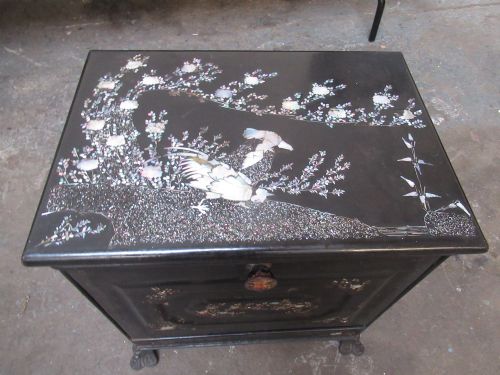
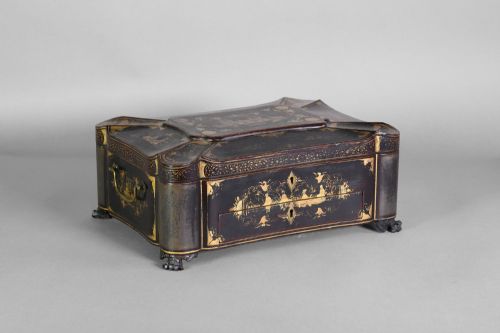
These victorian japanned boxes range from lacquered stationery caddies to heavy sheet iron coal scuttles, offering both practical storage and striking hand-painted decoration for the home.
Victorian Japanned Boxes
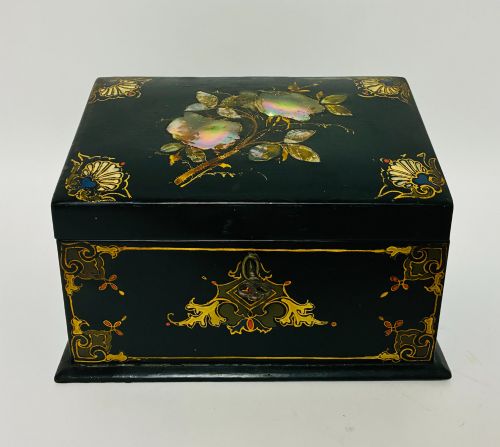
Victorian japanned boxes encompass a varied group of storage pieces, legal containers, and household items produced during the nineteenth century. When exploring victorian japanned boxes, buyers encounter items ranging from decorative stationery boxes to utilitarian coal scuttles and military hat containers.
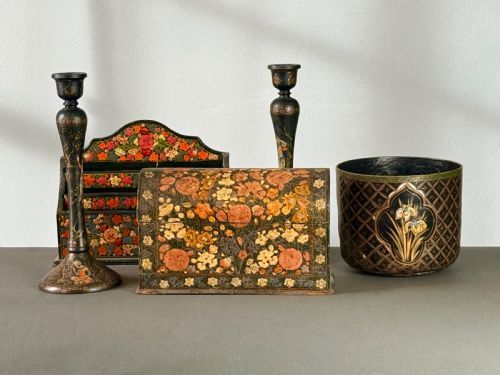
The selection frequently includes objects finished in imitation of oriental lacquer, alongside folk art barge ware and toleware pieces. These items originate from the nineteenth century, with specific examples carrying nineteenth century or circa 1900 dates.
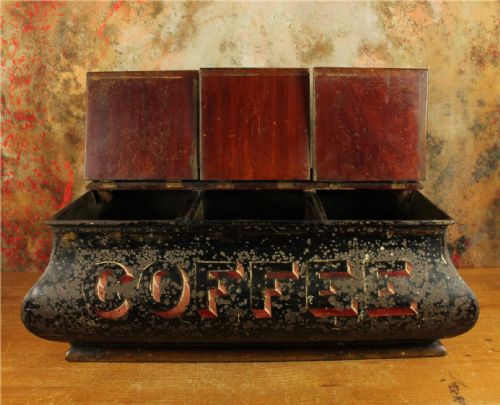
Forms span from small desk accessories and letter racks to large log boxes and wig cases. Many items combine painted metal with gold leaf details or incorporate wood and bamboo structures.
How they were made
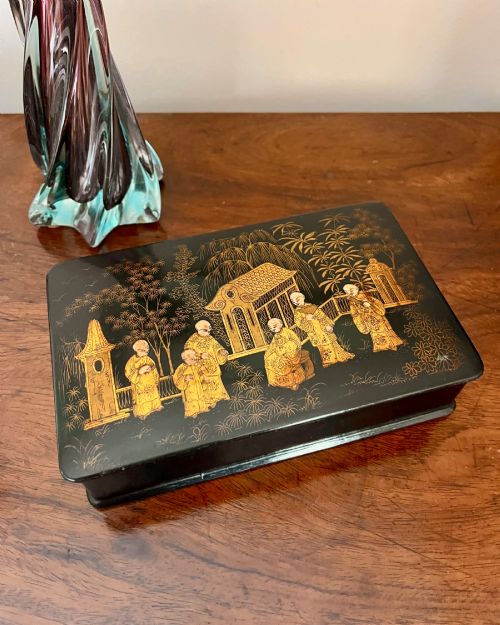
Construction relies heavily on sheet iron, tin, and wood as primary foundations for the painted and lacquered surfaces. Artisans applied layers of paint and varnish to simulate Asian lacquer work, often adding gold leaf highlights and Chinoiserie motifs.
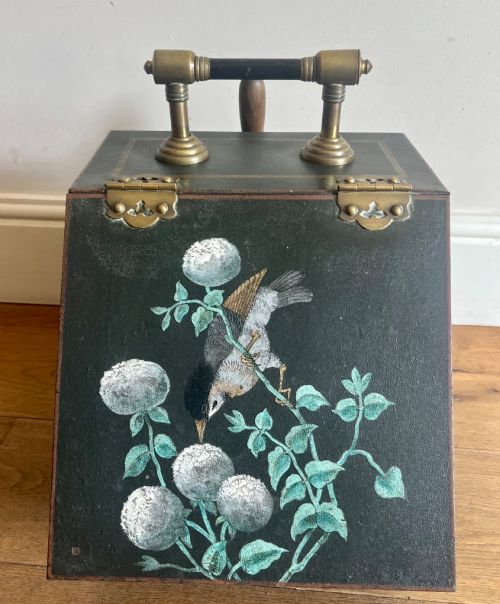
Folk art and barge ware examples utilise heavy metal panels decorated with distinctive floral or scenic compositions. Other pieces integrate organic materials such as horsehair within associated legal items or bamboo in supporting furniture structures.
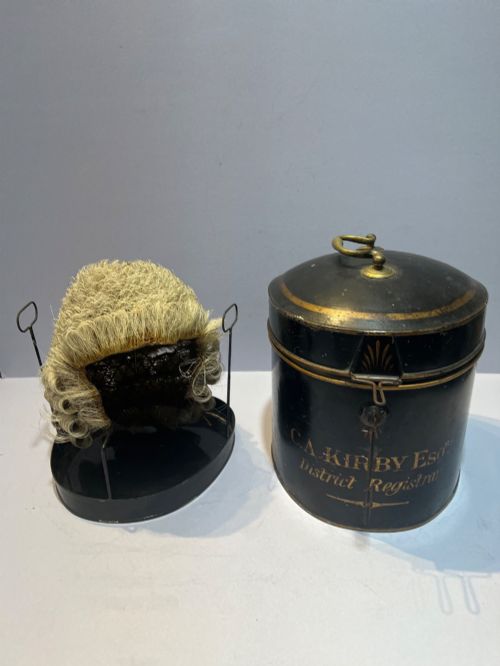
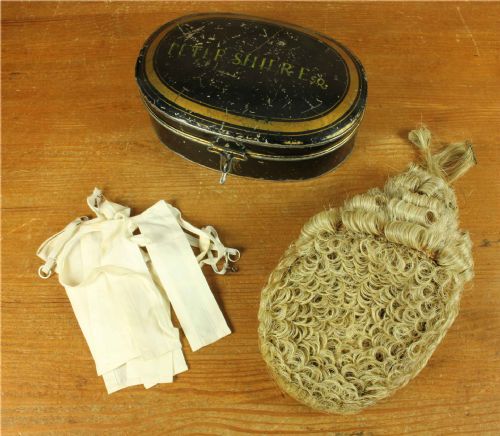
Barristers kept their horsehair wigs safe inside decorated tin boxes bearing the names of their legal outfitters.
What varies in quality
Quality depends upon the fineness of the hand-painted decoration and the preservation of the original surface finish. Pieces featuring intricate Chinoiserie details or gold leaf work demonstrate greater artisan skill than plain utilitarian containers.
The structural integrity of the metal or wood carcass influences the overall standard of the piece. Well-preserved surface patination without excessive overpainting distinguishes superior examples from heavily restored items.
Eade & Son·Ravenscroft Law·Peter Shier·Hawkes & Co
The Victorian Japanned Boxes Glossary
- Japanning
- European imitation of East Asian lacquerwork produced by applying layers of varnish and heat-drying the finish. This technique appeared widely on household ironware and wooden furniture during the nineteenth century.
- Toleware
- Painted or lacquered sheet metal utensils and vessels. Items constructed from tin and sheet iron received protective and decorative painted coatings.
- Chinoiserie
- European artistic style reflecting Chinese motifs and decorative schemes. Artisans rendered landscapes and figures in gold and colour upon dark lacquered grounds.
- Barge Ware
- Traditional British folk art decorating metal and wooden canal craft containers. Bold floral patterns and bright colours characterise these nineteenth-century items.
- Bicorn
- Two-cornered cocked hat worn by military officers and officials during the nineteenth century. These hats frequently survived inside dedicated metal storage tins.
Victorian Japanned Boxes: Frequently Asked Questions
What is toleware?
Toleware refers to lacquered or painted sheet metal objects produced for domestic and utilitarian use. These items include coal scuttles, hat boxes, and small storage containers.
The metal base received dark surface treatments, frequently embellished with hand-painted floral motifs or gilt decoration.
How do I clean japanned surfaces?
Japanned and lacquered surfaces require gentle dusting with a soft, dry cloth to protect the historic finish. Moisture and abrasive cleaners damage the delicate layers of varnish and paint.
Preserving the original surface maintains the character and visual appeal of nineteenth-century decorative boxes.
Are these boxes waterproof?
Nineteenth-century metal and lacquered boxes were designed for dry storage rather than liquid containment. Items like coal scuttles and hat boxes managed fuel and garments.
Exposing interior surfaces to prolonged dampness risks corroding the sheet iron and lifting the lacquer layers.
What are legal wig cases?
Legal wig cases served as protective metal containers for barristers' and judges' formal horsehair wigs. These specialised tins often accompanied named legal apparel.
Such containers provide secure storage and frequently retain makers' labels or owners' details from the Victorian period.