




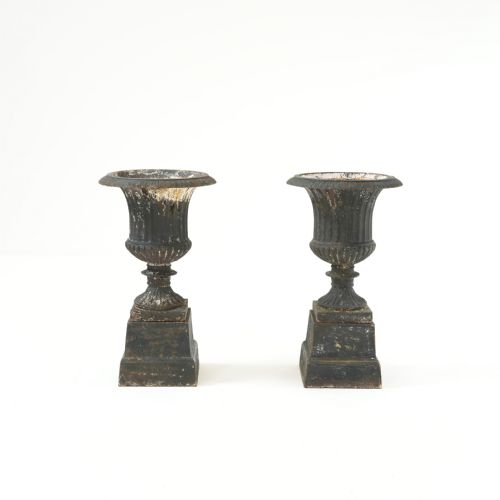
Victorian Iron Plant Stand
A victorian iron plant stand brings architectural weight and enduring utility to conservatories, patios and interiors through robust metalwork.
Victorian Iron Plant Stand
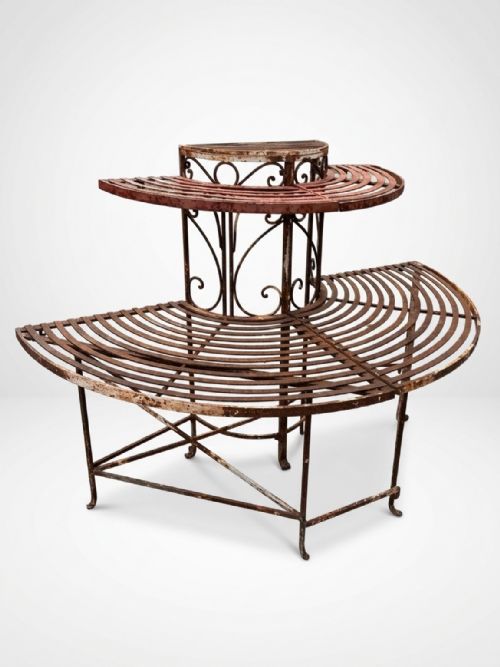
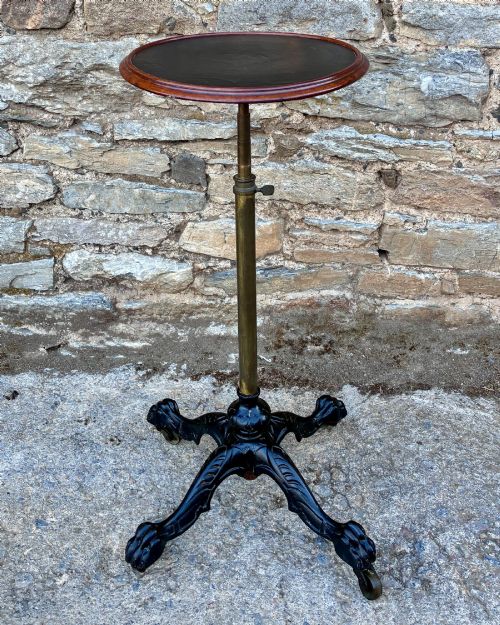
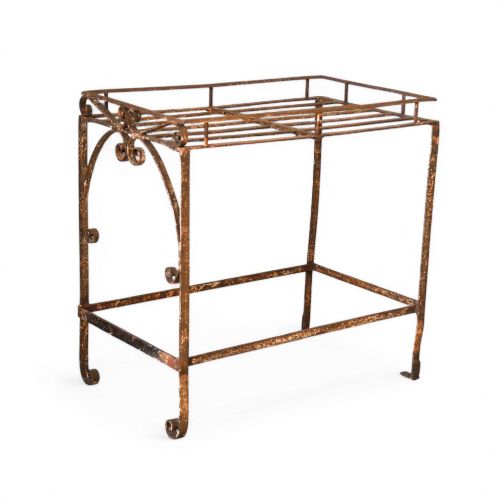
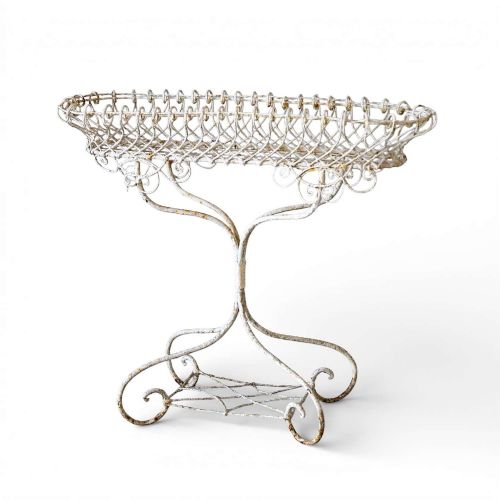
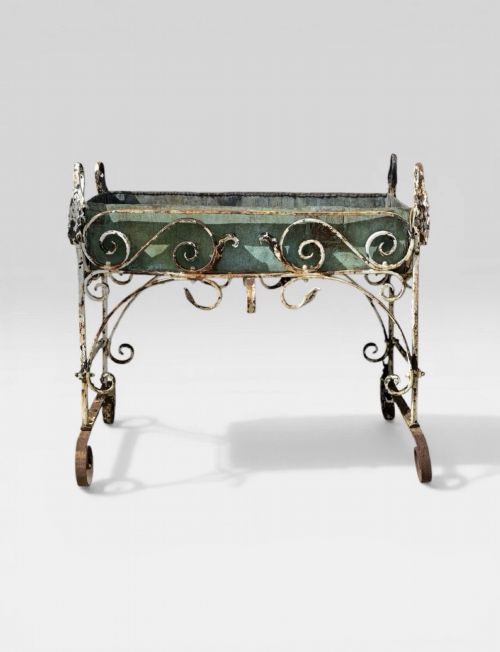
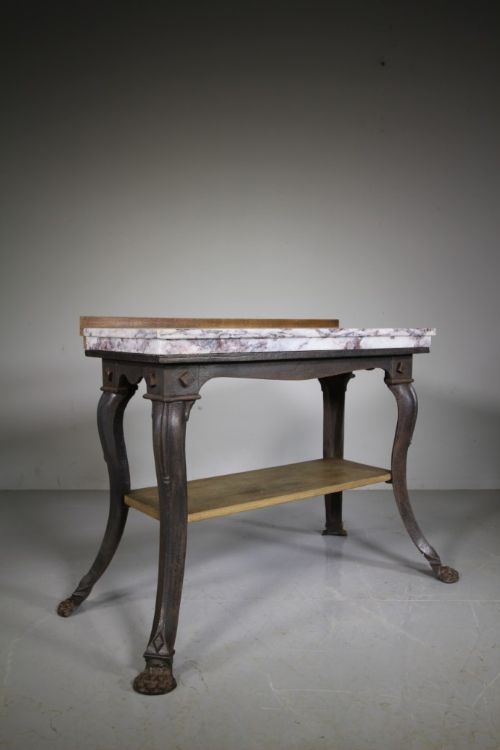
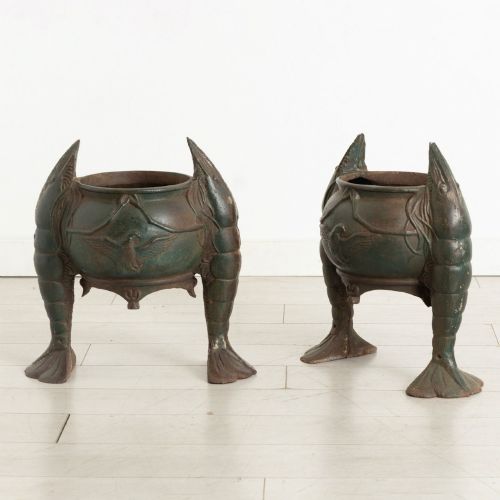
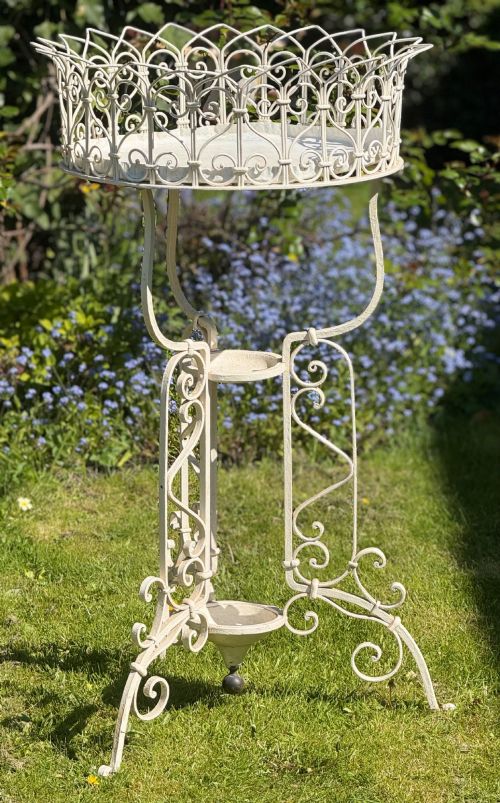
A victorian iron plant stand serves as a sturdy structural support for flora, utilising tiered shelves, scrollwork baskets and column forms to elevate greenery in gardens and conservatories. These items range from multi-tiered display stands and wirework jardinieres to heavy cast iron campana urns and side tables featuring marble tops.
Most examples encountered here date from the nineteenth century, spanning periods from the eighteen-sixties through the Edwardian era, with construction reflecting both English estate workshops and French garden traditions. Forms encompass everything from simple pot stands to elaborate birdcages and corner stands designed to maximise display space in limited areas.
How they were made
Makers utilised cast iron for robust structural elements like column planters and heavy urns, employing moulds to achieve decorative relief details. Wrought iron was forged by hand into scrollwork, lattice baskets and adjustable display frames, while delicate wirework was woven to create tiered conservatory planters.
Surface finishes typically incorporate layers of paint, often white or black, applied to protect the metal from weathering in garden environments. Certain pieces integrate contrasting materials such as marble tops, brass mounts, zinc linings or wooden elements to enhance their utility as side tables and display surfaces.
What varies in quality
The sophistication of the metalwork separates ordinary production from superior examples, with hand-forged scrollwork, crisp casting relief and intricate wirework indicating higher craftsmanship. Estate-made or architectural pieces often display greater individuality and robust construction compared to standard utilitarian items.
The integrity of the material and the survival of original decorative details, such as riveted joints, brass accents and integrated marble inserts, determine the overall merit of a piece. Original paint surfaces and minimal structural alteration preserve the historical character valued by collectors.
The Victorian Iron Plant Stand Glossary
- Wrought iron
- Iron that has been heated and hammered into shape by a blacksmith, producing fibrous structures and characteristic surface textures suitable for detailed scrollwork and plant stands.
- Cast iron
- Iron poured into a mould while molten to create heavy structural forms, decorative urns and repeating relief patterns that resist heavy loads.
- Wirework
- Fine metal strands bent and woven into open lattices and tiered frames, frequently utilised for lightweight conservatory plant stands and jardinieres.
- Campana urn
- A bell-shaped garden vessel mounted on a pedestal base, commonly cast in iron and utilised for planting or decorative display on terraces.
- Jardiniere
- An ornamental pot or stand designed specifically to hold plants or flowers, often featuring decorative scrollwork or lattice baskets.
Victorian Iron Plant Stand: Frequently Asked Questions
Where should I place an iron plant stand?
These pieces suit conservatories, sheltered patios, and interior garden rooms where their metal construction can support heavy pots and planters.
They also function effectively as display tables in hallways and living spaces when paired with marble or wood tops.
How do I clean and protect a painted iron stand?
Wipe surfaces gently with a soft, dry cloth to remove dust and debris without damaging the underlying painted finish or vulnerable wirework.
Avoid harsh chemical cleaners and keep the stands in dry environments to prevent rust formation on exposed metal.
Can these stands remain outside year-round?
Cast and wrought iron withstand outdoor conditions well, though prolonged exposure to moisture can cause weathering and degradation of original paint surfaces.
Many collectors prefer keeping delicate wirework and painted pieces indoors or within covered conservatories to preserve their condition.
How do I distinguish between cast and wrought iron?
Cast iron appears heavy and uniform with crisp moulded details, having been poured into a mould while in a liquid state.
Wrought iron displays visible hammer marks, textured grain and individual variations resulting from manual forging by a blacksmith.