



Victorian Intaglio Charm
These victorian intaglio charm selections bring together carved hardstone seals and pendants that collectors wear on chains and bracelets.
Victorian Intaglio Charm
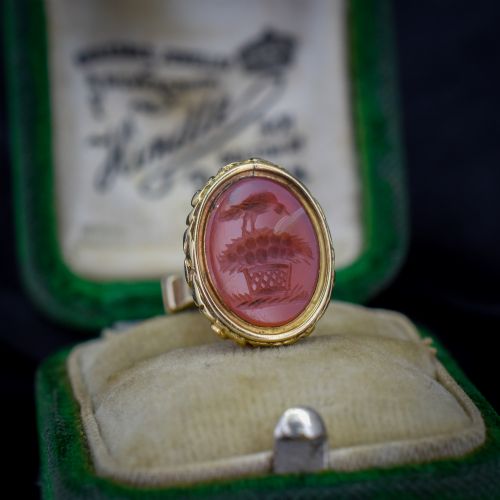
A victorian intaglio charm typically takes the form of a fob seal or pendant designed to be worn on a chain or charm bracelet. These pieces combine miniature carving with precious metal mounts, originating from periods spanning the Georgian era through to the late nineteenth century.
The versions most commonly met on this page include carnelian and bloodstone seals set in gold or gold cased mounts. Subjects range from heraldic motifs and carved animals such as elephants and birds to classical Greek figures and Roman emperors.
Many items function as both decorative pendants and functional signet seals, bearing engraved names or monograms like Ann and Jane. They appear mounted individually or gathered together on charm bracelets.
How they were made
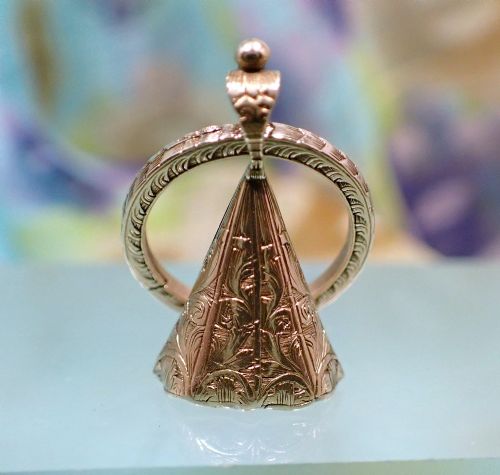
Metalworkers utilised casting, chasing, and ornate wirework to create the decorative fob seals and pendant mounts that frame each stone. The engineering often included swivel mechanisms and matching split rings to attach the seals securely to chains or bracelets.
Victorian Intaglio Charm Retail Price Guide 2026
Typical asking prices for victorian intaglio charm among the pieces listed under this phrase on Sellingantiques today, from the lower quarter to the upper quarter. They describe what is for sale here now, not the wider market.
Listings feature hardstones including carnelian, bloodstone, chalcedony, and sardonyx mounted in gold, nine carat gold, fifteen carat gold, and gold cased metals.
What varies in quality
The clarity and depth of the hardstone carving distinguish finer examples from simpler production, particularly in the rendering of animal motifs or classical figures. Finer stones display crisp lines and detailed polish within the intaglio recess.
The weight and purity of the metal mount also separate pieces, with solid nine carat and fifteen carat gold settings representing higher grade work compared to gold cased or gilt metal alternatives. Additionally, the complexity of the ornate scrollwork and the preservation of the original swivel or ring add to the standing of a piece.
The Victorian Intaglio Charm Glossary
- Intaglio
- A design carved into the surface of a hardstone so that the impression appears in relief when pressed into sealing wax. This technique reverses the image for stamping purposes.
- Fob seal
- A small pendant historically used to press a signature into wax for sealing correspondence or documents. They were typically suspended from a pocket watch chain or worn as a charm.
- Carnelian
- A reddish-orange variety of chalcedony quartz frequently utilised for carved intaglios and signet seals. Its warm colour made it a favourite material during the Georgian and Victorian eras.
- Sardonyx
- A form of onyx featuring parallel bands of sard and white chalcedony, providing contrast for cameo and intaglio carvers. The darker layers allow the carved subject to stand out distinctly against a lighter background.
- Gold cased
- A method where a thin layer of gold is mechanically bonded to a base metal core to provide the appearance of solid gold. This technique offered a durable finish at a lower cost than solid precious metal.
Victorian Intaglio Charm: Frequently Asked Questions
What is a victorian intaglio charm?
A victorian intaglio charm is a small decorative item featuring a carved hardstone set in gold or base metal, designed for wear on a chain or bracelet. Many of these items were originally pocket watch fobs or personal signet seals adapted for jewellery use.
They combine miniature glyptic art with precious metal mounts, often displaying heraldic crests, animals, or classical portraits.
How were these seals used historically?
These seals served a practical purpose in correspondence and document security by pressing into melted sealing wax to leave a personal mark. Owners used the carved intaglio face to authenticate letters and packages before envelopes with adhesive flaps became common.
Over time, as writing habits shifted, the seals transitioned into purely decorative pendants and components for charm bracelets.
What stones are commonly found in these charms?
Carnelian is the most frequently encountered stone, valued for its translucent reddish-orange tones and smooth surface for carving. Bloodstone, chalcedony, and sardonyx also appear regularly across the selection.
Each stone was chosen for its hardness and ability to hold fine detail under the carver's tools.