




Victorian Inlay Coffee Table
A victorian inlay coffee table brings nineteenth-century cabinet work into a modern room, offering patterned timber surfaces and compact proportions.
Victorian Inlay Coffee Table
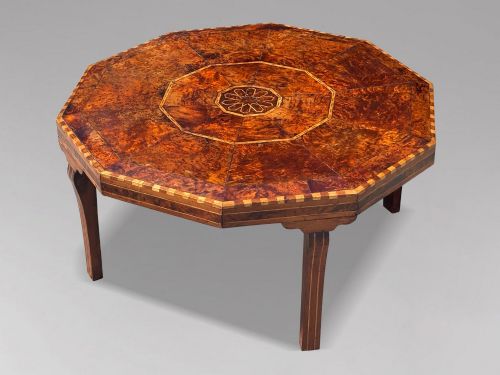
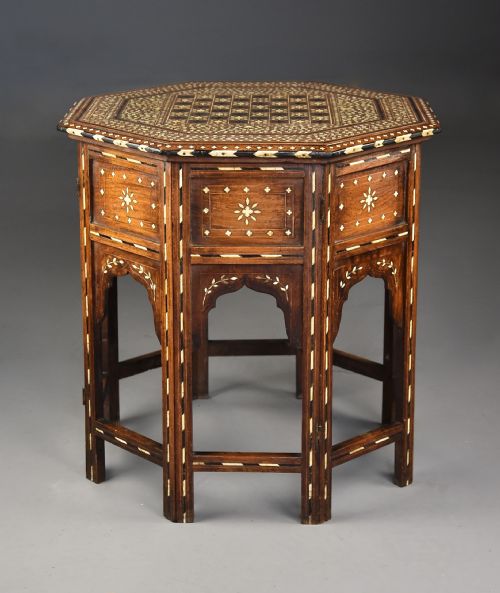
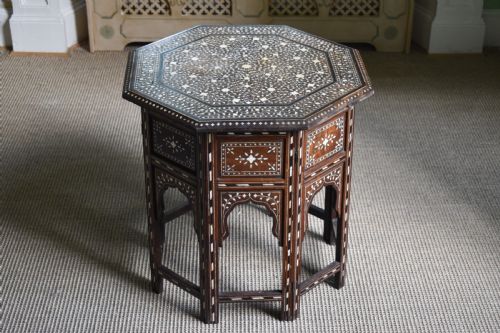
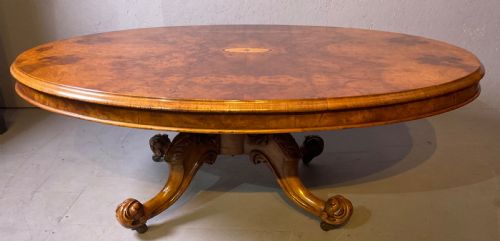
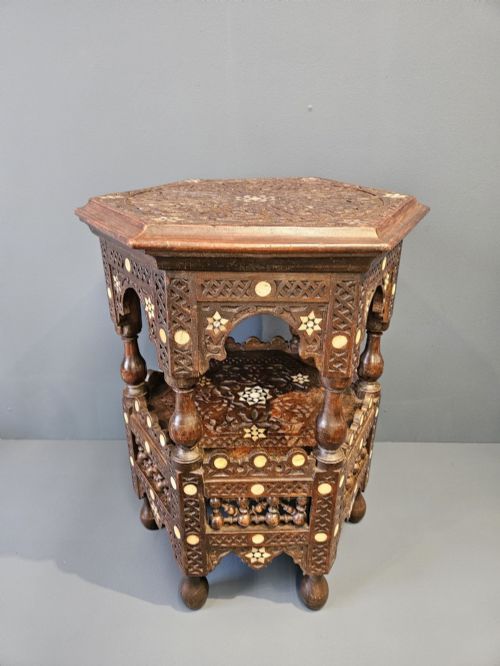
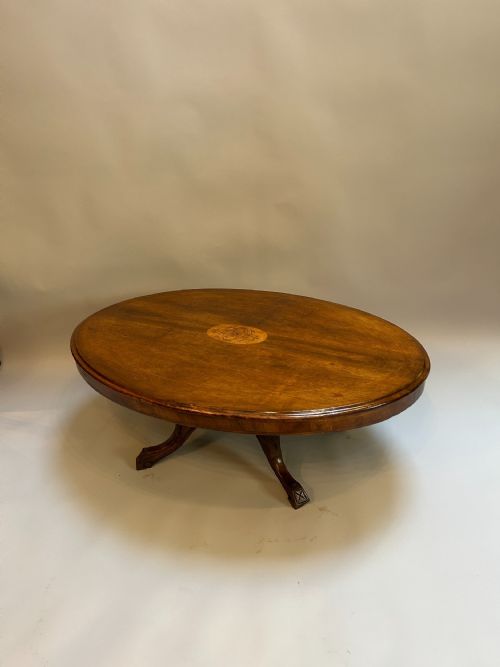
When you search for a victorian inlay coffee table, you are looking at nineteenth-century low tables adapted from earlier forms like occasional, centre, and lamp tables. The selection here spans the Victorian period alongside related nineteenth-century designs, including Moorish Revival, Anglo-Indian, and Sheraton style pieces.
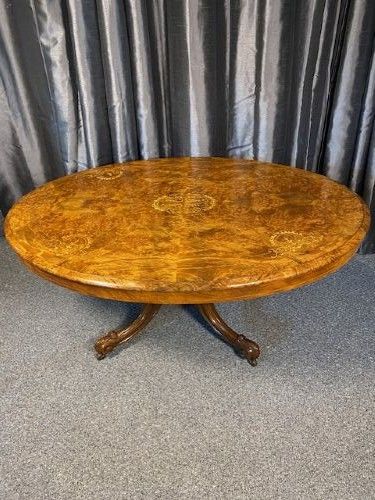
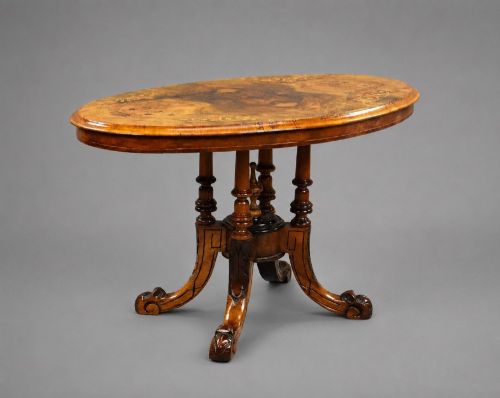
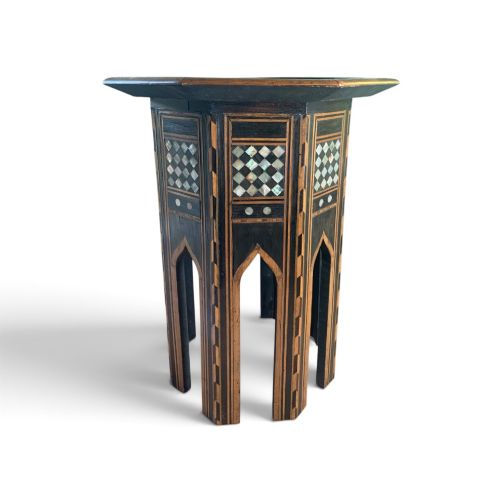
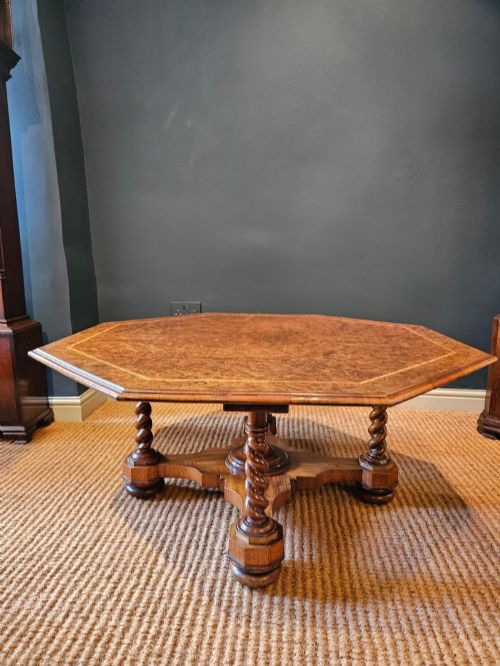
The most common forms you will meet on this page are octagonal and oval tables, alongside nests of tables and kidney-shaped designs. These pieces often feature marquetry or wood inlay across walnut, burr walnut, mahogany, and rosewood substrates.
Construction and Materials
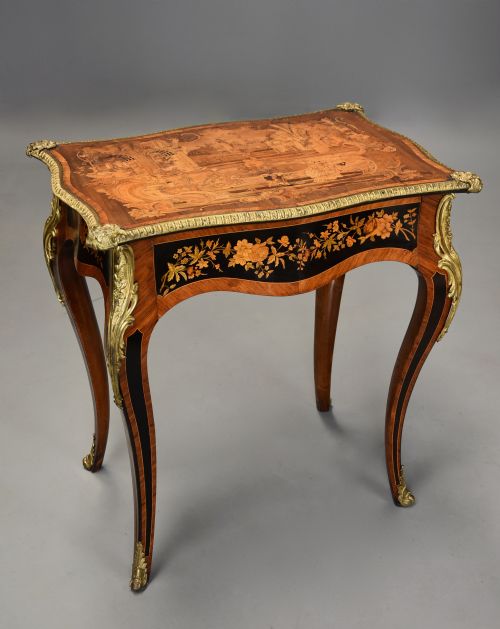
Cabinet makers built these tables using hardwoods such as mahogany, walnut, and rosewood, frequently applying burr walnut or satinwood veneers to create figured surfaces. Intricate patterns were achieved through wood inlay, marquetry, and occasionally bone or pietra dura work set directly into the timber.
Structural elements combined turned or hand-carved wooden bases with stable carcase timbers, supporting multi-layered table tops designed to withstand regular domestic use.
Several tables here hide multiple smaller companions inside, proving the Victorians had a tidy solution for unexpected tea guests.
Evaluating Quality
Quality in these tables rests upon the precision of the inlay work and the choice of primary and secondary timbers. Pieces featuring dense burr walnut, intricate marquetry, or specialised regional craftsmanship like Hoshiarpur or Killarney work sit at the higher end of the range.
Finer examples display tight joints, carefully matched timber grains, and refined hand-carved details on bases and legs, whereas simpler pieces rely on plain mahogany or basic geometric borders.
Liberty & Co·Edwards and Roberts
The Victorian Inlay Coffee Table Glossary
- Marquetry
- Decorative patterns formed by fitting together small pieces of veneer into wooden panels. This technique allows for elaborate floral or pictorial designs across table tops.
- Burr Walnut
- Timber taken from walnut tree growths, producing highly figured, swirling grain patterns. Cabinet makers prized this wood for its rich decorative impact on table surfaces.
- Pietra Dura
- Inlay work using cut and fitted polished coloured stones to create formal motifs. It appears on select nineteenth-century table tops.
- Quartetto Nest
- A set of four graduating tables designed to slide beneath one another. These space-saving nests became popular during the late Victorian period.
- Hoshiarpur
- A North African and Indian style of intricate wood carving and bone inlay. Pieces from this tradition feature dense geometric patterns across octagonal surfaces.
Victorian Inlay Coffee Table: Frequently Asked Questions
What is a victorian inlay coffee table?
A victorian inlay coffee table is typically a nineteenth-century occasional, centre, or lamp table adapted to modern coffee table height. These pieces display patterned wood surfaces created through marquetry, stringing, or exotic timber veneers.
Most examples originate from the broader Victorian era, featuring shapes ranging from octagonal and oval to kidney-shaped and nested configurations.
How were these tables used originally?
In nineteenth-century interiors, many of these low or occasional tables served as centrepieces for holding lamps, books, or decorative objects. Some functioned as games tables or small tea tables within reception rooms.
Their versatile sizes allowed servants or residents to move them easily around a parlour or drawing room as needs changed.
How do I care for a wood inlay surface?
Maintain these surfaces by keeping them away from direct sunlight and excessive temperature shifts, which can dry out old timbers and veneers. Use soft cloths for dusting and apply specialist wax sparingly to nourish the wood.
Avoid placing damp glasses or hot cups directly on the antique polish to prevent ring marks and lifting veneers.
How do I distinguish regional styles like Anglo-Indian work?
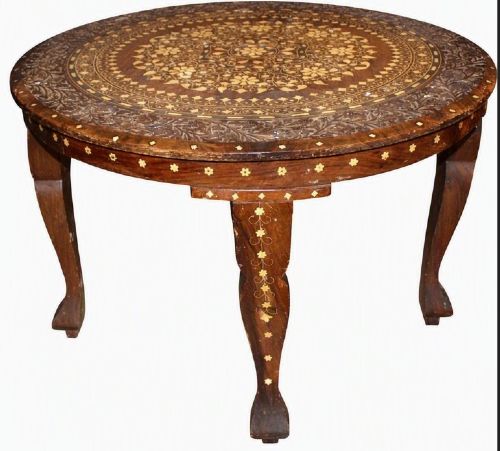
Regional styles stand out through specific decorative vocabularies, such as the dense bone inlay and carved foliage found in Hoshiarpur pieces. European Victorian pieces tend to rely on French-style marquetry, satinwood banding, or burr walnut veneers.
Examining the construction timbers and the nature of the joinery often reveals whether a table originated in British workshops or overseas.