



Victorian Inlaid Satinwood Sideboard
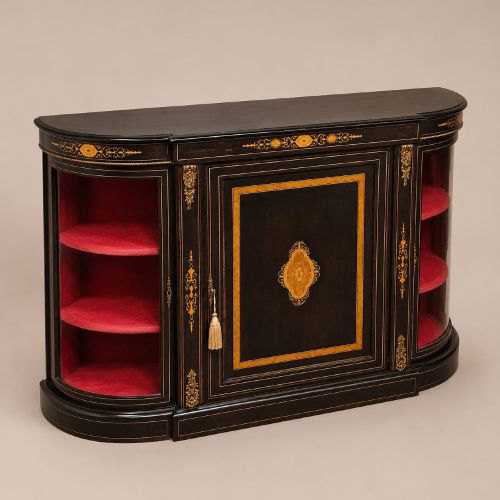
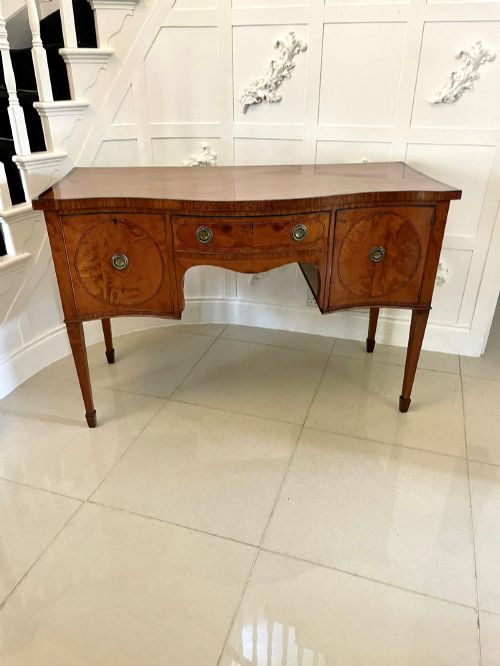
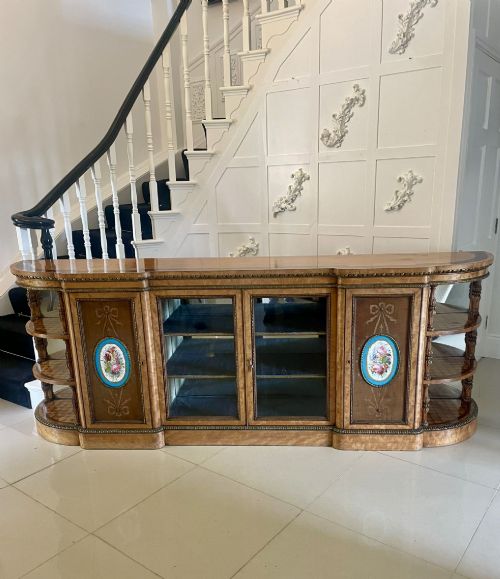
A victorian inlaid satinwood sideboard brings luminous timber and classical ornament into a room.
Victorian Inlaid Satinwood Sideboard
When you search for a victorian inlaid satinwood sideboard, you encounter formal reception room furniture designed to display taste and status through pale timbers and delicate marquetry. The examples on this page span the mid to late nineteenth century, taking the form of sideboards, credenzas, side cabinets and display cabinets.
Makers drew heavily on earlier vocabularies, producing pieces in the Sheraton Revival, Adam Revival and French Neoclassical styles. Alongside traditional sideboards, you find serpentine shapes, bowed fronts and glazed display cabinets mounted with ormolu.
The primary timber is satinwood, frequently enriched with contrasting woods, floral painting and classical marquetry. These items served as grand focal points in nineteenth century interiors, combining storage with decorative display.
How They Were Made
Cabinet makers utilised satinwood as a veneer over secondary woods, combining it with mahogany, burr walnut and kingwood to create rich colour contrast and geometric banding. Marquetry panels were meticulously cut from various tinted woods to form floral and classical motifs.
Mounts in cast and gilt ormolu add architectural definition to corners and panels, while brass hardware secures doors and drawers. Selected pieces integrate mirrored glass backs and marble tops to enhance light reflection and surface durability.
Victorian Inlaid Satinwood Sideboard Retail Price Guide 2026
Typical asking prices for victorian inlaid satinwood sideboard among the pieces listed under this phrase on Sellingantiques today, from the lower quarter to the upper quarter. They describe what is for sale here now, not the wider market.
Materials appearing across the inventory include ormolu mounts, mirrored glass, burr walnut, mahogany and marble.
What Varies in Quality
The distinction between standard cabinet work and exhibition standard pieces lies in the precision of the marquetry and the depth of the timber figuring. Superior examples display intricate, tightly fitted multi-wood inlays and hand-painted floral details rather than simpler transfers.
Construction methods also separate the tiers of production, seen in the selection of secondary timbers and the crispness of the ormolu mountings. Firm attribution through maker signatures further elevates an individual piece.
Edwards and Roberts·Maple and Co·Gillows
The Victorian Inlaid Satinwood Sideboard Glossary
- Satinwood
- A hard, yellow-tinted exotic timber prized for its lustrous sheen and smooth grain. It serves as the primary decorative surface for nineteenth century revival furniture.
- Marquetry
- The art of applying small pieces of veneer to a structure to form decorative patterns and pictures. Craftsmen cut contrasting woods together to ensure tight joints.
- Ormolu
- Gilded bronze used for decorative mounts and furniture feet. It provides metallic contrast against dark and light wood veneers.
- Credenza
- A sideboard or display cabinet originating in Italy and popular in Victorian drawing rooms. These items often feature glazed central doors flanked by curved side compartments.
- Sheraton Revival
- A late nineteenth century design movement that reinterpreted the light, neoclassical furniture forms of eighteenth century designer Thomas Sheraton.
Victorian Inlaid Satinwood Sideboard: Frequently Asked Questions
What is a satinwood sideboard?
A satinwood sideboard is a nineteenth century storage and display piece veneered in pale, lustrous satinwood timber. These items frequently feature marquetry inlays and classical revival motifs.
Craftsmen built them for formal reception rooms to hold dining porcelain or to display decorative objects.
How do I date a Victorian cabinet?
Dating relies on stylistic clues, construction techniques, and materials recorded in the specific piece. Revival styles such as Sheraton and Adam gained particular popularity during the late nineteenth century.
Cabinet makers also incorporated ormolu mounts and painted floral panels that reflect the aesthetic tastes of the 1850s to 1890s.
Where were these cabinets used?
Original owners placed these cabinets in drawing rooms, dining rooms and grand salons. They functioned both as surfaces for serving and as glazed display cases for treasured collections.
In modern interiors, they serve similar display roles while adding warmth and reflective timber tones to a room.
What is the difference between a credenza and a sideboard?
A credenza typically incorporates a low profile with glazed side cabinets and central cupboards, often mounted with ormolu details. Sideboards lean towards dining room storage with broader timber surfaces and drawers.
Victorian makers sometimes blurred these distinctions in hybrid forms listed as credenza side cabinets.