



Victorian Inlaid Chairs
Victorian inlaid chairs bring fine cabinetwork and varied timbers into the sitting room, offering a distinct ornamental focus for daily seating.
Victorian Inlaid Chairs
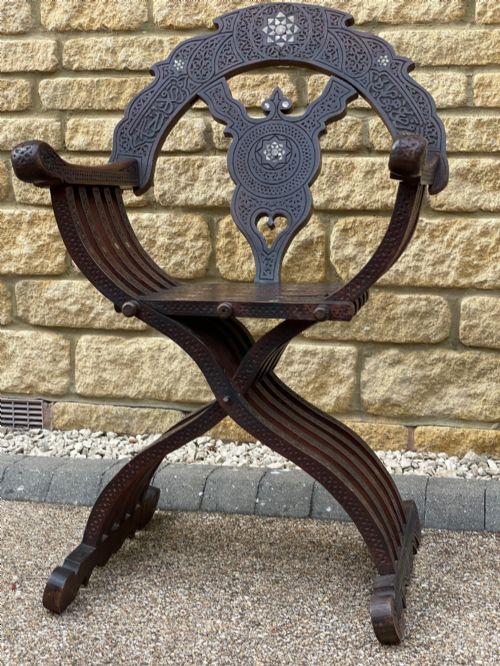
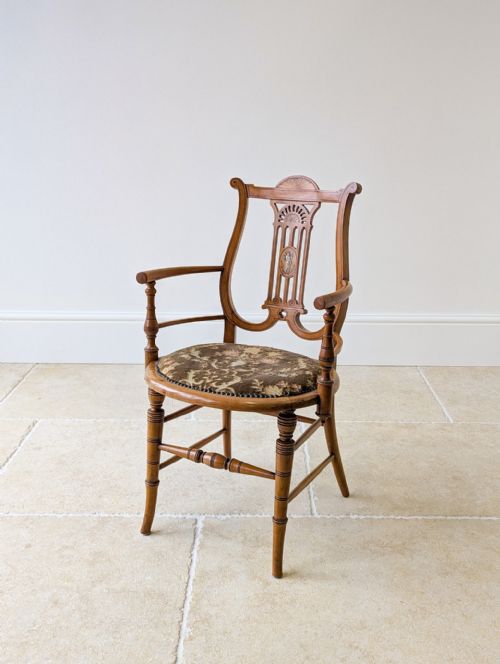
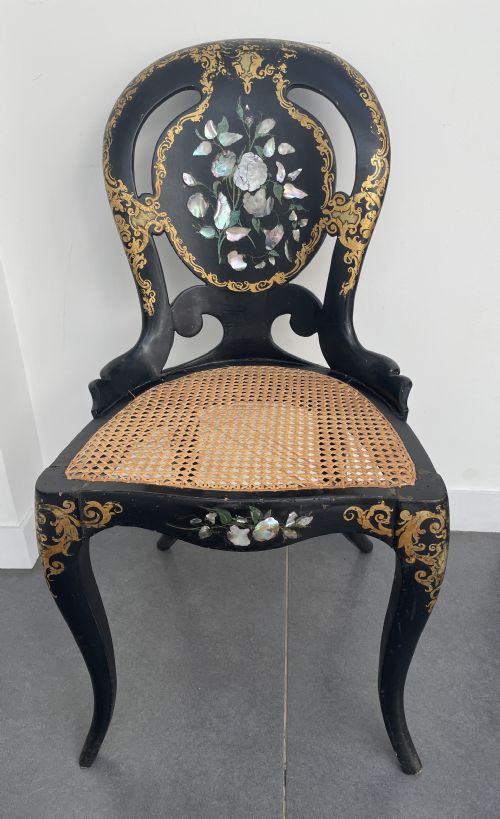
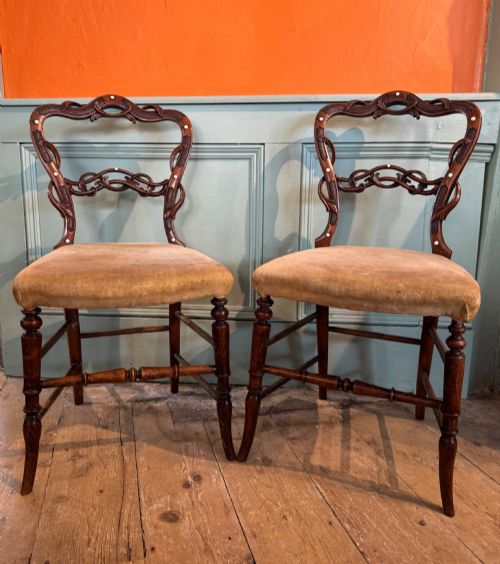
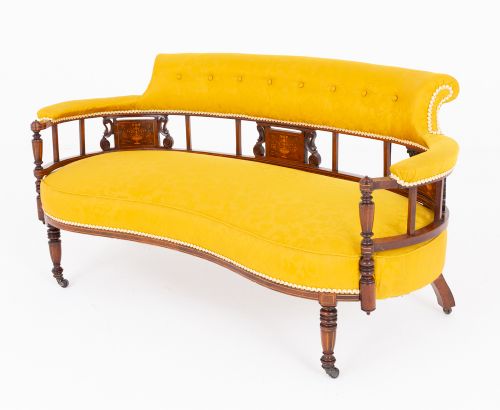
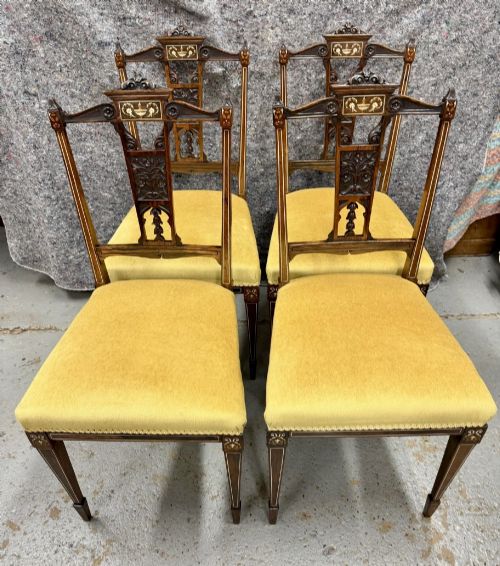
Victorian inlaid chairs encompass a broad spectrum of domestic seating, from parlor armchairs and salon suites to sets of dining chairs produced during the nineteenth century. Buyers searching this phrase typically encounter mahogany, walnut, or rosewood frames embellished with contrasting wood details.
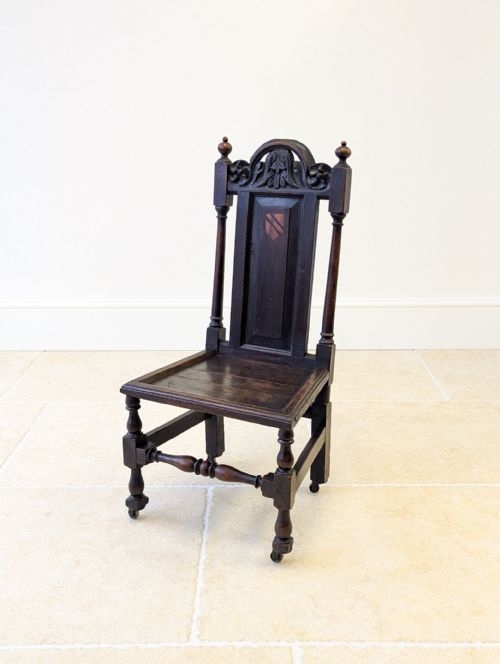
The selections span from formal dining sets to occasional side chairs and bedroom pieces, often reflecting historical revivals such as Sheraton, Jacobean, or Arts and Crafts movements. Surviving examples demonstrate how nineteenth-century makers adapted traditional seating forms to suit changing domestic tastes through decorative surface work.
While single armchairs and pairs of side chairs appear frequently, larger dining sets also surface alongside specialised forms like corner chairs and piano stools. Each variation reveals the nineteenth-century preference for integrating ornamental timber decoration into functional furniture.
Markers of Quality
The distinction between standard production and exceptional examples lies in the crispness of the carving, the precision of the veneer work, and the structural integrity of the frame. Superior pieces display tightly fitted joints and meticulous alignment within the inlaid motifs rather than superficial surface decoration alone.
Heavier timber selection and balanced proportions throughout the legs, rails, and backrests separate finer parlour and dining sets from simpler utility seating. Furthermore, the complexity of the marquetry and the retention of original upholstery foundations influence the standing of an individual piece.
The listings demonstrate a strong preference for mahogany and walnut primary woods, complemented by satinwood and mother-of-pearl inlay across various decades.
Liberty and Co·Lamb of Manchester·Jenks and Wood·Jennens and Bettridge·Howard and Son
The Victorian Inlaid Chairs Glossary
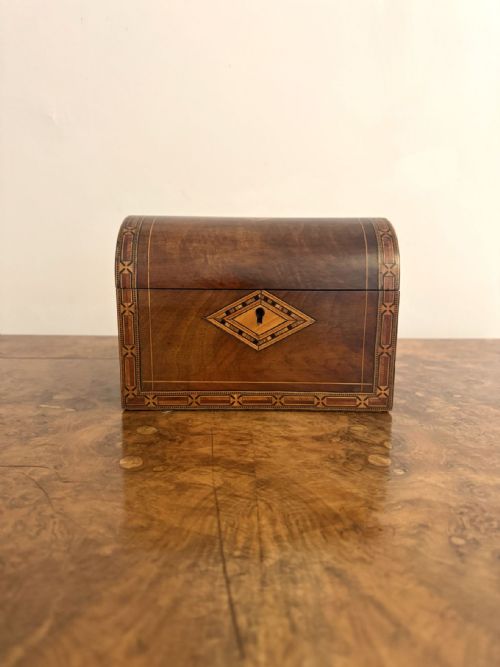
- Marquetry
- The art of creating decorative pictures or patterns by arranging small pieces of veneer onto a structural ground. This technique allows for elaborate floral and geometric displays across chair backs and seats.
- Satinwood
- A durable, lustrous timber native to India and Ceylon, prized for its pale yellow colour and chatoyant grain. Cabinetmakers utilised it extensively for contrasting inlay work and entire decorative panels.
- Sheraton Revival
- A late nineteenth-century style drawing inspiration from the lighter, neoclassical designs of the eighteenth-century designer Thomas Sheraton. Pieces typically exhibit slender tapered legs and delicate satinwood stringing.
- Corner chair
- A seating form designed to fit neatly into the corner of a room, featuring a continuous curved backrest supported by multiple uprights. These pieces often incorporate carved details or inlaid panels along the crest rail.
- Scroll carved back
- A chair back featuring wooden elements shaped into upward or outward-curving ornamental scrolls. This sculptural woodwork frequently tops Victorian bedroom and library chairs.
Victorian Inlaid Chairs: Frequently Asked Questions
Where were these chairs used in a Victorian home?
Victorian inlaid chairs served varied domestic functions depending on their form and timber. Parlour and salon chairs were arranged for entertaining guests, while sturdier mahogany or walnut sets furnished the dining room.
Smaller side chairs and bedroom chairs often stood against chamber walls or accompanied writing desks, reflecting the era's compartmentalized interior spaces.
How do I care for inlaid wood surfaces?
Maintaining nineteenth-century inlaid surfaces requires shielding the timber from direct sunlight and maintaining stable indoor humidity. Excessive dryness causes delicate veneers to warp and lift from the ground wood.
Applying a sparing amount of appropriate microcrystalline wax helps protect the polished finish without sealing moisture into the grain.
Can I mix these chairs with modern dining tables?
These nineteenth-century chairs adapt readily to contemporary interiors when paired with complementary timber tables. Their varied wood tones and slender proportions provide visual contrast against plain architectural backgrounds.
Mixing individual side chairs or matching sets introduces historical texture while maintaining functional seating around a modern central table.
How do I distinguish late Victorian from earlier pieces?
Earlier pieces from the mid-nineteenth century frequently display heavier rosewood or walnut frames with restrained, geometric stringing. Late Victorian and Edwardian examples often embrace lighter satinwood accents and revivals of Sheraton or Arts and Crafts styles.
Examining the construction methods underneath the seat rail helps clarify whether a piece dates closer to the 1850s or the turn of the twentieth century.