

Victorian Howard Armchair
When you seek a victorian howard armchair, you are looking for deep, sprung comfort dressed in traditional fabrics like calico or ticking.
Victorian Howard Armchair
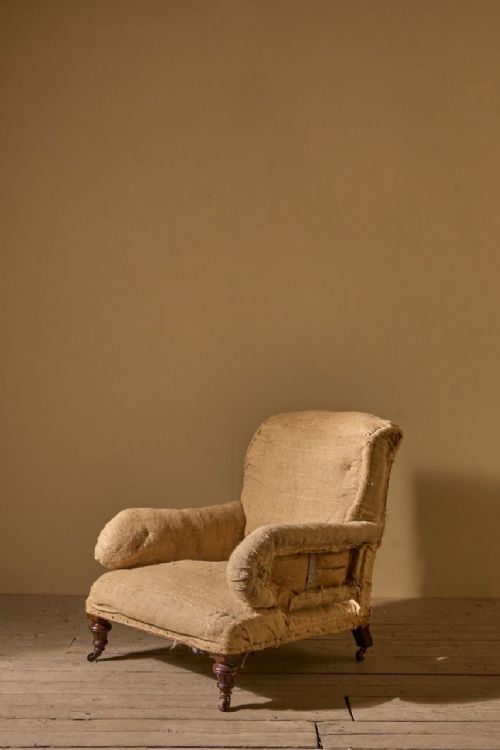
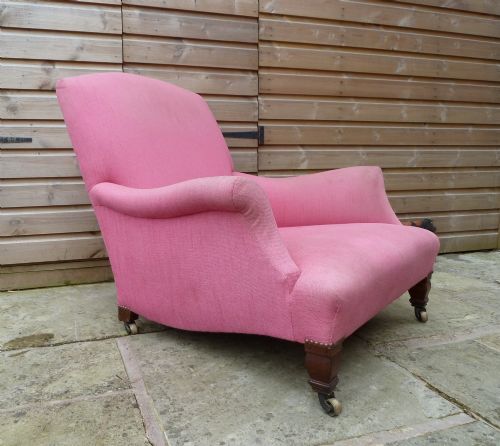
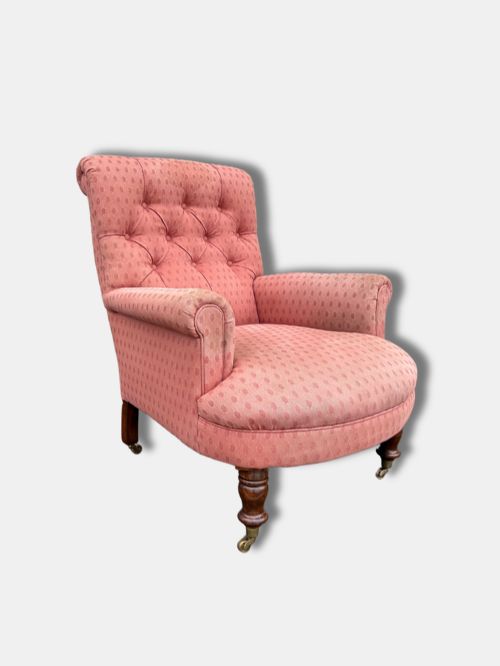
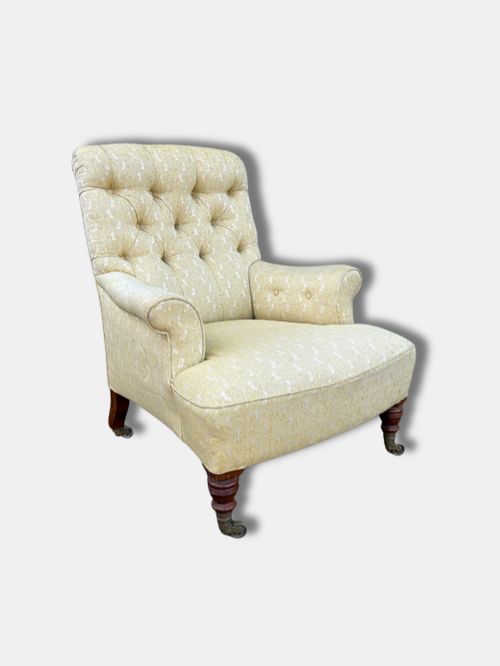
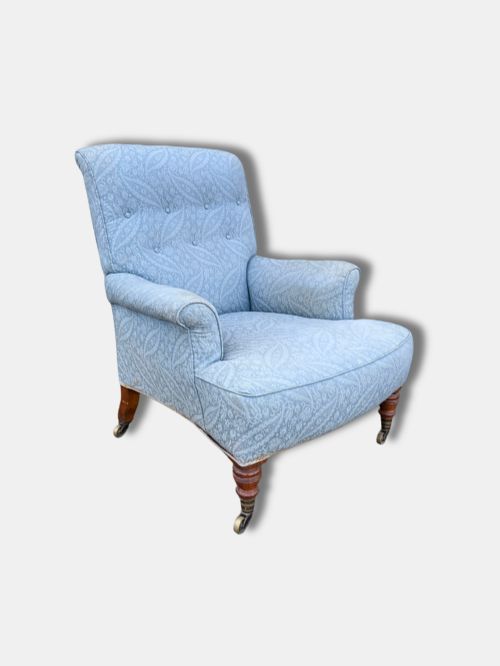
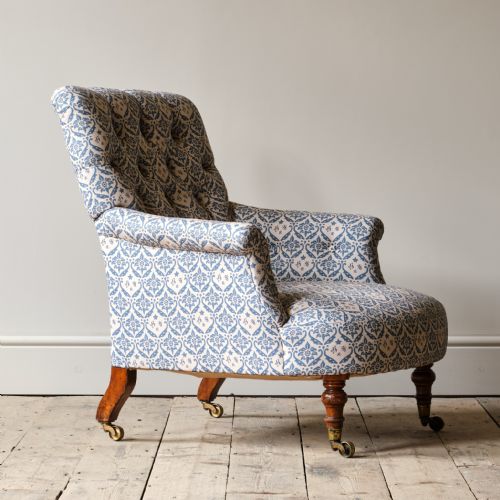
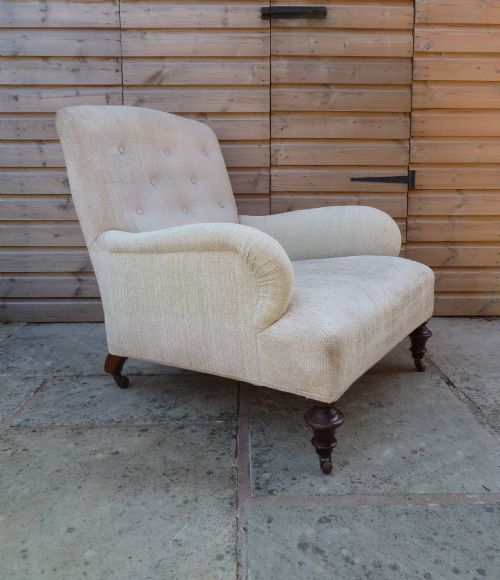
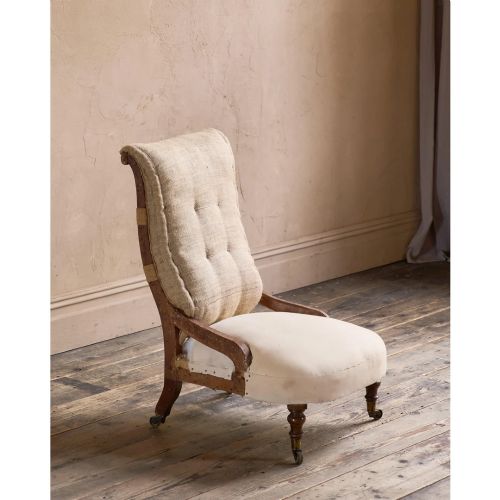
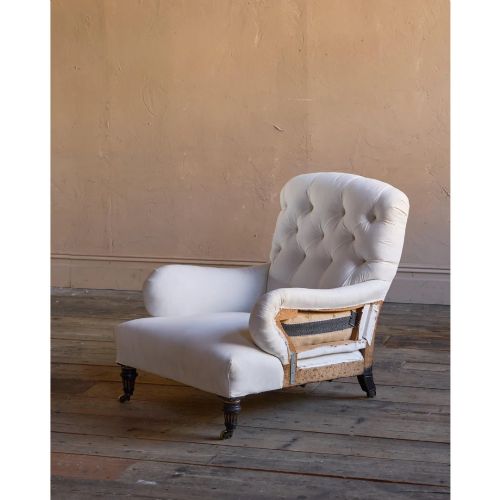
A victorian howard armchair typically presents a low-slung, deeply padded silhouette designed for maximum lounging. These pieces range from substantial country house models to more compact bedroom and tub chairs.
Many examples on this page carry the specific hallmarks of the Berners Street firm, while others reflect the broader Howard style produced across the nineteenth and early twentieth centuries. Original makers' stamps and numbered brass castors often confirm authenticity.
The form encompasses distinct named models such as the Bridgewater, the Grafton, and the Woodstock, each offering slight variations in arm shape and back height. These seating pieces embody the relaxed standard of English country house interiors.
Materials and Construction
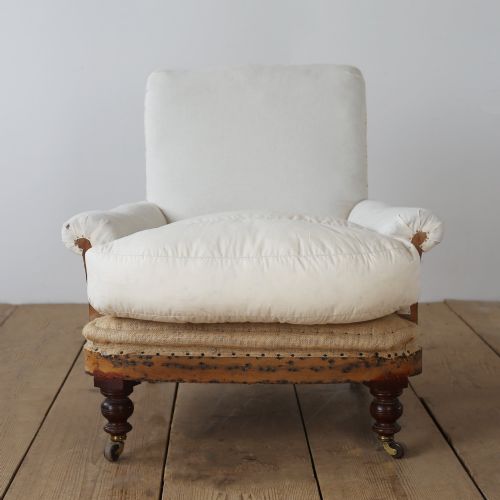
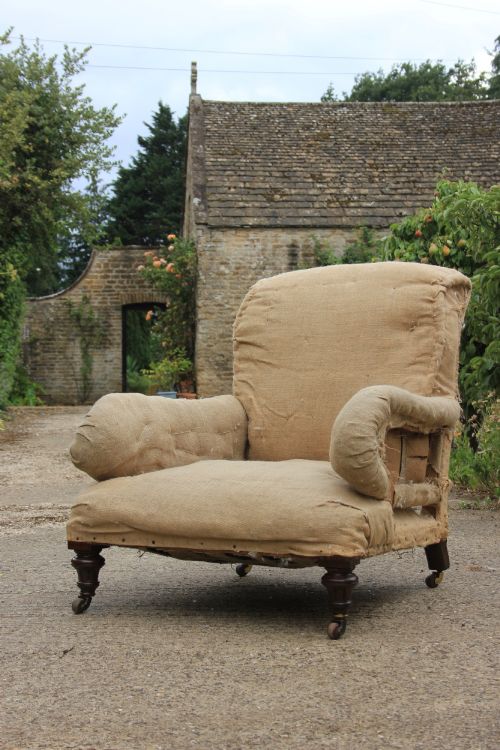
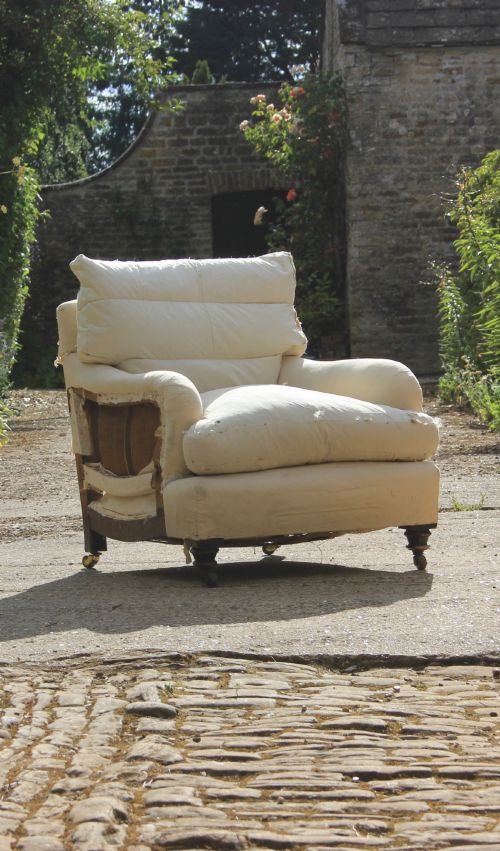
Frames are constructed from sturdy timbers such as mahogany, walnut, and oak, providing a rigid internal skeleton for complex upholstery. Traditional stuffing layers rely on materials like hessian and cotton supporting coiled steel springs.
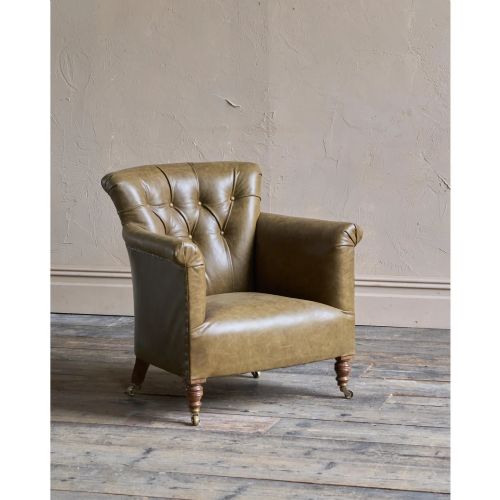
Exposed wooden elements appear on turned legs, often fitted with brass castors stamped with the maker's name. Final top covers span from simple calico and ticking to patterned fabrics, leather, and velvet.
Victorian Howard Armchair Retail Price Guide 2026
Typical asking prices for victorian howard armchair among the pieces listed under this phrase on Sellingantiques today, from the lower quarter to the upper quarter. They describe what is for sale here now, not the wider market.
Listings feature frames spanning from the mid-nineteenth century through the Edwardian era, constructed in mahogany, walnut, oak, and satin birch.
Judging Quality and Proportion
The distinction between standard workshop output and top-tier pieces lies in the integrity of the internal springing and the sculptural balance of the arms. Superior examples maintain firm, resilient support without sagging across the seat deck.
Attention to detail in the turned wooden supports and the precision of the upholstery stitching separate ordinary vernacular chairs from those bearing the signature stamps of premier London makers.
Howard and Sons·James Shoolbred·Cornelius V Smith·Trollope and Sons·Robert Strahan
The Victorian Howard Armchair Glossary
- Bridgewater armchair
- A specific model characterised by low, recessed arms that allow for comfortable side-sitting. This form became a staple of late nineteenth-century country house seating.
- Grafton armchair
- A distinct model shape often associated with deep proportions and substantial padding. These chairs provide a wider seat base than standard occasional chairs.
- Calico
- A plain-woven cotton fabric used as the inner lining or base cover beneath decorative top upholstery. Many traditional chairs retain their original stamped calico undercovers.
- Hessian
- A coarse woven fabric, typically made from jute fibres, utilised inside the frame for webbing and stuffing containment. It forms the robust foundation beneath the upper padding layers.
- Castor
- A small wheel attached to the base of the legs to allow easy movement across floor surfaces. Marked brass examples often provide crucial evidence of maker attribution.
Victorian Howard Armchair: Frequently Asked Questions
How do I spot a genuine Howard?
Look for stamped maker's marks on the wooden frame or inscribed lettering upon the brass castors. Original pieces often feature numbered legs and specific internal webbing stamps.
Context also matters, as authentic proportions balance deep sprung seats with low, gently scrolled arms. The presence of original calico ticking bearing maker details further confirms attribution.
What is a Bridgewater chair?
A Bridgewater chair is a distinct armchair variety featuring low, set-back arms that create an open and inviting seat. This design prioritises relaxed lounging over upright posture.
These models frequently appear in nineteenth-century country house interiors, upholstered in deep fabrics or soft leather. Their generous proportions distinguish them from standard parlor seating.
Can I reupholster these chairs?
Many examples are acquired specifically for reupholstering to suit contemporary interiors. Traditional stuffing and webbing methods should be maintained during any restoration work.
Preserving original stamped calico inner linings is recommended where possible to maintain the historical integrity of the piece. Skilled upholsterers work carefully around the original frame structure.
Which woods were used for frames?
Internal frames are built using durable hardwoods such as mahogany, walnut, and oak. These timbers provide the necessary structural strength to support heavy internal spring systems.
Exposed wooden legs typically display matching timber grains, finished with hand-turned details. The choice of wood often aligns with the manufacturing period and the maker's workshop standards.