


Victorian Helmet Coal Bucket
A victorian helmet coal bucket brings practical fireside utility together with expressive metalwork, holding fuel while anchoring the hearth.
Victorian Helmet Coal Bucket
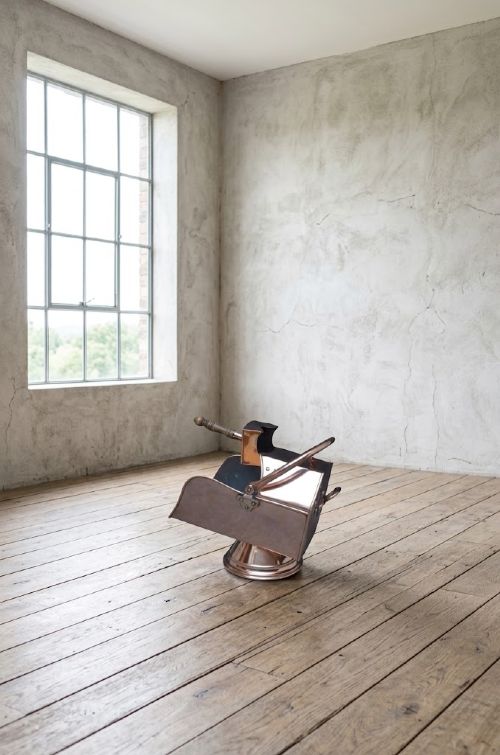
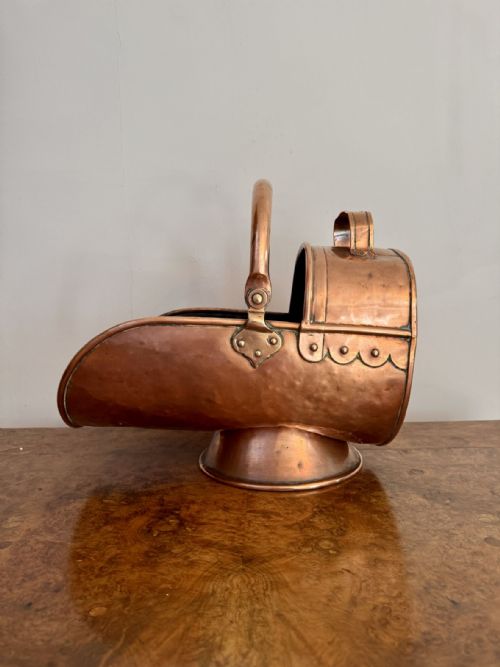
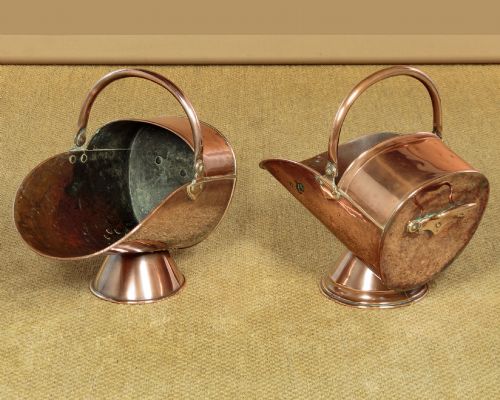
A victorian helmet coal bucket takes its name from its distinctive sloping silhouette, reminiscent of a classical helmet with an elevated back and a flared spout for pouring fuel onto a fire. These pieces sit alongside related fireside accessories such as log bins and umbrella stands, though the helmet form remains the defining shape for coal storage.
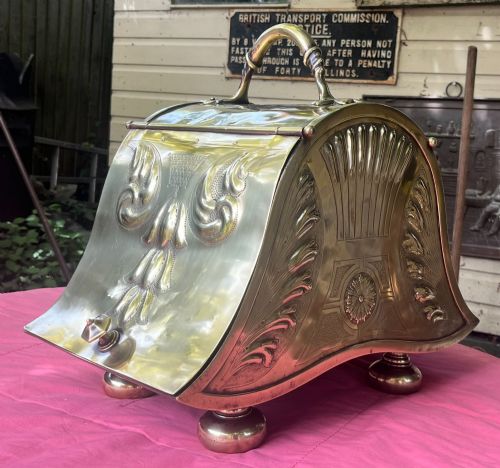
Most examples encountered date from the nineteenth century into the Edwardian period, appearing in both polished brass and warm copper. Makers produced these items to stand beside the fireplace as both functional containers and decorative furnishings, often accompanied by original metal shovels.
Materials and construction
Metalworking defines how these items were constructed, relying heavily upon sheet copper and brass formed into the characteristic helmet profile. Workshops employed hand-beating techniques, visible in hammer marks across the surface, alongside embossed decoration that added texture to the metal body.
Iron components frequently provided structural support, while wooden handles offered insulation for lifting and carrying the fuel. Riveted seams and cast brass feet or mounts completed the construction, ensuring stability beside the hearth.
Several examples double quite happily as umbrella stands once the coal dust is brushed out.
Distinctions in standard
Gauge and weight separate robust examples from lighter pieces, with heavier metal stock ensuring longevity and resistance to denting during daily use. The crispness of embossed patterns and the careful execution of hand-beaten surfaces indicate the level of craftsmanship invested in the work.
The presence of matching original accessories, such as dedicated shovels, elevates a piece, as do signed mounts or stamped makers' marks from recognised metalwork manufacturers. Fine finishing on handles and joints demonstrates a higher standard of production.
Benham And Froud·Henry Loveridge
The Victorian Helmet Coal Bucket Glossary
- Helmet coal scuttle
- A fireside container featuring a high back and a jutting front lip designed for carrying and pouring fuel.
- Embossed copper
- Sheet metal raised into decorative relief designs from the reverse side using hammers and punches.
- Arts and Crafts
- A design movement emphasising hand craftsmanship and visible material textures over mass production.
- Aesthetic Movement
- A late nineteenth century style focusing on visual beauty and artistic expression in domestic objects.
Victorian Helmet Coal Bucket: Frequently Asked Questions
What were helmet coal buckets used for?
These vessels held coal near the fireplace, allowing homeowners to replenish domestic fires cleanly and efficiently.
The flared spout directed fuel straight into the grate without spilling debris onto the hearth rug.
How do I clean polished brass?
Dust the surface regularly with a soft cloth to maintain the shine without stripping the aged patina.
Avoid harsh chemical abrasives that can damage nineteenth-century metal finishes.
Are original shovels common?
Original matching shovels survive with certain pieces, often sliding into side brackets designed specifically for storage.
Many surviving buckets lost their shovels over decades of everyday household use.
Where were these pieces made?
British workshops and specialised metalworking firms produced the vast majority of surviving examples.
Regional variations appear across English and Scottish makers working in copper and brass.