


Victorian Hearth Accessory Set
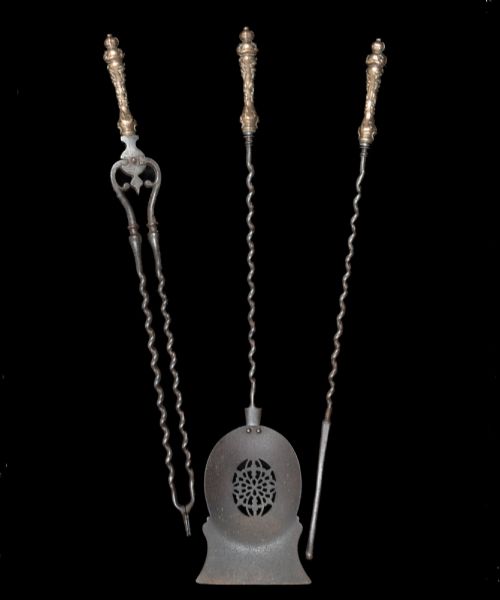
A victorian hearth accessory set brings together the functional ironmongery of the nineteenth-century fireplace with the decorative brass and steel craftsmanship of the period.
Victorian Hearth Accessory Set
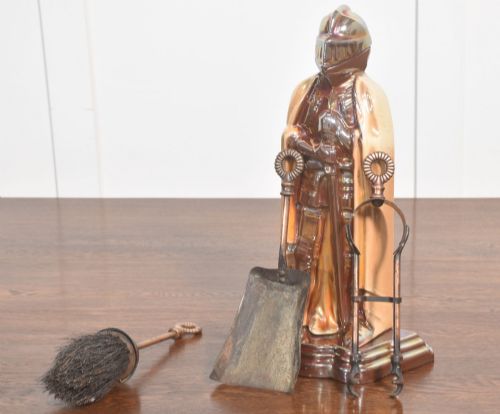
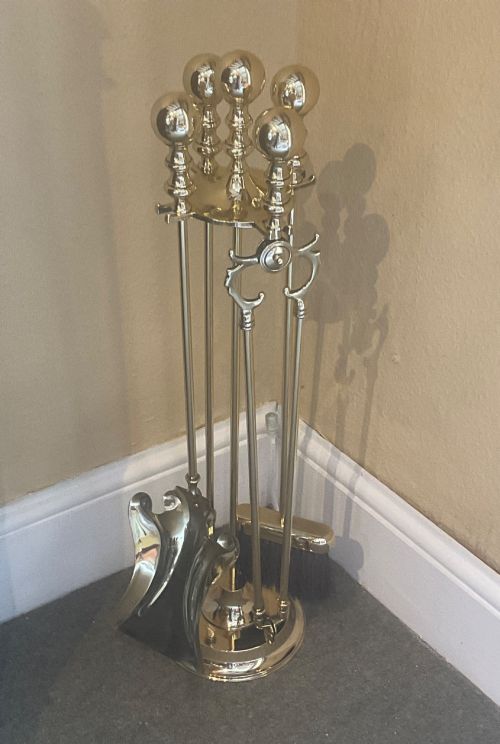
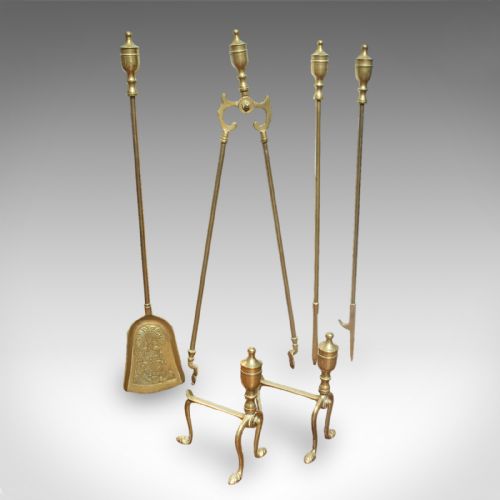
A victorian hearth accessory set typically comprises companion tools such as shovels, pokers and tongs, frequently accompanied by fire dogs, fenders or coal scuttles. The pieces date primarily from the nineteenth century, including Victorian, Edwardian and Arts and Crafts examples.
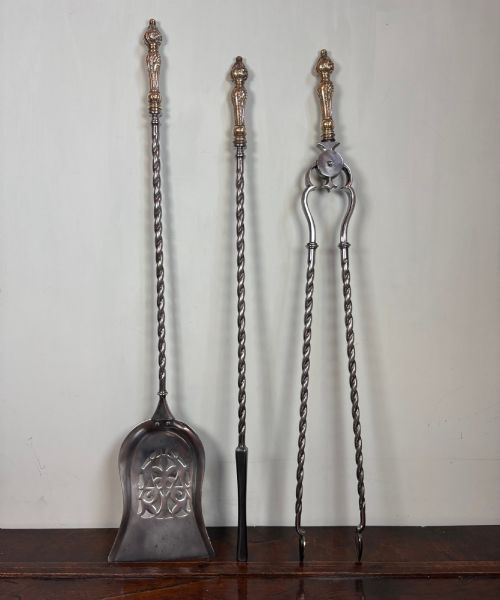
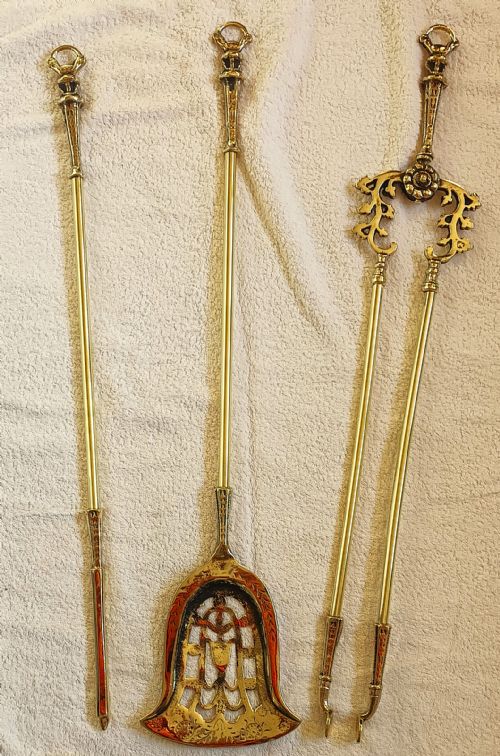
The most common configurations on this page are three-piece brass and steel fire iron sets, often found alongside matching fire dogs or a coal scuttle. These arrangements served both a practical role in tending the grate and a decorative function in the principal rooms of the house.
Materials and Construction
Makers utilised brass, steel, iron, cast iron, wrought iron and copper to forge and cast these hearth implements. Brass imparted a bright, polished finish suitable for formal reception rooms, while heavy iron and steel provided the durability required for daily fire tending.
Techniques ranged from cast brass components with decorative handles to hand-forged steel and wrought iron. Details such as starburst motifs and painted metal elements appear across the surviving pieces.
Evaluating the Pieces
Quality in a victorian hearth accessory set rests upon the weight of the metal, the crispness of the casting and the integrity of the individual tools. Superior sets display substantial gauge metal and well-balanced implements that feel substantial in the hand.
Finer examples show careful attention to detail in the handles and mounts, whereas simpler iterations rely on standard cast elements. The presence of a matching set of fire dogs or an integrated fender elevates the cohesion of the group.
The Victorian Hearth Accessory Set Glossary
- Fire irons
- The collection of implements used to maintain a coal or wood fire, standardly consisting of a shovel, poker and tongs. These tools were usually suspended from a stand or rested against fire dogs.
- Fire dogs
- Metal supports placed on either side of the hearth to hold logs above the hearth floor. They frequently matched the accompanying fire irons in material and decorative style.
- Fender
- A low metal guard placed on the hearth floor in front of the fireplace. It prevented embers from escaping onto the carpet and often matched the finish of the companion tools.
- Companion set
- A coordinated group of fireplace tools arranged together for daily use. Such sets became increasingly popular during the Victorian period as parlour decoration.
- Coal scuttle
- A container designed to hold coal for the fireplace, often fashioned from brass, copper or iron. These vessels matched the broader metalwork scheme of the hearth.
Victorian Hearth Accessory Set: Frequently Asked Questions
What tools come in a standard set?
A standard set generally includes a shovel for clearing ash, a poker for adjusting fuel and tongs for placing logs or coal. Many groupings also incorporate fire dogs or a dedicated stand.
Additional elements like fenders or coal scuttles sometimes form part of a larger ensemble depending on the original commission.
How do I date a brass hearth set?
Dating relies on stylistic markers such as Gothic Revival or Arts and Crafts motifs, alongside the method of manufacture and material composition. Victorian sets often feature polished brass with cast decorative elements.
Later Edwardian and early twentieth-century pieces frequently adopt simpler lines or incorporate painted metal finishes while retaining traditional forms.
Were these sets used daily?
Most sets were designed for active service in maintaining coal and wood fires in domestic hearths. The use of robust steel and iron ensured the implements could withstand regular heat and physical labour.
Sets kept in formal drawing rooms experienced lighter use compared to those in kitchens or nurseries, preserving their polished brass finishes.
Can I mix brass and steel pieces?
Mixing metals occurs frequently in nineteenth-century hearth arrangements, as makers routinely paired brass handles or mounts with steel shafts. Authentic groupings often combine both materials to balance durability with decorative appeal.
Matching the period and style remains more important for cohesion than ensuring every single component is formed from a single metal.